
Plant record · Perennial · Lamiaceae
Is Perennial Salvia deer resistant?
Salvia nemorosa
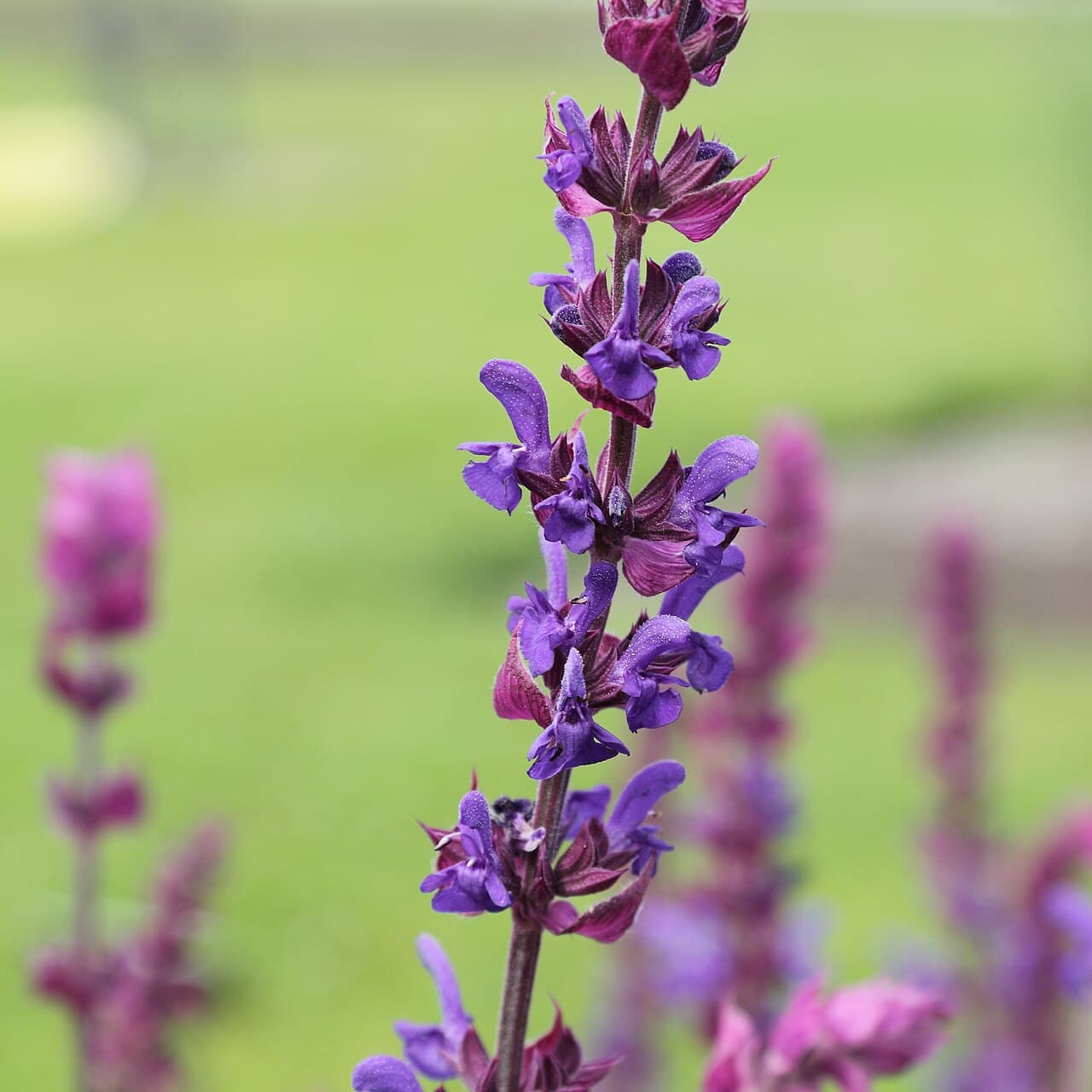
Mostly. Light browsing at worst; rarely ruined.
- Type
- Perennial
- Hardiness
- Zones 4–8
- Light
- Full sun
- Height
- 18–36 in
- Bloom
- May–September
- Maintenance
- Low
- Family
- Lamiaceae
Damage steps follow a published university field scale. How plants are rated.
About Perennial Salvia
Mint family, aromatic, and reliably left alone. It is the workhorse of a deer-resistant bed because it flowers for months rather than weeks.
The key to that long season is cutting it back hard after the first flush fades, right down to the low basal foliage rather than just snipping the spent spikes. It looks brutal for a fortnight and then reblooms properly. Deadheading lightly gives a thin second showing; shearing gives a real one.
It wants sun and drainage and nothing else. In damp or shaded ground it opens out from the middle and flops onto its neighbors, which is usually diagnosed as needing staking when it actually needs a drier, sunnier spot.
Do deer eat salvia?
Seldom. Rutgers rates perennial salvia Seldom Severely Damaged, and NC State's entry for Salvia nemorosa says it "is seldom damaged by deer or rabbit browsing," listing deer, rabbits, drought, dry soil and pollution among the challenges it resists. The mint-family scent above is the mechanism, and it is the same one that puts lavender and Russian sage at the top of the list. Under heavy pressure a flower spike is occasionally bitten off; the plant is not.
Protecting salvia
Rarely needed, and the one thing that helps is the thing the plant wants anyway: sun and drainage. A salvia in damp shade opens out and flops, as above, and soft, sprawling growth is the version of any plant deer take first. Where spikes are going in a bad spring, one application of the 20 percent egg spray Colorado State rates High covers the thirty days until the first flush is over.
What browsing does to it
The same thing the shears do. NC State: "once the plant has bloomed and the stem has turned brown, cut it down to the basal leaves and new flowers will appear," and a spike browsed in June is a spike cut early. The hard cut-back above is how the June-to-September bloom NC State describes is kept going, on a plant of 18 inches to 3 feet, hardy in zones 4 to 8.
Soil and care
- Soil pH
- 6 to 7.5
- Drainage
- Well drained
- Water
- Low
- Fertility
- Low
- Spacing
- 12 to 18 in apart
- Growth rate
- Moderate
- Maintenance
- Low
Tolerances and uses
- Drought
- High
- Salt
- Moderate
- Pollinators
- High
Containers
What to plant it with
- Catmint
Both Lamiaceae, same conditions, overlapping bloom. Shear both after the first flush for a second season.
Similar to Perennial Salvia
Other perennials with the same deer rating.
- African LilyAgapanthus sp.Zones 8–11, genus rangeSeldom damaged
- AsparagusAsparagus officinalisZones 2–9Seldom damaged
- AsterAster sp.Zones 3–8, genus rangeSeldom damaged
- AstilbeAstilbe x arendsiiZones 3–8Seldom damaged
- Baby's BreathGypsophila sp.Zones 3–9, genus rangeSeldom damaged
- BastardsageEriogonum wrightiiZones 5–10Seldom damaged
Where Perennial Salvia grows
Hardy across 50 states on zone range alone. Mountain and coastal areas sit outside the ranges used here, so check your own zone before ordering. Select any state, including one it will not grow in, for what is resistant there.
Choose a state from the listeasier on a phone
- Pennsylvania
- New Jersey
- New York
- Connecticut
- Massachusetts
- Virginia
- Maryland
- Michigan
- Wisconsin
- Ohio
- Indiana
- Illinois
- Minnesota
- Missouri
- North Carolina
- Tennessee
- Georgia
- Texas
- Colorado
- California
- Oregon
- Washington
- New Hampshire
- Vermont
- Maine
- Rhode Island
- Delaware
- West Virginia
- Kentucky
- South Carolina
- Florida
- Alabama
- Mississippi
- Louisiana
- Arkansas
- Oklahoma
- Kansas
- Nebraska
- Iowa
- North Dakota
- South Dakota
- Montana
- Wyoming
- Idaho
- Utah
- Nevada
- Arizona
- New Mexico
- Alaska
- District of Columbia
- Hawaii
Common questions about Perennial Salvia
- Is Perennial Salvia deer resistant?
- Perennial Salvia (Salvia nemorosa) is rated Seldom Severely Damaged, step 2 of 4 on the damage scale this site uses. Light browsing at worst; rarely ruined.
- What hardiness zones does Perennial Salvia grow in?
- Perennial Salvia is hardy in USDA zones 4 to 8. Outside that range it will either not survive winter or will struggle with summer heat.
- Does Perennial Salvia grow in shade?
- No. Perennial Salvia wants full sun and will grow thin and flop in shade.
- How big does Perennial Salvia get?
- Mature height is roughly 18–36 in. Growth rate is moderate.
- When does Perennial Salvia bloom?
- Perennial Salvia flowers from May–September.
Browse from here
Every list Perennial Salvia belongs to.
All perennials·Seldom damaged·Full sun plants