
Plant record · Perennial · Lamiaceae
Is Lavender deer resistant?
Lavandula angustifolia
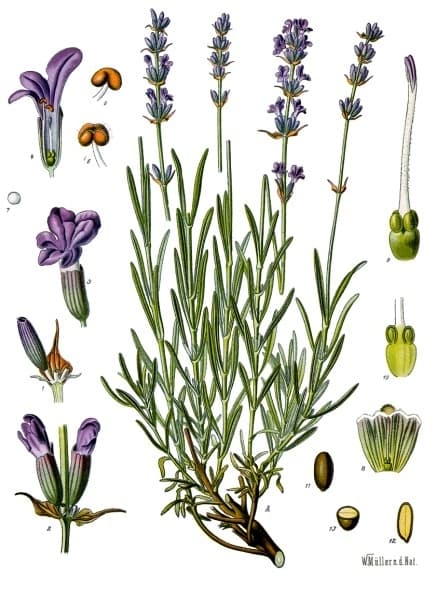
Yes. Deer almost always leave this alone.
- Type
- Perennial
- Hardiness
- Zones 5–9
- Light
- Full sun
- Height
- 12–24 in
- Bloom
- June–August
- Maintenance
- Low
- Family
- Lamiaceae
- Toxic to
- dogs, cats, and horses
Damage steps follow a published university field scale. How plants are rated.
About Lavender
Aromatic oils deter browsing reliably, and lavender is close to the safest thing you can plant where deer are heavy.
Wet winter soil kills far more lavender than cold ever does. A plant that would survive minus twenty in gravel will rot at minus five in clay. Sharp drainage, full sun, no mulch against the crown, and gravel rather than bark if you mulch at all.
English lavender is the hardy one, reliable to about zone 5. Spanish and French lavenders, the ones with the showy topknot bracts, are zone 8 plants sold widely in the north as though they were not, and they die the first winter.
Prune every year into the green growth, never into bare wood. Lavender does not resprout from old wood, so a plant allowed to go leggy cannot be brought back.
Do deer eat lavender?
Almost never. Rutgers puts Lavandula angustifolia in Rarely Damaged, the top tier, and the mechanism is the oil that makes it lavender: the volatile compounds that fill a room fill a deer's nose, and it moves on. NC State's entry does not mention deer at all, which for a plant this widely grown says as much as a rating would. Rarely is not never. A plant in its first weeks, watered and soft, is the version most likely to be tasted, and a deer in a hard February has been recorded testing plants it ignored all year.
Does lavender keep deer away from other plants?
No trial consulted here says so. The idea that an aromatic plant protects its neighbors is the same claim made for marigolds, and the USDA's twenty-product repellent trial found that scent carried in the air around a plant reduced browsing only when the material could drip onto the foliage itself. A lavender hedge protects lavender. What it does for the roses behind it, nobody has measured.
What kills it instead
Water. NC State: it "does not like wet feet and will die out in heavy clays," and "root rot is caused by overwatering." In deer country lavender's failure is almost always the drainage rather than the deer, and a bed of it black at the crown in April with the deer nowhere in sight is the usual way the plant is lost. Sharp drainage, gravel, no mulch against the crown, as above.
Soil and care
- Soil pH
- 6.5 to 8
- Drainage
- Sharp, gritty. Will rot in wet soil
- Water
- Low
- Fertility
- Low
- Spacing
- 12 to 18 in apart
- Growth rate
- Moderate
- Maintenance
- Low
Tolerances and uses
- Drought
- High
- Salt
- Moderate
- Pollinators
- High
Evergreen·Containers·Coastal sites
What to plant it with
- Garden Rose
Aromatic screen at the bed edge. Site lavender where drainage is sharpest, since roses prefer richer, damper soil.
Keep apart from
- Astilbe
Directly opposed water needs. Lavender dies in soil kept damp enough for astilbe, and astilbe crisps in soil dry enough for lavender.
- Bigleaf Hydrangea
Hydrangea wants consistent moisture; lavender wants to dry out completely between waterings. One of them loses.
Similar to Lavender
Other perennials with the same deer rating.
- Anise HyssopAgastache sp.Zones 4–9, genus rangeRarely damaged
- Basket of GoldAurinia saxatilisZones 3–7Rarely damaged
- Bearded IrisIris germanicaZones 3–9Rarely damaged
- Bigleaf GoldenrayLigularia dentataZones 4–8Rarely damaged
- Bleeding HeartLamprocapnos spectabilisZones 3–9Rarely damaged
- Butter and EggsLinaria vulgarisZones 3–9Rarely damaged
Where Lavender is used
3 guides on this site plant it, and say where and what beside it.
- Contrast: Texture Over Flower ColorThe resistant palette is short of coarse texture, which is the one thing a composition needs to hold together. Here is what fills the gap.5 min
- Deer-Resistant Rose Garden PlanNo rose is deer resistant, and rugosa rates no better than a hybrid tea. So the plan is an enclosure you can live with looking at.6 min
- Wall and Foundation Planting PlanThe strip at the base of a wall is the driest ground you own, and a wall stops nothing. Aspect decides the planting; the rain shadow decides whether it lives.6 min
Where Lavender grows
Hardy across 50 states on zone range alone. Mountain and coastal areas sit outside the ranges used here, so check your own zone before ordering. Select any state, including one it will not grow in, for what is resistant there.
Choose a state from the listeasier on a phone
- Pennsylvania
- New Jersey
- New York
- Connecticut
- Massachusetts
- Virginia
- Maryland
- Michigan
- Wisconsin
- Ohio
- Indiana
- Illinois
- Minnesota
- Missouri
- North Carolina
- Tennessee
- Georgia
- Texas
- Colorado
- California
- Oregon
- Washington
- New Hampshire
- Vermont
- Maine
- Rhode Island
- Delaware
- West Virginia
- Kentucky
- South Carolina
- Florida
- Alabama
- Mississippi
- Louisiana
- Arkansas
- Oklahoma
- Kansas
- Nebraska
- Iowa
- North Dakota
- South Dakota
- Montana
- Wyoming
- Idaho
- Utah
- Nevada
- Arizona
- New Mexico
- Alaska
- District of Columbia
- Hawaii
Common questions about Lavender
- Is Lavender deer resistant?
- Lavender (Lavandula angustifolia) is rated Rarely Damaged, step 1 of 4 on the damage scale this site uses. Deer almost always leave this alone.
- What hardiness zones does Lavender grow in?
- Lavender is hardy in USDA zones 5 to 9. Outside that range it will either not survive winter or will struggle with summer heat.
- Does Lavender grow in shade?
- No. Lavender wants full sun and will grow thin and flop in shade.
- How big does Lavender get?
- Mature height is roughly 12–24 in. Growth rate is moderate.
- When does Lavender bloom?
- Lavender flowers from June–August.
- Is Lavender toxic to dogs or cats?
- Yes. The ASPCA lists Lavender as toxic to dogs, cats, and horses. Site it away from where animals graze, or choose something else if you have a dog that chews.
Browse from here
Every list Lavender belongs to.
All perennials·Rarely damaged·Full sun plants·Evergreen shrubs