
Plant record · Shrub · Rosaceae
Is Garden Rose (Knock Out) deer resistant?
Rosa spp.
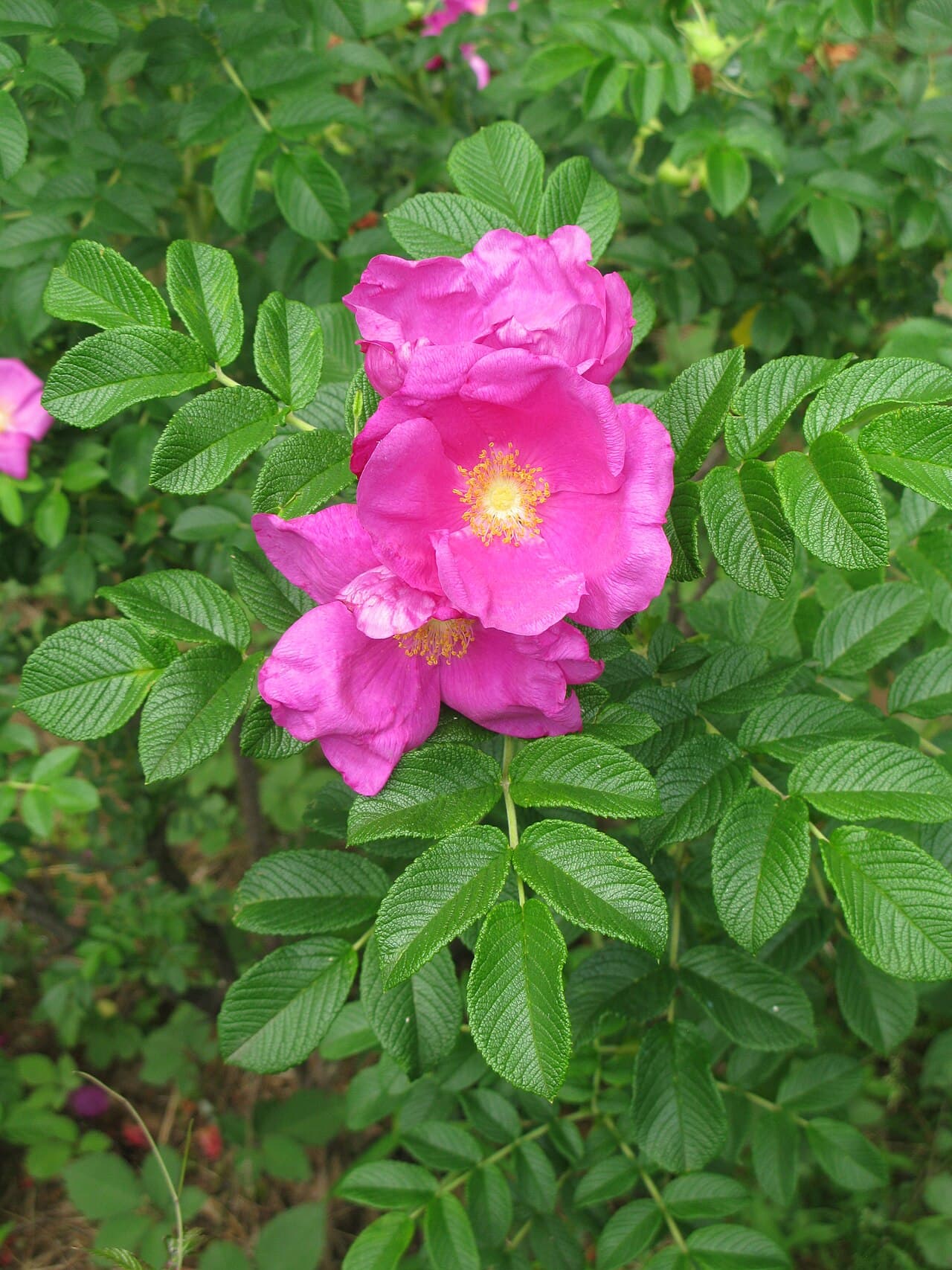
Partly. Browsed where deer pressure is high. Protect it.
- Type
- Shrub
- Hardiness
- Zones 4–9, genus range
- Light
- Full sun
- Height
- 24–71 in
- Bloom
- May–October
- Maintenance
- High
- Family
- Rosaceae
Damage steps follow a published university field scale. How plants are rated.
About Garden Rose
Thorns do not stop deer. That is the single most useful thing to know about roses in deer country, because the assumption that they do costs people entire beds.
What gets taken is the soft growth: buds just before they open, and the tender new canes in spring. A bush stripped in April will often push again, but the flush is lost and repeated browsing weakens the plant over a season.
Rugosa roses hold up better than most, being genuinely dense and viciously prickly rather than decoratively thorny, and their foliage is coarse enough that deer lose interest. For everything else in a garden with real pressure, plan on repellent from the moment growth starts in spring, or fencing, and start before the first bite rather than after.
Do deer eat roses?
Yes, and the prickles are no deterrent. NC State's entry for Rosa lists white-tailed deer and cottontail rabbit under the plant's problems, and its one concession to defense is that "using larger, pricklier species as hedges can provide some security." Rutgers rates the garden rose Occasionally Severely Damaged. The sharp structures are prickles rather than true thorns, in NC State's wording, and a deer's lips and tongue are tougher than either.
When deer take roses
Bud swell in spring, when the new canes are soft, and again at every flush of buds through the season. A repeat-blooming rose browsed in April pushes a second set of shoots; a once-blooming old rose browsed at the same moment has lost the year, because its buds were on last season's wood.
Protecting roses from deer
Start the egg spray when the first leaves unfold, not after the first bite; Colorado State rates the 20 percent mix High and gives it about thirty days before reapplying, which through a rose season means six or seven applications. For a specimen, a cylinder of welded wire five feet tall and wide enough to clear the canes. For a hedge, rugosa, for the reasons above. For a bed that has to flower every year regardless, a fence rather than a bottle.
Will a browsed rose come back?
A repeat bloomer usually rebranches below the bite within weeks and flowers on the new growth; a plant browsed three or four times in a season is visibly smaller and flowers less the following year. Cut ragged stubs back to a clean bud. Deer tear rather than cut, and a torn cane end dies back further than a pruned one.
Are Knock Out roses deer resistant?
No more than any other rose. Nothing consulted here rates the Knock Out group separately from the genus, and NC State's entry for the group, the roses sold as carefree, says it in one sentence: "Roses are susceptible to damage from rabbits and deer." The disease resistance they were bred for, blackspot in particular, is real and is what the name refers to; deer were not part of the breeding. Rutgers rates the genus Occasionally Severely Damaged and a Knock Out carries that tier with the rest. What the group does have is vigor. NC State puts it at 3 to 4 feet, flowering spring through fall and needing less pruning than most roses, so a browsed Knock Out has more growth to come back from than a hybrid tea and flowers again on the new wood the same season. That is recovery, not resistance.
Protecting Garden Rose
Whether this survives comes down to local pressure, so decide on the options before it gets browsed rather than after.
- 1How tall a deer fence needs to beEight feet, and six is the most common expensive mistake in deer fencing.
- 2Repellent that actually worksThe egg-based recipe that reproduces the active ingredient in the commercial sprays that win university trials.
- 3Check it is actually deerDeer tear and leave a ragged stub. A clean 45-degree cut is rabbits, and slug holes get blamed on deer constantly.
What to plant instead of Garden Rose
Same plant type, hardy in the same zones, and rated better for deer. If Garden Rose keeps getting eaten, these go in the same spot.
Soil and care
- Soil pH
- 6 to 7
- Drainage
- Well drained
- Water
- Moderate
- Fertility
- High
- Spacing
- 35 to 59 in apart
- Growth rate
- Moderate
- Maintenance
- High
Tolerances and uses
- Drought
- Low
- Salt
- Low
- Pollinators
- Moderate
Containers
What to plant it with
- Catmint
The standard rose underplanting. Blue against any rose colour, and completely deer-proof.
- Ornamental Onion
Onion scent masks roses from deer and the flower heads carry the bed in June. The traditional pairing, and it works.
- Lavender
Aromatic screen at the bed edge. Site lavender where drainage is sharpest, since roses prefer richer, damper soil.
Where Garden Rose is used
One guide on this site plants it, and says where and what beside it.
Where Garden Rose grows
Hardy across every state on zone range alone. Mountain and coastal areas sit outside the ranges used here, so check your own zone before ordering. Select any state, including one it will not grow in, for what is resistant there.
Choose a state from the listeasier on a phone
- Pennsylvania
- New Jersey
- New York
- Connecticut
- Massachusetts
- Virginia
- Maryland
- Michigan
- Wisconsin
- Ohio
- Indiana
- Illinois
- Minnesota
- Missouri
- North Carolina
- Tennessee
- Georgia
- Texas
- Colorado
- California
- Oregon
- Washington
- New Hampshire
- Vermont
- Maine
- Rhode Island
- Delaware
- West Virginia
- Kentucky
- South Carolina
- Florida
- Alabama
- Mississippi
- Louisiana
- Arkansas
- Oklahoma
- Kansas
- Nebraska
- Iowa
- North Dakota
- South Dakota
- Montana
- Wyoming
- Idaho
- Utah
- Nevada
- Arizona
- New Mexico
- Alaska
- District of Columbia
- Hawaii
Common questions about Garden Rose
- Is Garden Rose deer resistant?
- Garden Rose (Rosa spp.) is rated Occasionally Severely Damaged, step 3 of 4 on the damage scale this site uses. Browsed where deer pressure is high. Protect it.
- What hardiness zones does Garden Rose grow in?
- Garden Rose is hardy in USDA zones 4 to 9. Outside that range it will either not survive winter or will struggle with summer heat. That is the range across the genus, so a named species or cultivar may be narrower.
- Does Garden Rose grow in shade?
- No. Garden Rose wants full sun and will grow thin and flop in shade.
- How big does Garden Rose get?
- Mature height is roughly 24–71 in. Growth rate is moderate.
- When does Garden Rose bloom?
- Garden Rose flowers from May–October.
Browse from here
Every list Garden Rose belongs to.
All shrubs·Sometimes destroyed·Full sun plants