
Plant record · Perennial · Asparagaceae
Do deer eat hostas?
Hosta spp.
Yes. Hostas are the first thing deer eat in a shade garden, and a clump they find is bare stalks by morning.
- Type
- Perennial
- Hardiness
- Zones 3–9, genus range
- Height
- 8–35 in
- Bloom
- June–August
- Maintenance
- Low
- Family
- Asparagaceae
- Toxic to
- cats, dogs, and horses
Damage steps follow a published university field scale. How plants are rated.
Yes. Hostas are among the first things deer eat in a shade garden, and a clump that gets found in June is usually down to the stalks by morning.
Rutgers puts Hosta in Frequently Severely Damaged, the worst of its four tiers, on a list built from years of field observation in northern New Jersey.1 NC State's entry for the genus says only that "Deer and rabbits enjoy the tender foliage."2 Iowa State describes what the browsing looks like: "When browsing, deer grab and tear leaf blades from the plant. This leaves behind a characteristic ragged edge on the petiole."3
This page covers how to tell deer damage from the three other animals that eat hostas, what stands behind the "deer-resistant hosta" claims, what actually keeps deer off, and what an eaten hosta does afterwards.
What deer damage on a hosta looks like
Slugs, rabbits and voles all live in the same damp shade a hosta wants, and all three get blamed on deer. Each one needs a different fix, so look at the leaf stalks before buying anything.
Deer have no upper incisors. Minnesota Extension: "Deer have no upper incisors and must grasp and tear leaves and buds from plants," so what is left has "a rough, torn or shredded appearance."5 On a hosta the blade is gone and the leaf stalk is still standing with a frayed top. Damage can be anywhere from ground level to about six feet up.7 A whole clump can go in one night.
Rabbits cut cleanly. Iowa State's hosta page: "they snip off leaves, leaving behind a petiole that looks as if it was cut by scissors."3 Missouri Extension gives the angle as about 45 degrees and the height as under two and a half feet, and lists "pea-sized droppings" as the other sign.8 If the stub is clean, slanted and low, it was a rabbit, and a deer fence will not help.
Slugs eat holes through the blade and leave the stalks alone. Iowa State: "Feeding damage appears as large, irregular holes."3 There is usually a dried slime trail on the leaf next to the holes.
Voles eat the roots. NC State: "Voles may destroy the plant by eating the roots."2 The leaves wilt on a plant that has not been bitten, and the clump lifts out of the ground with nothing under it.
A hosta grazed by white-tailed deer in Malvern, Pennsylvania. The blades are gone and the stalks are still standing, torn at the top, which is the deer signature. Photo by SB_Johnny, CC BY-SA 3.0, via Wikimedia Commons.
The blades are gone and the stalks are still standing, torn and frayed at the top.
Deer. The damage can sit anywhere from the ground to about six feet up, and a whole clump usually goes in one night. Pellet droppings nearby, and the shrub behind the bed browsed at shoulder height. An eight-foot fence, or a cage about 50 inches high around the one bed, or a spray that starts on the April pips and is repeated every three to four weeks. Sources 3, 5, 7
The stalks are cut clean at a slant, like scissors, and only low down.
Rabbit. Under about two and a half feet, pea-sized droppings, and it happens in daylight. A rabbit goes under a fence rather than over it, so the fix is wire pinned to the ground with no gap, checked now and then; a deer fence on its own does nothing here. The rabbits page has the wire spec. Sources 3, 8
The blades are still there, with large irregular holes eaten through them.
Slug. Look for a dried slime trail beside the holes and for the damage to be worst on the damp side of the clump after wet weather. A beer trap sunk to soil level, three to four inches deep with a quarter cup of flour in the can, and less leaf litter for them to hide in. Sources 3, 15
Nothing has been bitten, but the leaves have wilted and the clump lifts out of the ground with no roots under it.
Vole. NC State: “Voles may destroy the plant by eating the roots.” This is the one animal here a hosta does not recover from. The voles page covers what to do about them. Sources 2, 6
Height helps when the stub is hard to read. Maryland Extension: "The height at which damage occurs, from ground level to about 6', often rules out other animal damage."7 If the hostas are eaten at knee height and the shrub behind them is eaten at shoulder height, it was deer.
Clean cuts inside a fence are the usual false alarm. In August 2022 a Baltimore County gardener wrote to Maryland's extension service about Hosta plantaginea flower buds disappearing inside a five-foot mesh enclosure. The buds had been cut flat across the stem and the mesh was intact. The horticulturist's first guess was "either deer or rabbits." After seeing a photo, the answer was a rabbit, and that it had gone under the mesh.18
Are any hostas deer resistant?
No, and the claim that some are does not come with any evidence attached.
None of the sources consulted for this page rates one hosta above another for deer. Rutgers and NC State both rate the genus as a whole.12 Hostalists.org, a reference site of hosta lists built up from grower reports, opens its deer list with this: "When it comes to hostas, only the artificial ones are deer proof! Or in other words, ALL hostas are susceptible to deer damage unless control measures are taken to prevent it." The only ranking it offers points the other way: "Green (non-variegated) hostas and those with fragrant flowers are reported to be the most vulnerable."13
The cultivars sold as deer resistant are usually the thick-leaved blues and the giants. On September 15, 2026, the page Google ranked first for "deer resistant hosta" was a UK nursery's blog post listing 'Blue Angel', 'Sum and Substance', 'Halcyon' and 'Krossa Regal'. It cites nothing, and a reader in the comments reports that deer ate a 'Krossa Regal' they had grown for years.19 The Spruce makes the same claim with a hedge: "No hosta is completely deer-proof, but some varieties, such as Blue Mouse Ears, with a thick or textured leaf, are less likely to attract deer."20
The thick-leaf idea seems to have been carried over from slugs. Hostalists keeps a slug-resistant list and explains it in one sentence: "Generally, large hostas and those with thick foliage tend to be less susceptible to slug damage."14 A slug rasps at a leaf, and a thick one slows it down. A deer pulls the whole leaf off at the stalk, and thickness makes no difference to that. The blue is a wax that comes off, too. Chicago Botanic Garden: "The blue color is actually a waxy 'bloom' that can be rubbed off," and heavy rain washes it away.15 And 'Blue Angel', the cultivar most often sold on its thick leaves, is not on hostalists' slug-resistant list.
As far as this site can find, nobody has run a trial that put deer in front of named hosta cultivars and counted what they ate. Until someone does, a hosta that has gone three seasons unbrowsed says something about that garden's deer and nothing about the cultivar.
The chart lists the cultivars most often sold as resistant, with what is actually documented about each.
| Cultivar | Leaf, as pictured | Hostalists says | Sold as deer resistant by | Deer |
|---|---|---|---|---|
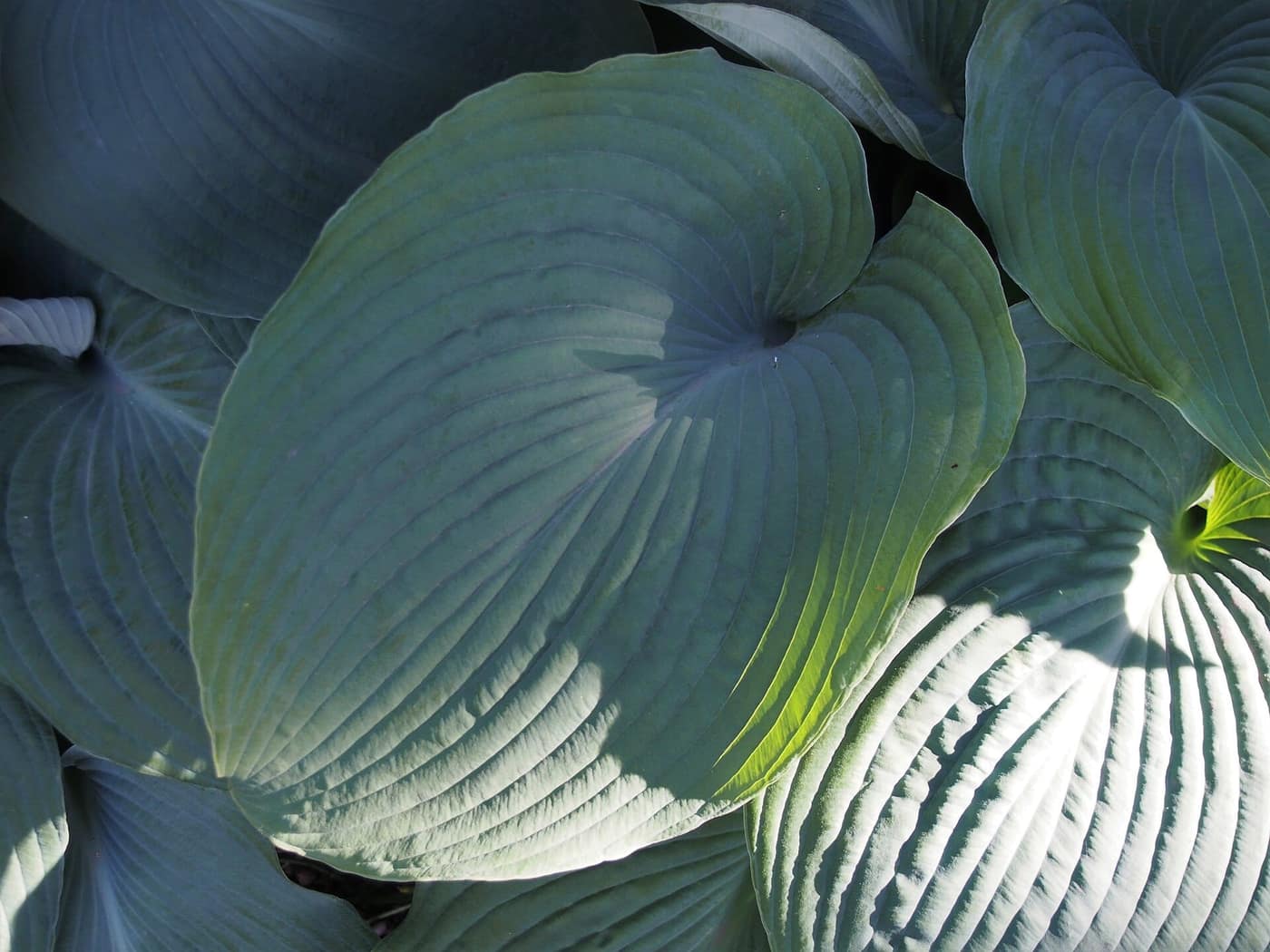 'Blue Angel' 'Blue Angel' | Huge, blue-grey, heart-shaped, heavily veined | Very large | source 19 | Sold on its thick leaves; not on hostalists' slug-resistant list |
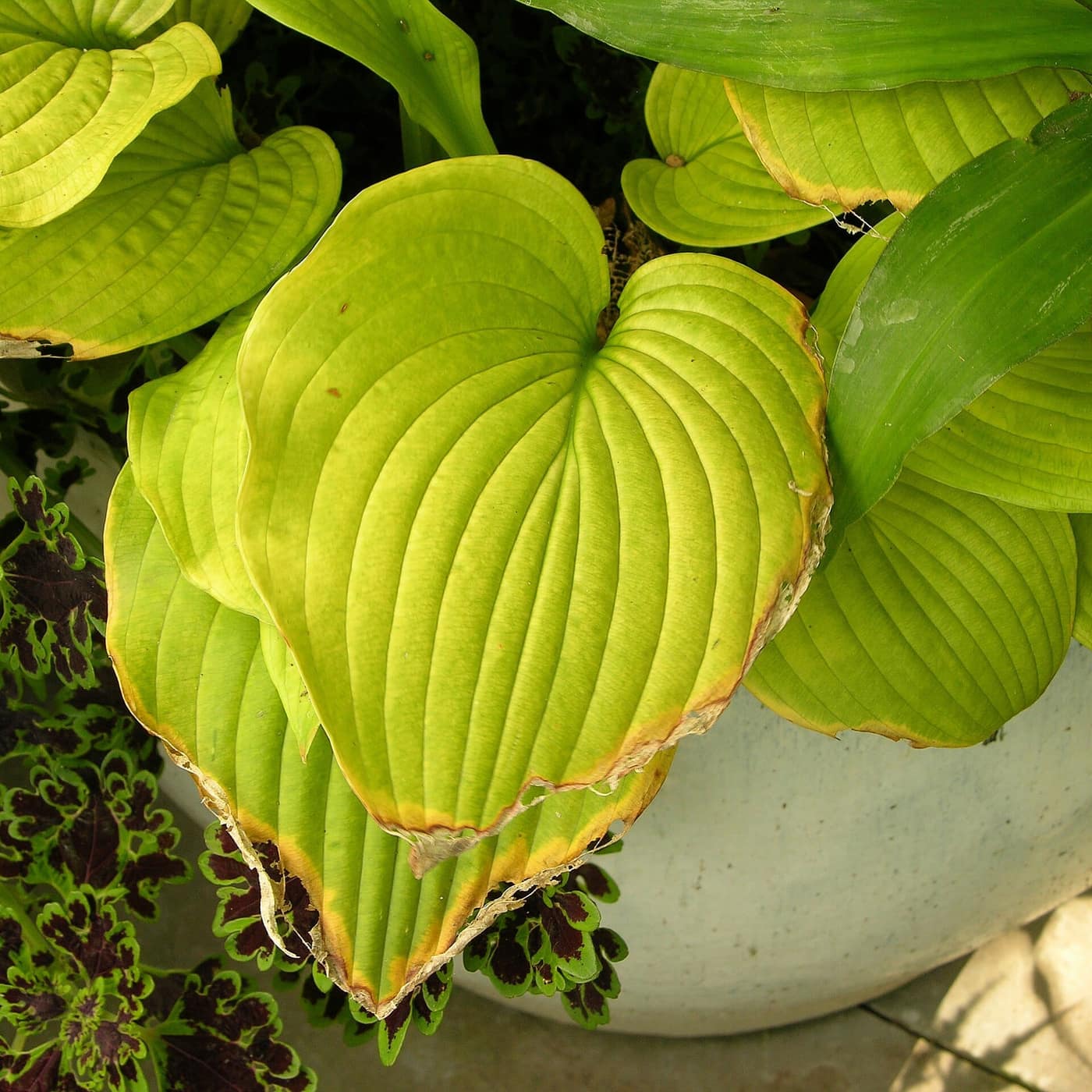 'Sum and Substance' 'Sum and Substance' | Giant chartreuse to gold, glossy, puckers with age | Very largeSlug-resistant list | source 19 | No source rates it apart from other hostas |
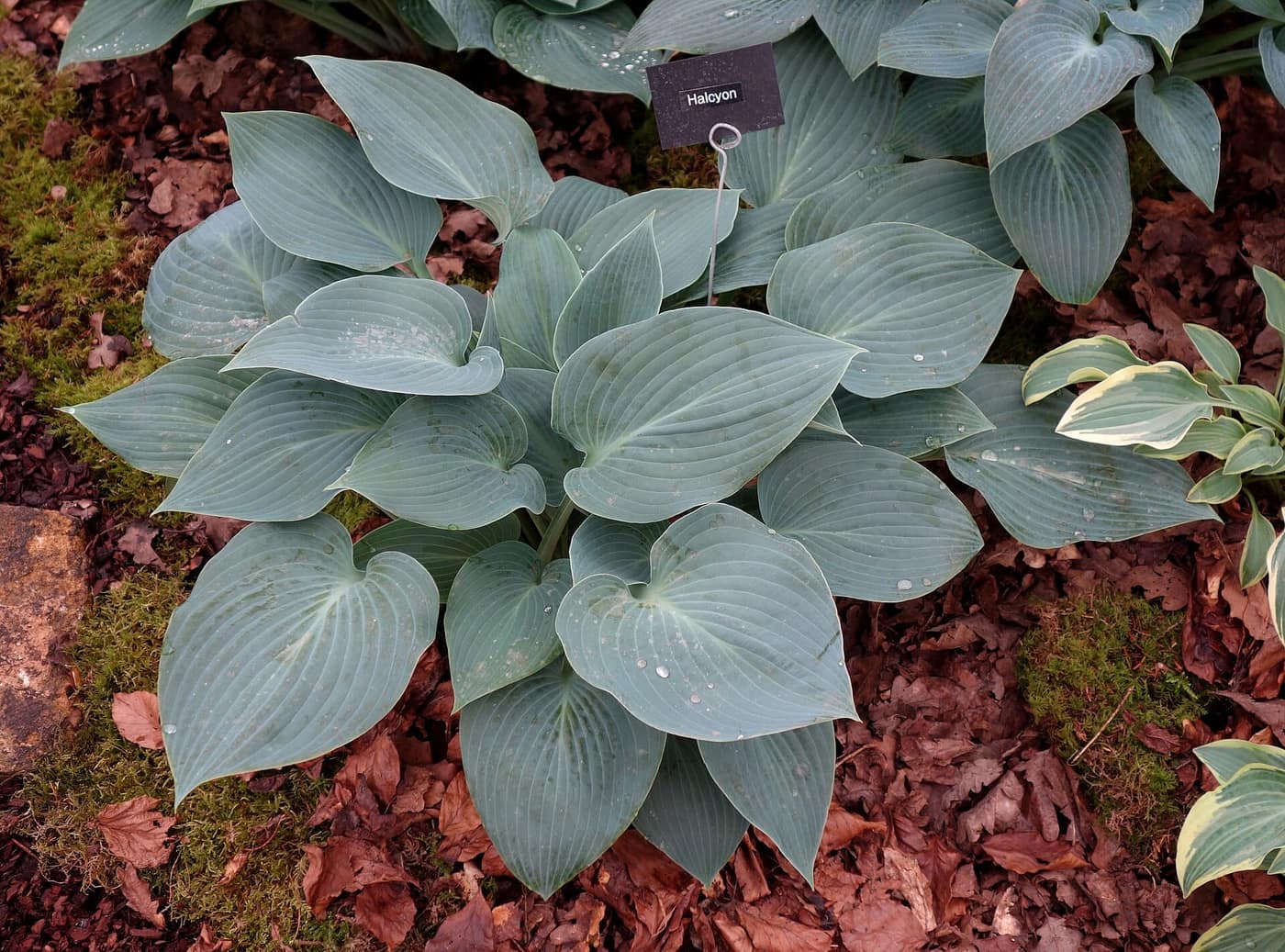 'Halcyon' 'Halcyon' | Medium, powder-blue, spear-shaped | Slug-resistant list | source 19 | No source rates it apart from other hostas |
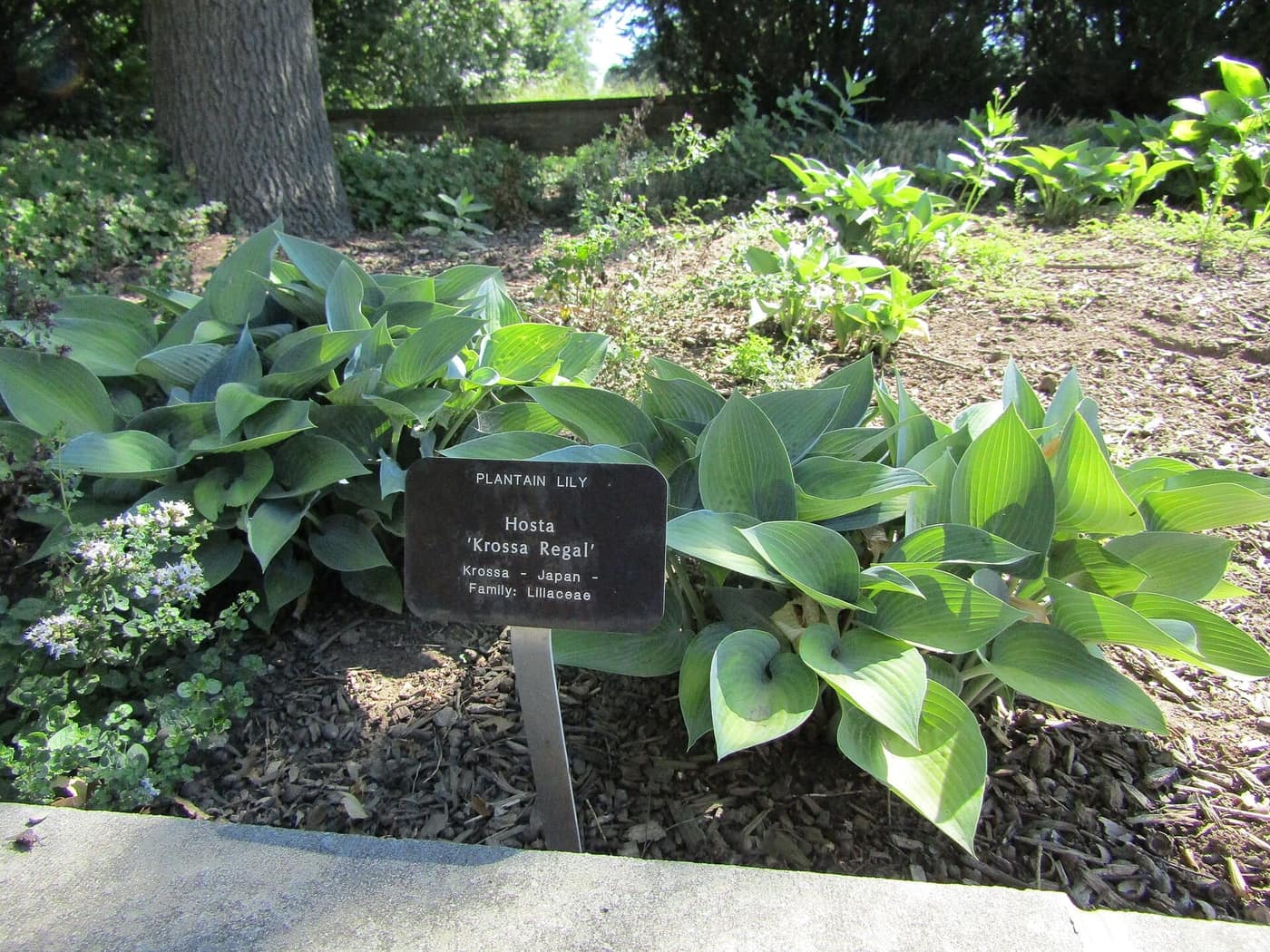 'Krossa Regal' 'Krossa Regal' | Tall upright vase, steel-blue, wavy edge | Slug-resistant list | source 19 | A reader of source 19 reports theirs eaten after years in the ground |
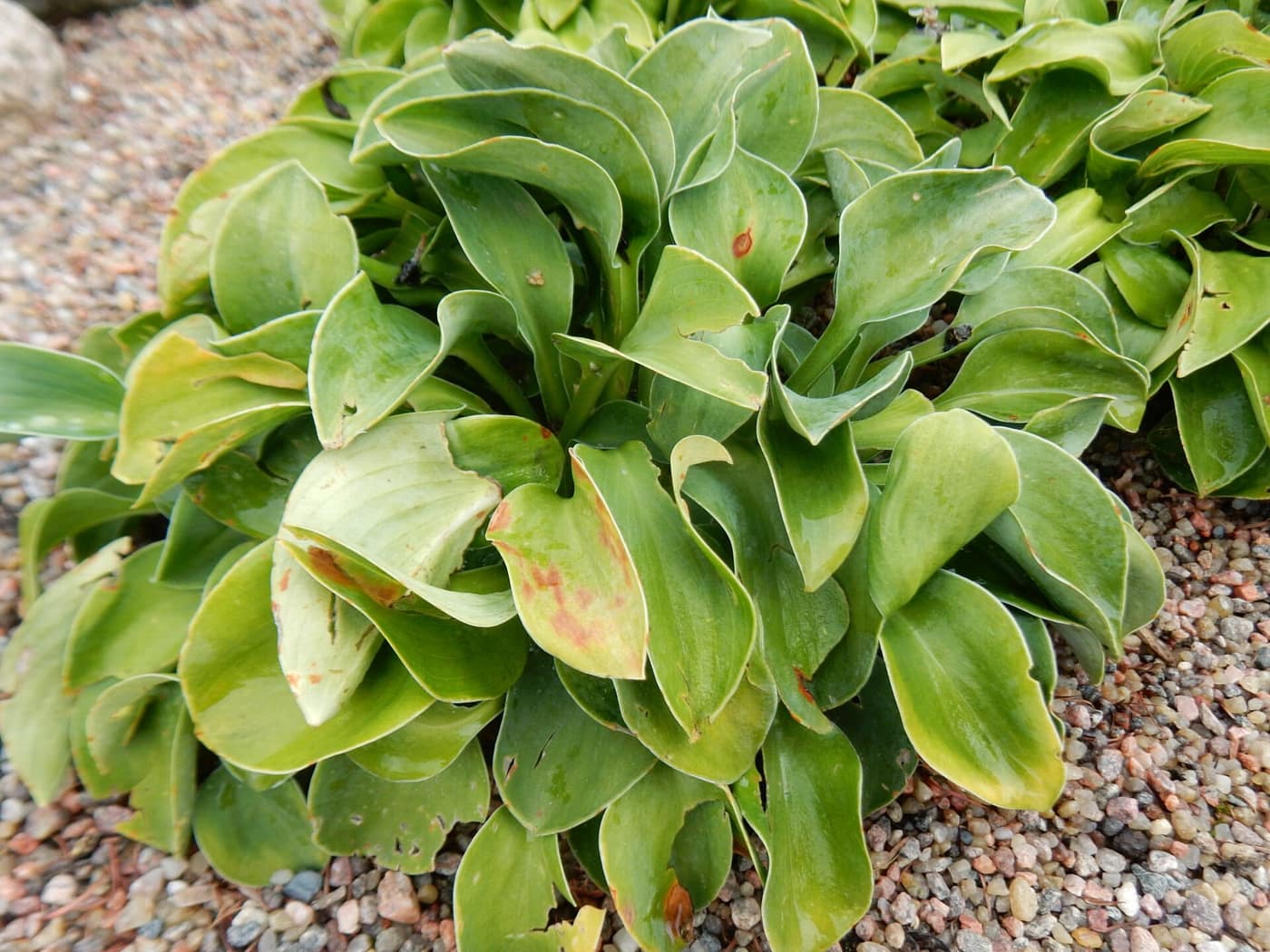 'Blue Mouse Ears' 'Blue Mouse Ears' | Miniature, round, blue-grey, rubbery | Slug-resistant list | source 20 | No source rates it apart from other hostas |
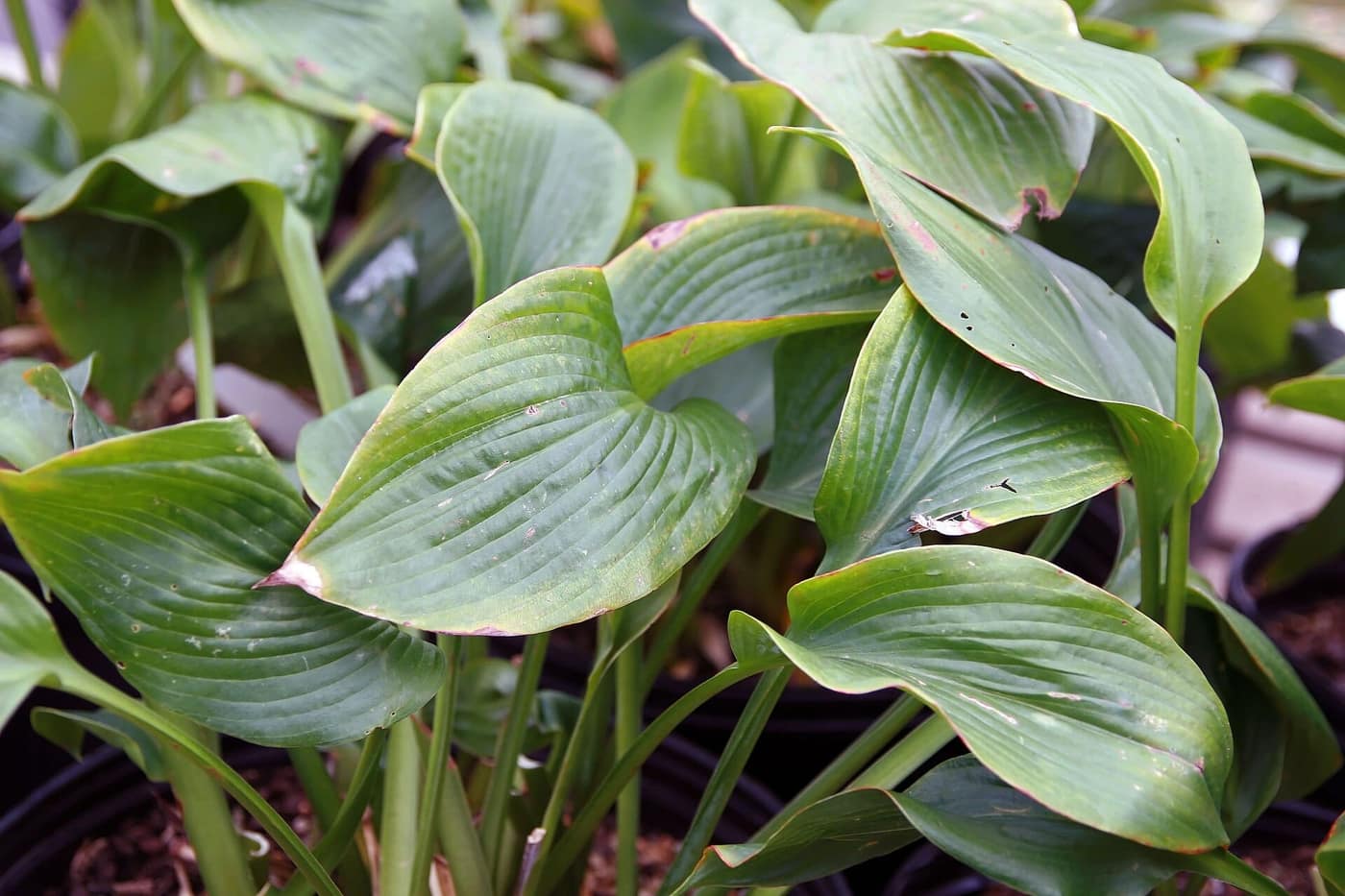 sieboldiana 'Elegans' sieboldiana 'Elegans' | Giant, blue-grey, deeply corrugated and cupped | Slug-resistant list | — | No source rates it apart from other hostas |
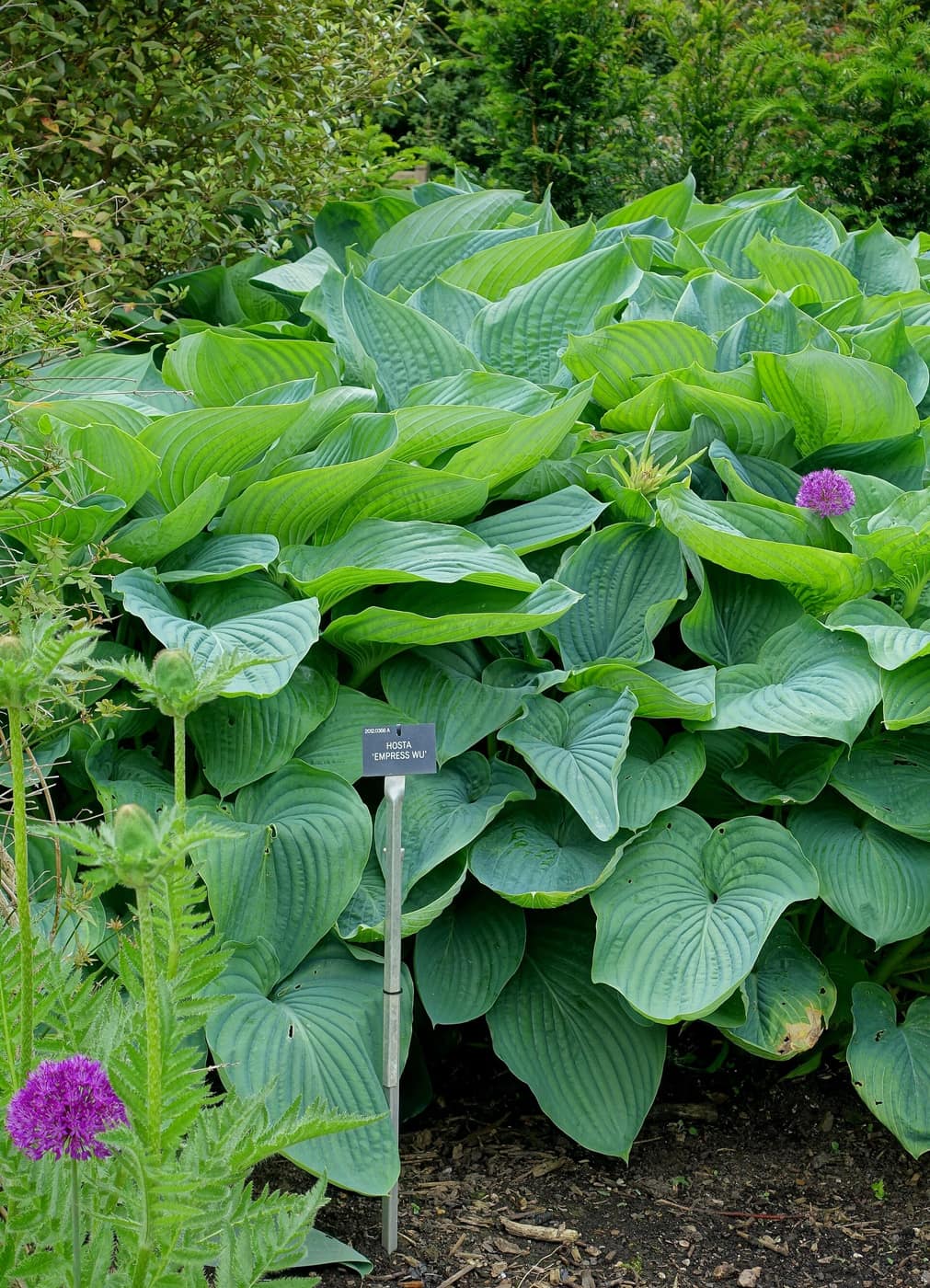 'Empress Wu' 'Empress Wu' | Giant, dark green, deeply veined | Very large | — | No source rates it apart from other hostas |
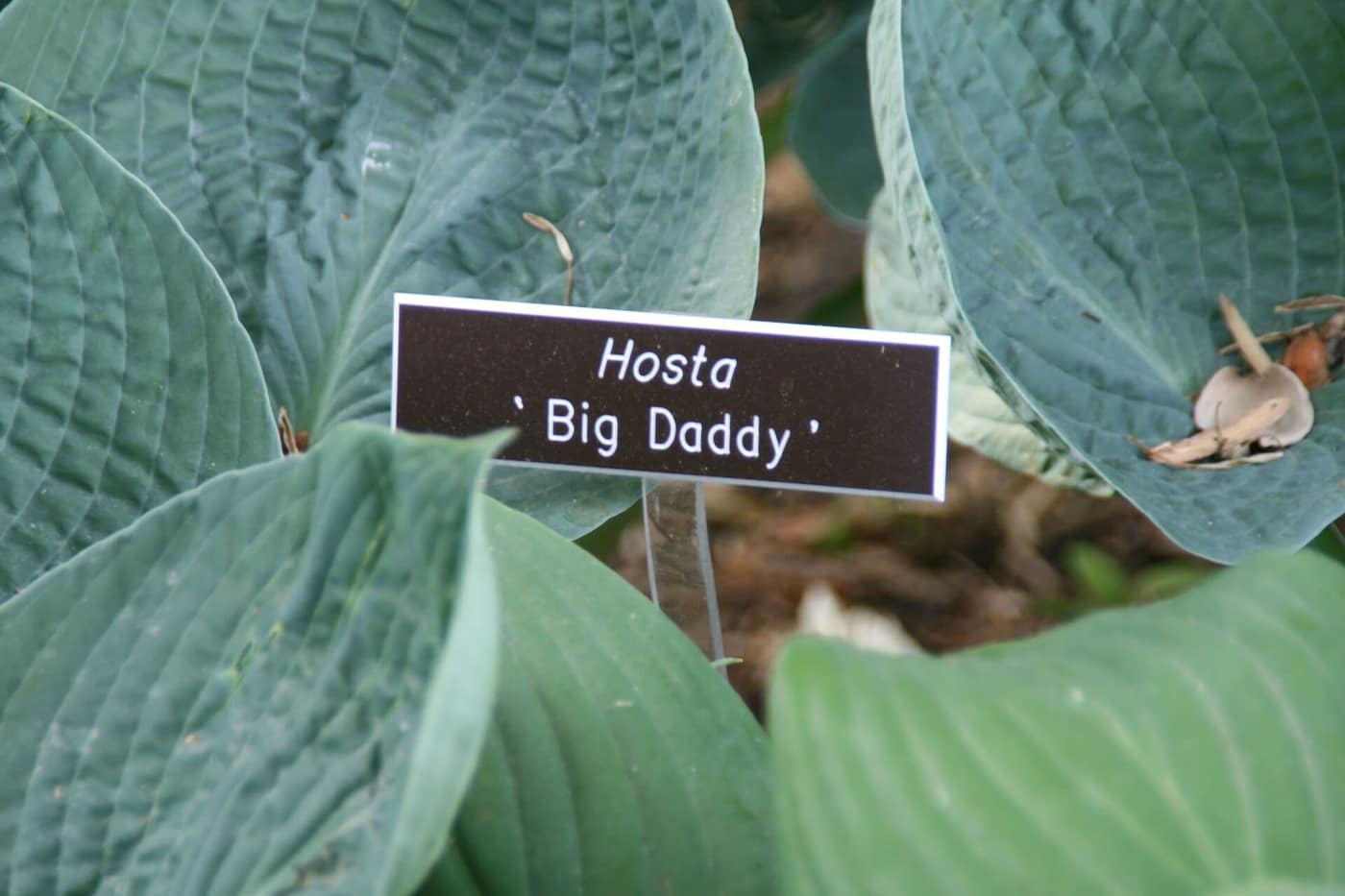 'Big Daddy' 'Big Daddy' | Large, blue, cupped and puckered | Slug-resistant list | — | No source rates it apart from other hostas |
 'June' 'June' | Medium, gold centre, blue-green margin | Slug-resistant list | — | No source rates it apart from other hostas |
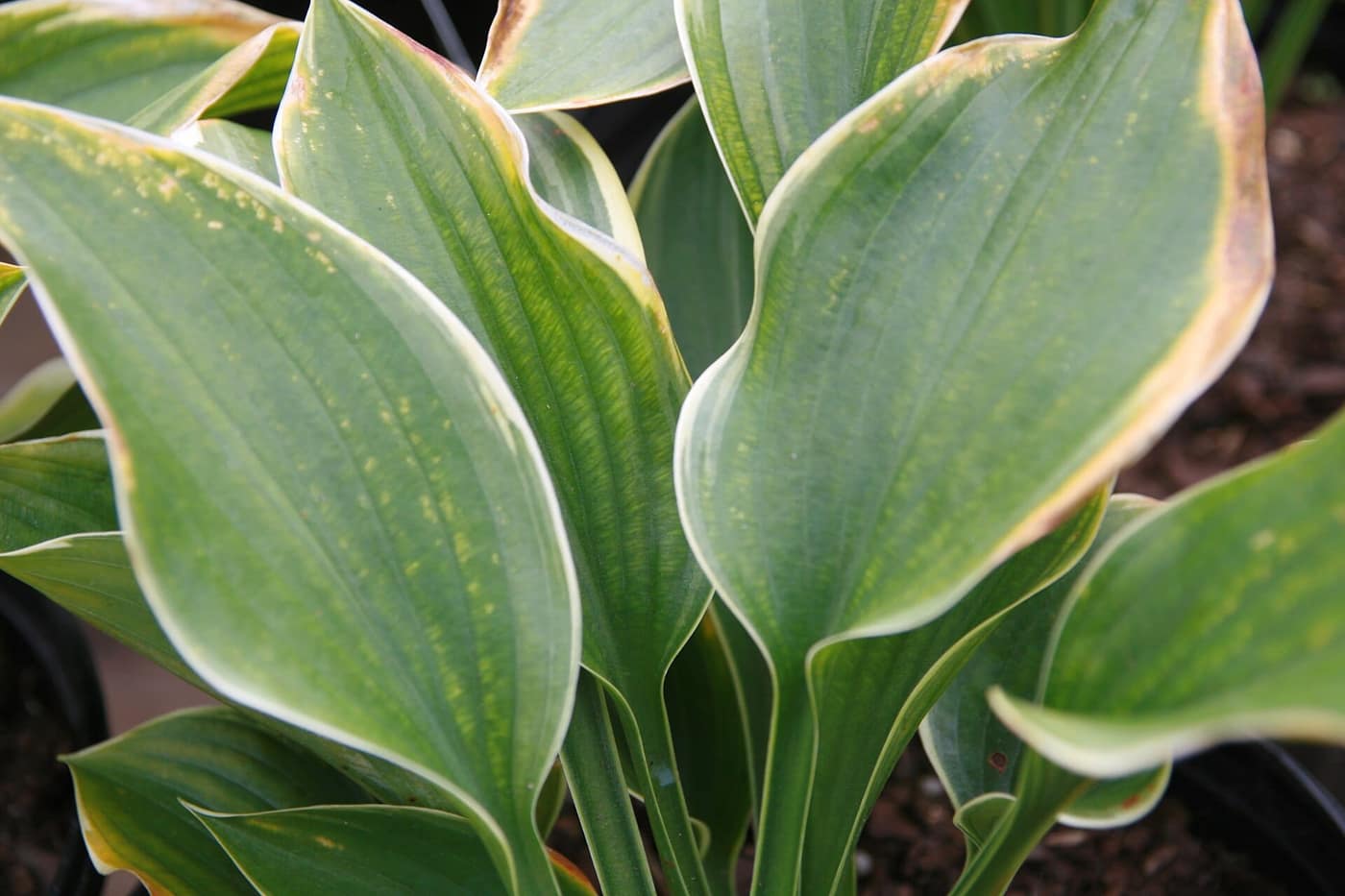 'Sagae' 'Sagae' | Large, upright, blue-green with a cream margin | Not on those lists | — | No source rates it apart from other hostas |
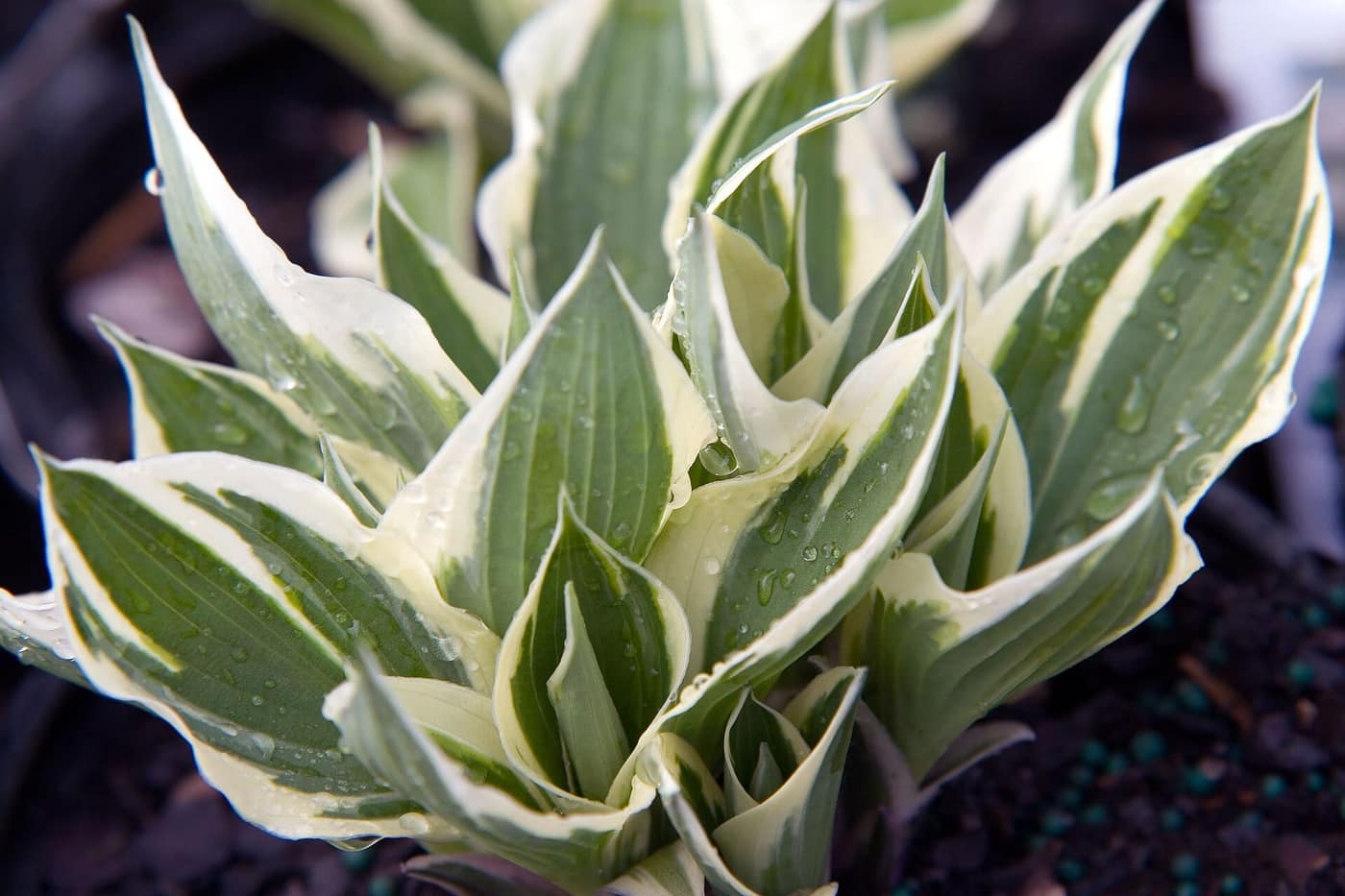 'Patriot' 'Patriot' | Medium, green with a wide white margin | Not on those lists | — | No source rates it apart from other hostas |
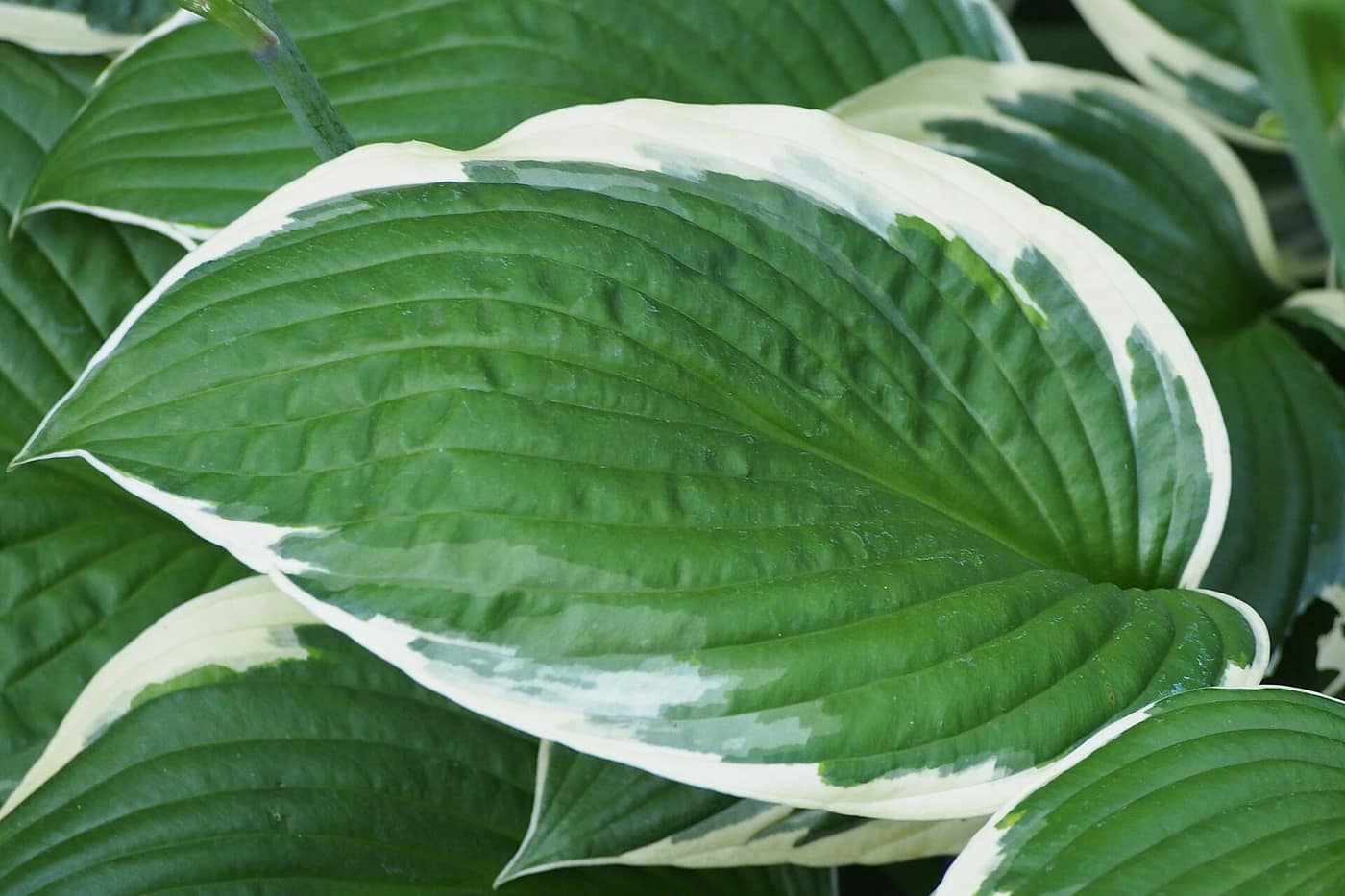 'Francee' 'Francee' | Medium, green with a narrow white edge | Not on those lists | — | No source rates it apart from other hostas |
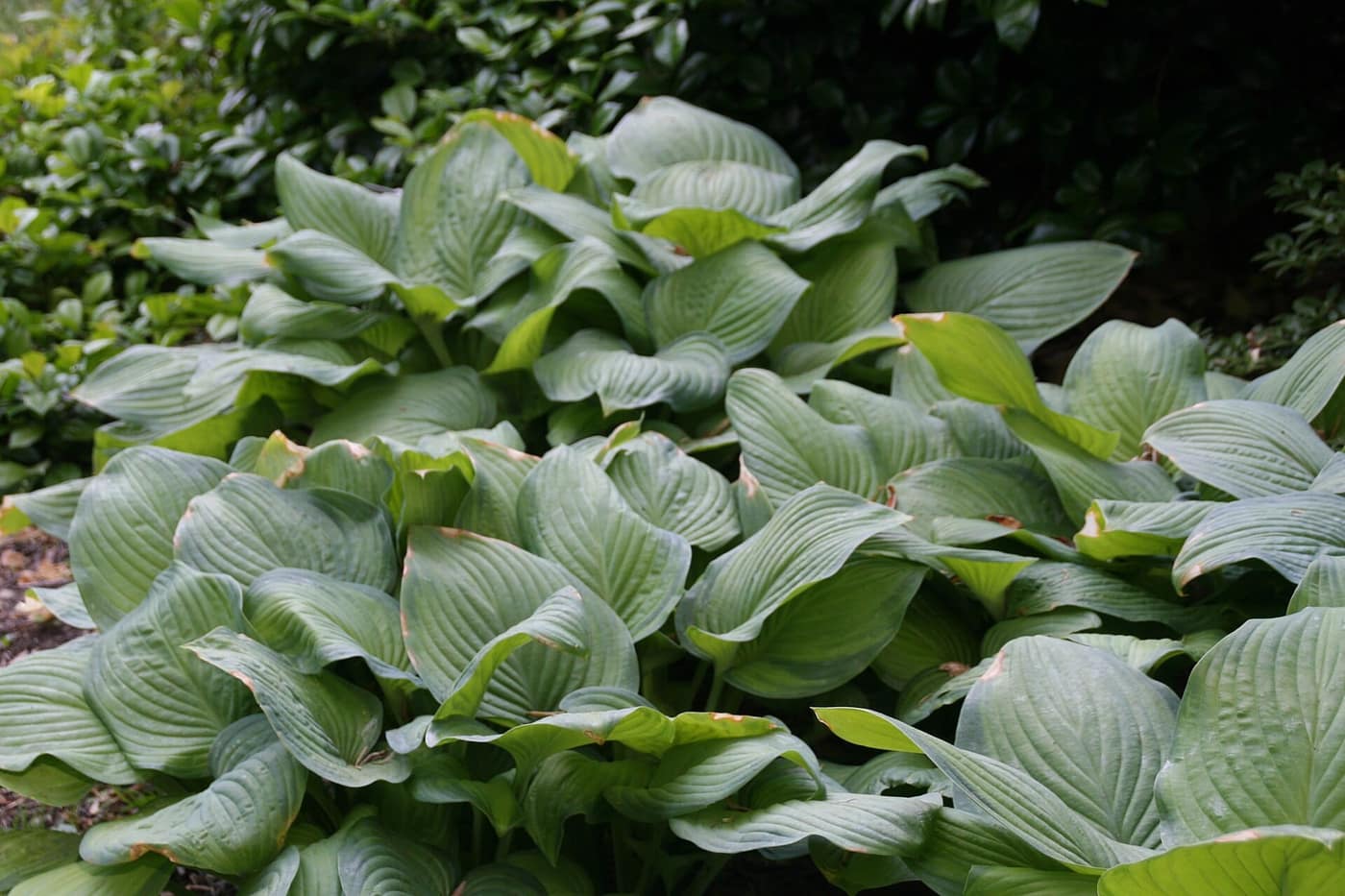 'Guacamole' 'Guacamole' | Large, chartreuse centre, green margin, glossy | Slug-susceptible listFragrant flowers | — | Fragrant: the group hostalists reports as most vulnerable |
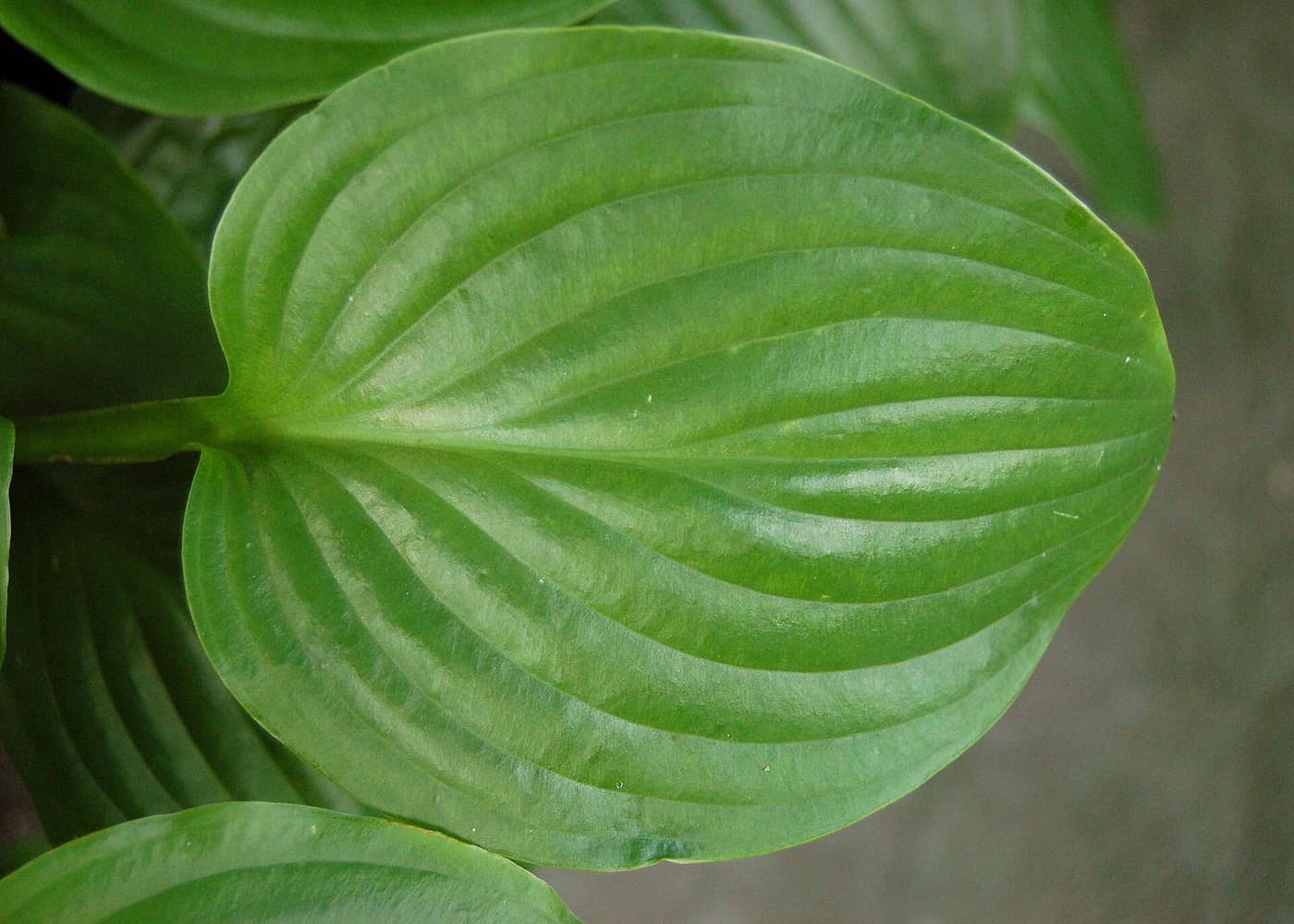 'Royal Standard' 'Royal Standard' | Large, plain glossy green | Slug-susceptible listFragrant flowers | — | Green and fragrant, both of hostalists' most-vulnerable traits |
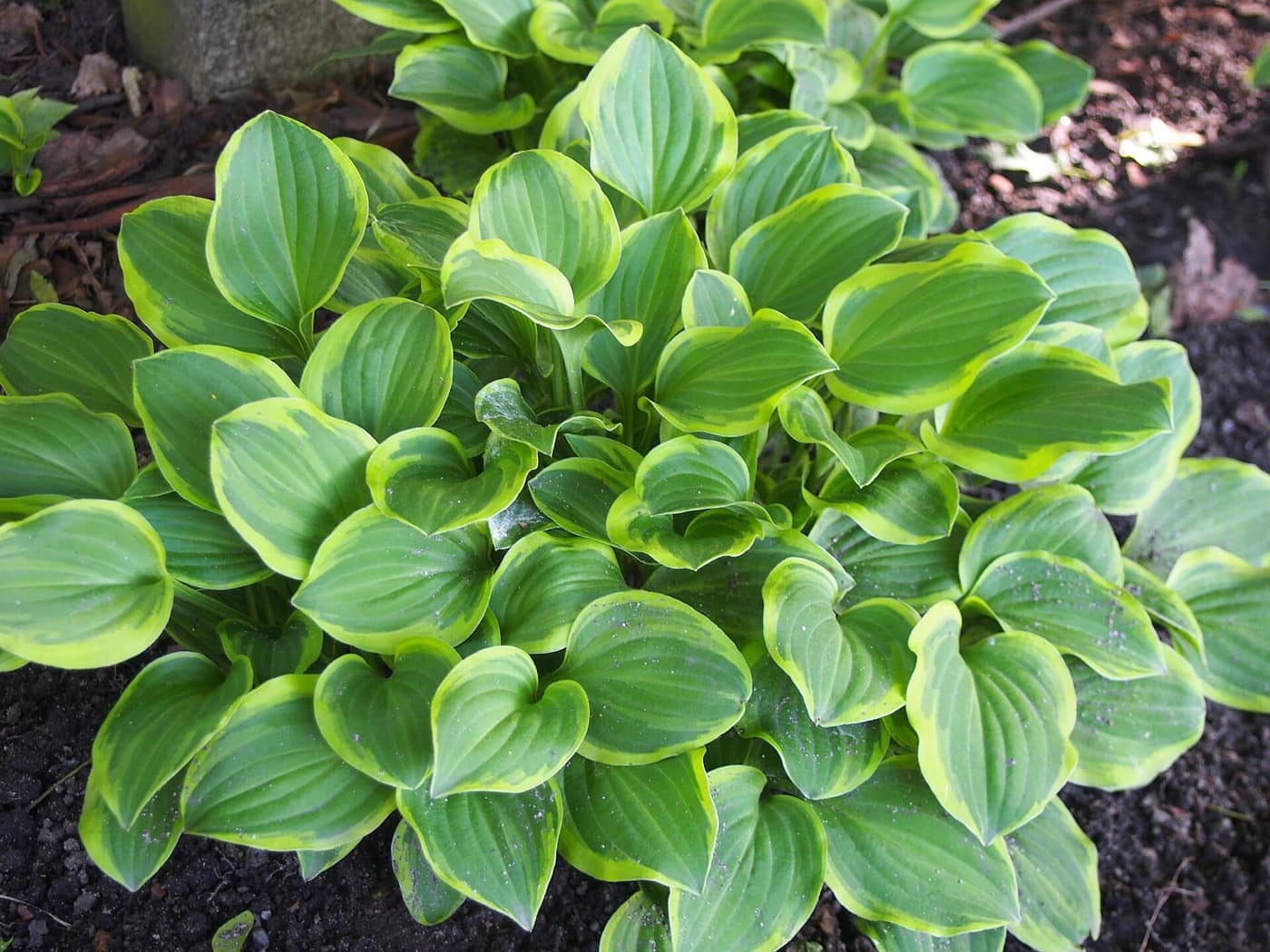 'Golden Tiara' 'Golden Tiara' | Small, green with a gold edge | Slug-susceptible list | — | No source rates it apart from other hostas |
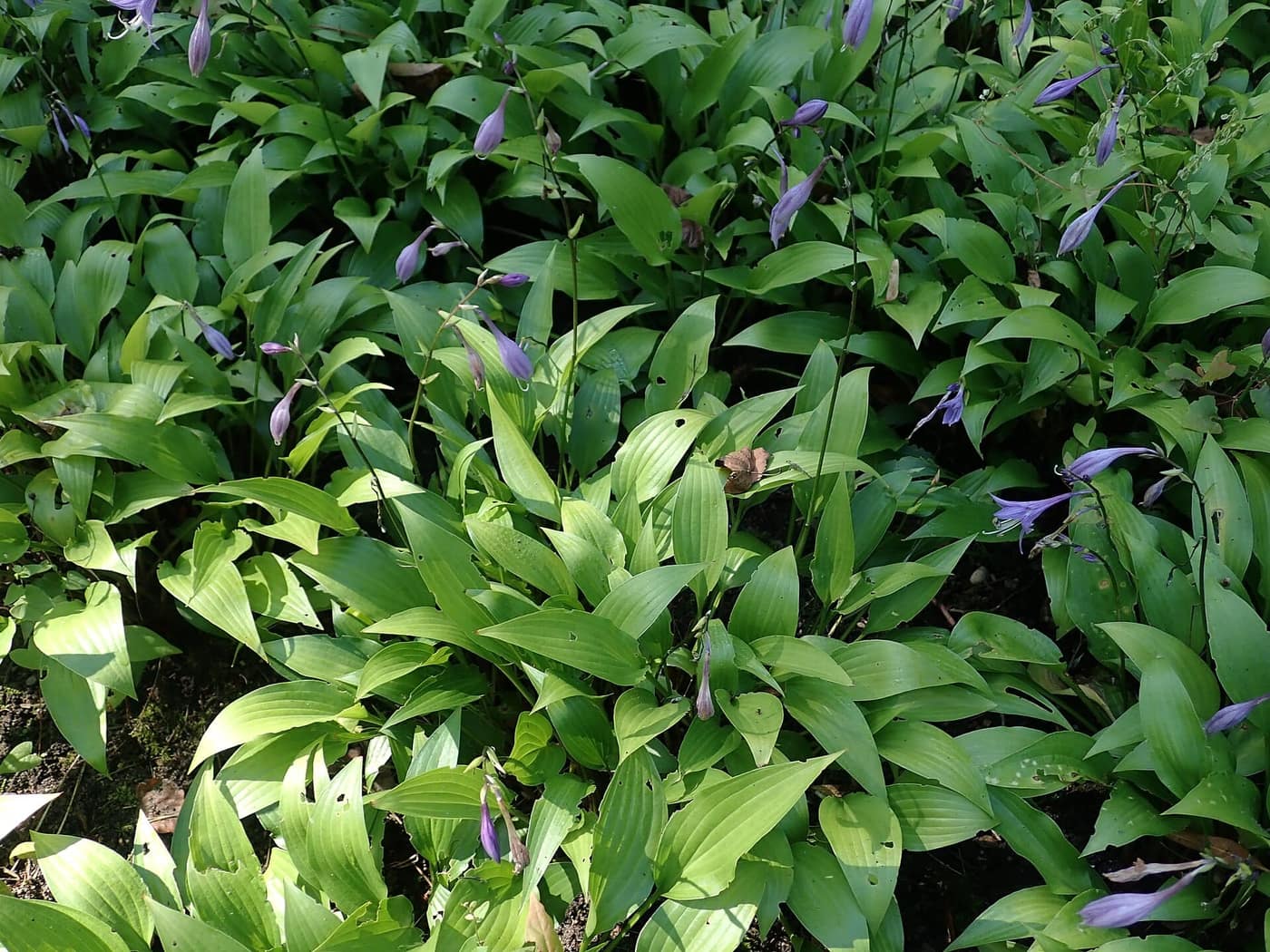 'Lancifolia' 'Lancifolia' | Medium, narrow, glossy green; the old roadside hosta | Slug-susceptible list | — | Plain green: hostalists' most-vulnerable group |
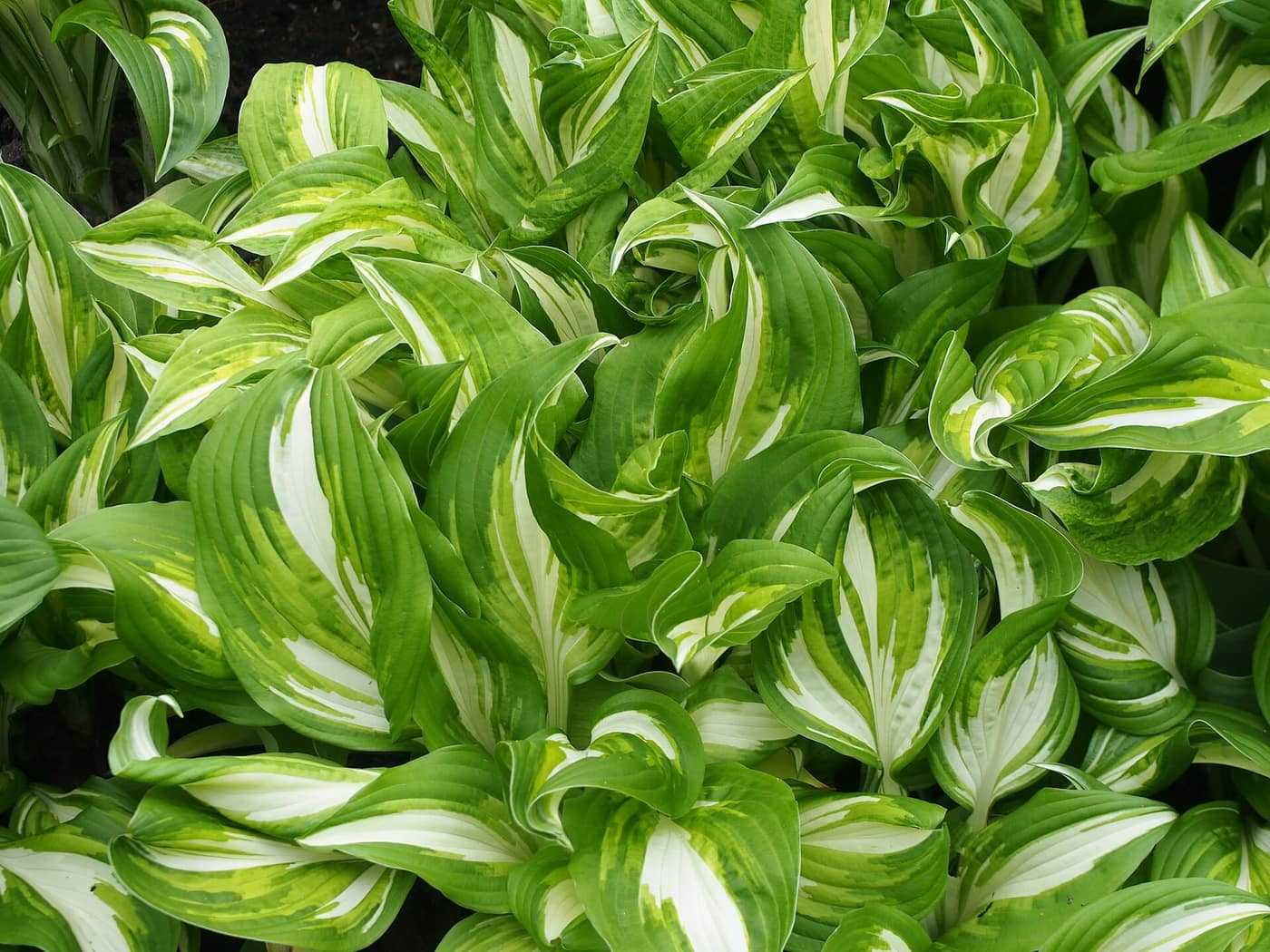 'Undulata' 'Undulata' | Medium, wavy, white centre with a green margin | Slug-susceptible list | — | No source rates it apart from other hostas |
How to keep deer from eating hostas
A fence or a cage works. A spray program works some of the time. The rest of the forum list works for a few weeks at best.
A fence, or a cage around the bed. VerCauteren and colleagues ran white-tailed deer at fences of increasing height: 1.5 meters stopped none of them, 2.1 meters stopped 85 percent, and 2.4 meters, about eight feet, stopped every one.11 That is the number for fencing a property. A single bed can get away with less, because a deer will not jump into a space where it cannot see a landing. Minnesota Extension reports micro-exclosures "8 by 16 feet and only 50 inches high" holding in landscapes,5 and Iowa State lists "individual plant protection with domes or cylinders" for hostas specifically.3 A cylinder of welded wire around each clump, pinned to the ground, is the cheapest thing here that works every time. It is also ugly from May to September, which is why most people try the spray first.
A repellent, on a schedule. Colorado State rates the sprays, and a 20 percent whole-egg mix gets its top rating, reapplied at about thirty days.10 Purdue's Brian MacGowan gives the interval as "every three to four weeks" and says to start early. His example is tulips, and a hosta follows the same calendar: "applying repellents early during sprouting, later during sprouting and during flower bud development will prevent damage during most years."9 In practice that means the first coat goes on the pips in April, before anything has been eaten. Iowa State adds the part the label leaves out: sprays "will need to be reapplied often to maintain effectiveness including after heavy rains, irrigation, heavy dew, or to new growth as the plant grows,"4 and a hosta in May is almost all new growth.
How much a spray program buys has been measured. Minnesota Extension's benchmark is that a 50 percent reduction in deer browse counts as very successful, and 30 percent is the likelier result.5 On a plant grown for its leaves, losing half of them may or may not be acceptable, and that is the question to settle before buying the bottle. The egg recipe is on its own page, and the ranked repellents page covers the commercial products.
Where the hostas go. Iowa State: "Deer are highly habitual. Identify areas they frequent and avoid planting their favorites or highly valued plants in these areas. Alternatively, plant deer favorites, like hosta or daylily, in areas that are easy to protect or less likely to be visited, such as near the home or in a place with a lot of activity."4 Minnesota adds a rule that gets broken a lot: "Don't mix plants deer prefer among those they dislike. They'll trample the plants they dislike to get to those they prefer."6 A hosta tucked into a bed of catmint ends up with a trampled path leading to it.
Soap, hair, dryer sheets and the rest. The Irish Spring page covers what the trials found for soap. In June 2024 Steve Miles, a Hennepin County Master Gardener, suggested a wind chime to a Minnesota gardener because "the movement and sound may decrease the feeding."16 "May" is about the strength of the evidence for all of these.
Do deer eat hosta flowers?
The scapes come up in July and August and stand above the leaves. The extension pages do not treat flowers separately from leaves. What they document is that deer and rabbits both take buds and leaves, and that the stub tells them apart: a scape torn off high up is a deer, and a scape cut clean and low is a rabbit, which is how the Baltimore County case above was settled.18 A cage that only reaches the top of the leaves leaves the flowers exposed in July, so size the wire to the flowers.
Will hostas grow back after deer eat them?
Yes, usually the same year. Two extension services in two states gave the same answer to the same question. Steve Miles, to a Hennepin County gardener whose mature hostas had been stripped, June 20, 2024: "Leave them be. The bits of green leaf that are left are still feeding the roots from which the plant will regrow. In fact, it is not too late to see new leaves this year."16 Maryland's Home and Garden Information Center, to a Montgomery County gardener in July 2022: "You can leave the hosta as they are and they should regrow - by leaving them it will allow more foliage for photosynthesis needed for regeneration."17 So leave the stalks alone. They are the leaf area the plant has left.
The crown is what carries the plant through, and deer cannot reach it. Voles can, which is why a vole is the one animal on this page a hosta does not come back from.2
What a hosta looks like after being eaten to stubs every June for five years is not something any of these sources answers, and this site has not found a trial that does.
What to plant instead of hostas
For a hosta's mass in shade with a top-tier rating: hellebore, heartleaf bergenia, Siberian bugloss for the big heart-shaped leaf, lungwort, European ginger, the ferns, and, where the ground stays wet, rocket ligularia and bigleaf goldenray. None of them looks quite like a hosta, and all of them are still standing in August. The shade page goes through what the tiers say about a whole shade bed, and the alternatives block lower on this page is built from the same data.
Growing hostas where deer live
NC State gives the genus zones 3a to 9b, 4 inches to 2 feet 6 inches tall, and anything from dappled to deep shade, with direct sun "only part of the day, 2-6 hours."2 Minnesota puts the size range at "six inches high and a foot or less across to 3 to 4 feet high and 5 to 6 feet across," and notes that blue hostas "have a waxy coating on their leaves, much like the needles on blue spruce, and require a shadier site to avoid leaf burn and bleaching."6
Slugs are the other pest, and a fence does nothing about them. Chicago Botanic Garden's trap is a shallow container of beer, "3 to 4 inches deep or most of the slugs will crawl out," with "¼ cup of flour mixed in with the can of beer."15
The ASPCA lists hosta as toxic to dogs, cats and horses. The toxic principle is saponins, and the signs are vomiting, diarrhea and depression.12 None of that puts deer off, which is as clear a case as this site has that toxicity does not predict browsing.
In the garden
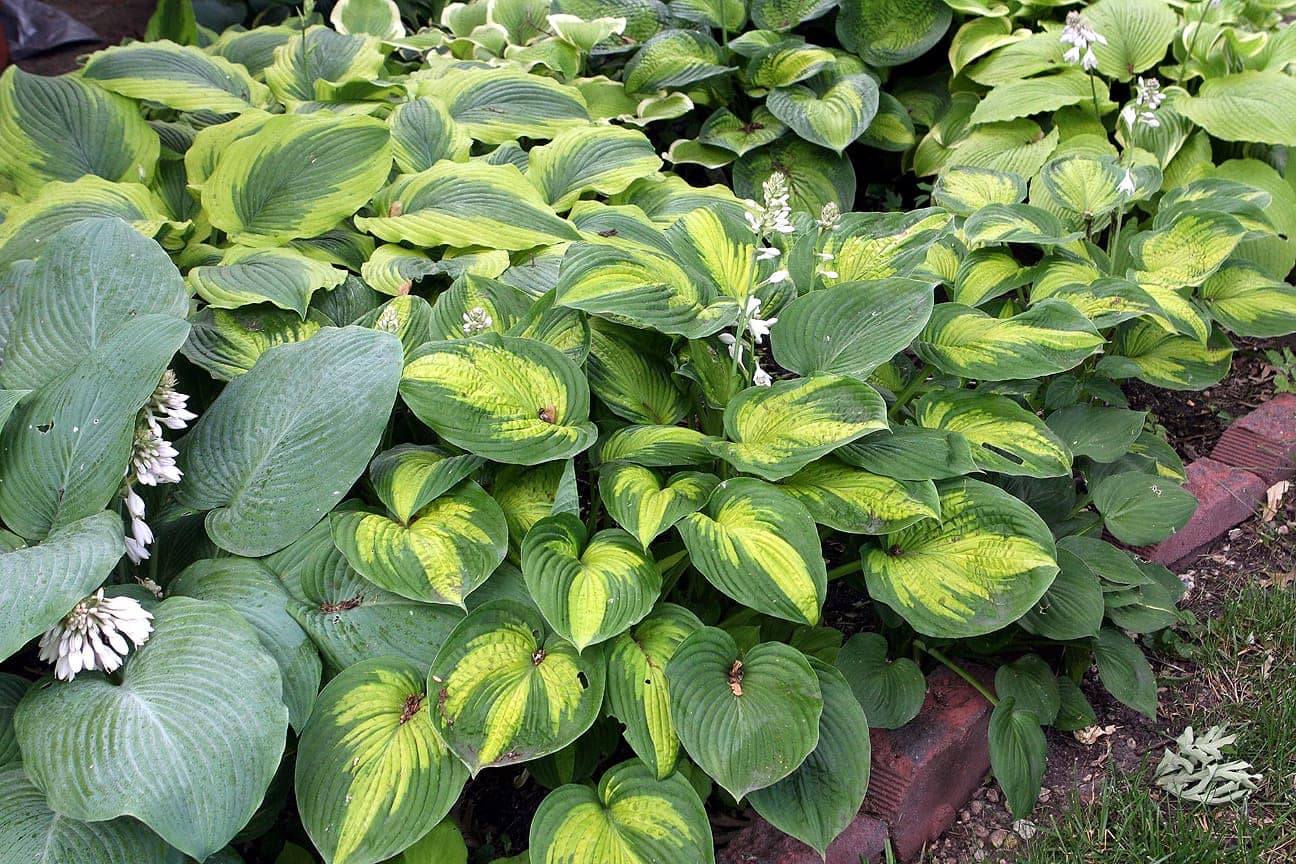
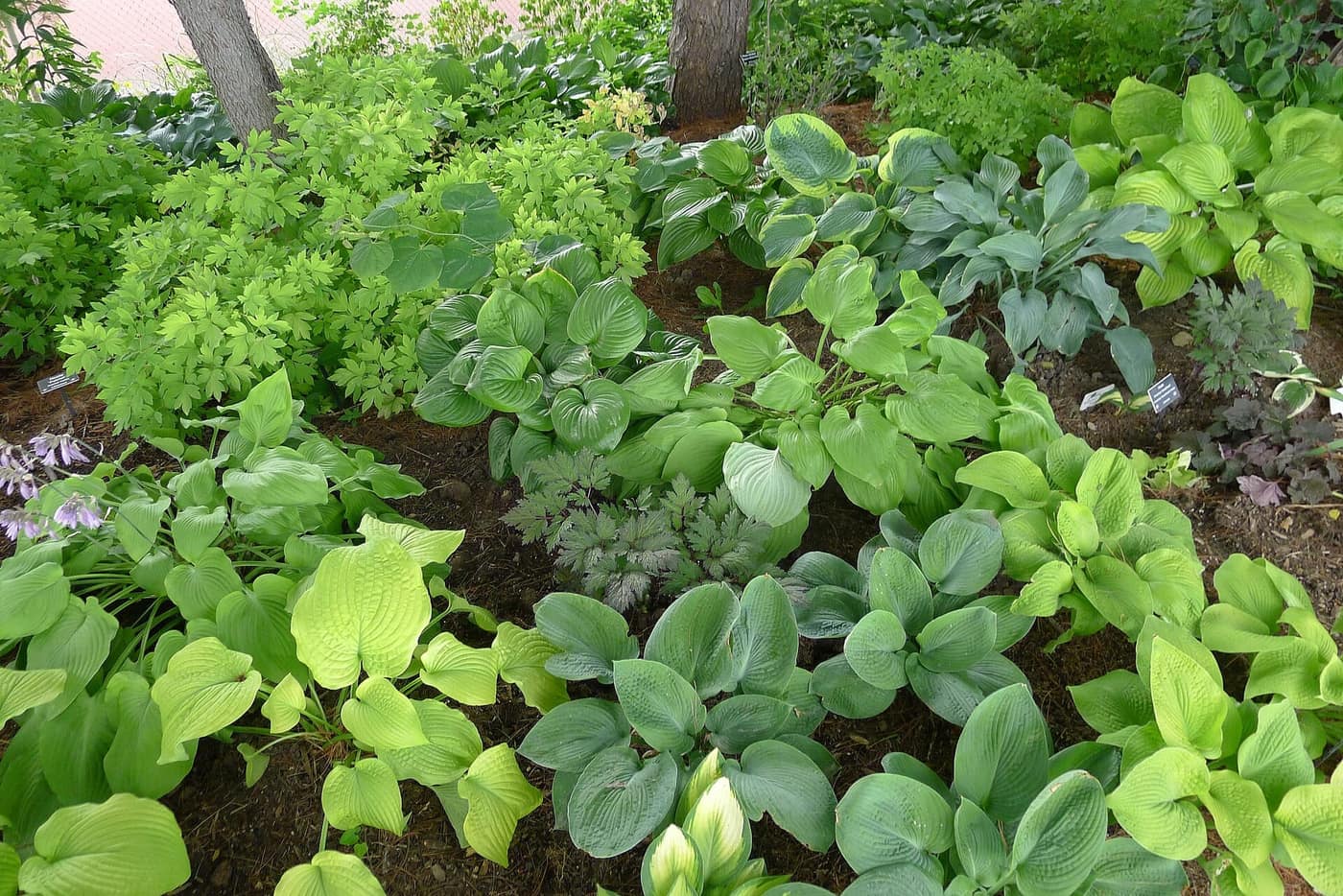
A private hosta collection photographed in summer 2009. This is the kind of bed people build a cage for.Photo by Hardyplants, Public domain, via Wikimedia Commons. 'Empress Wu' at the Sir Harold Hillier Gardens, Hampshire. One of the giants, named by NC State among the popular cultivars. No source rates it any differently from the rest for deer.Photo by Daderot, CC0, via Wikimedia Commons. 'Krossa Regal' at the Royal Botanical Gardens, Ontario. It is sold as deer resistant on the page Google ranks first for the phrase, and a reader of that page reports deer ate theirs after years in the ground.Photo by Leonora (Ellie) Enking, CC BY-SA 2.0, via Wikimedia Commons. 'June', a sport of 'Halcyon' with the same leaf and a gold centre. Photographed in the Netherlands in August 2020.Photo by Dominicus Johannes Bergsma, CC BY-SA 4.0, via Wikimedia Commons. 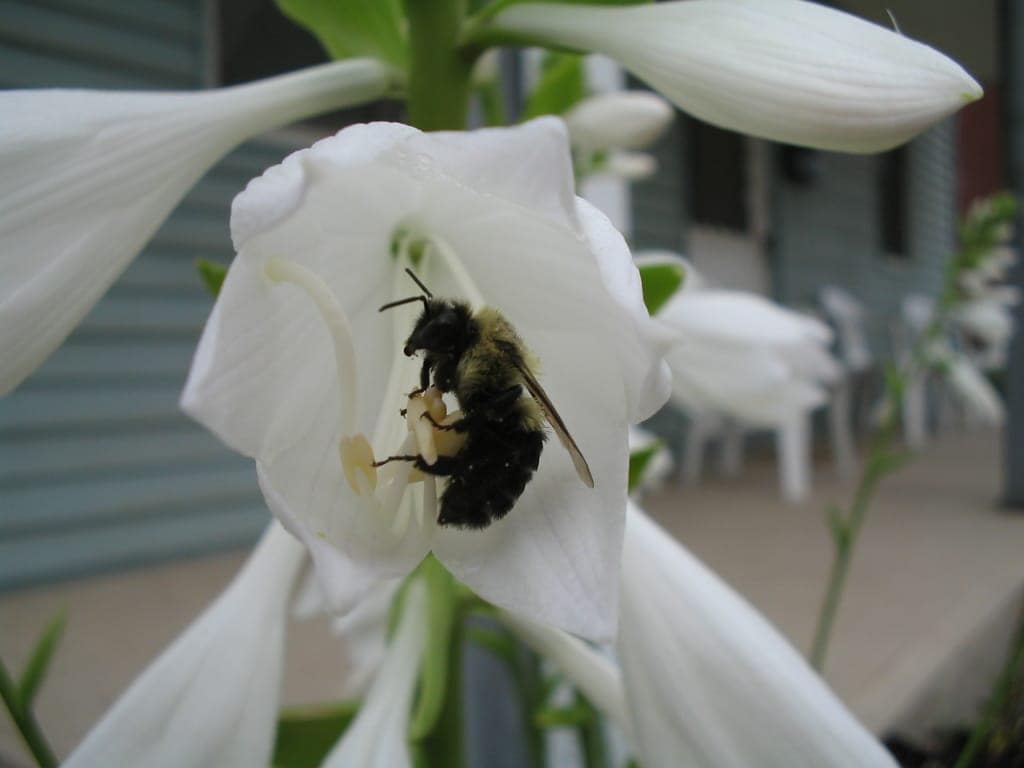
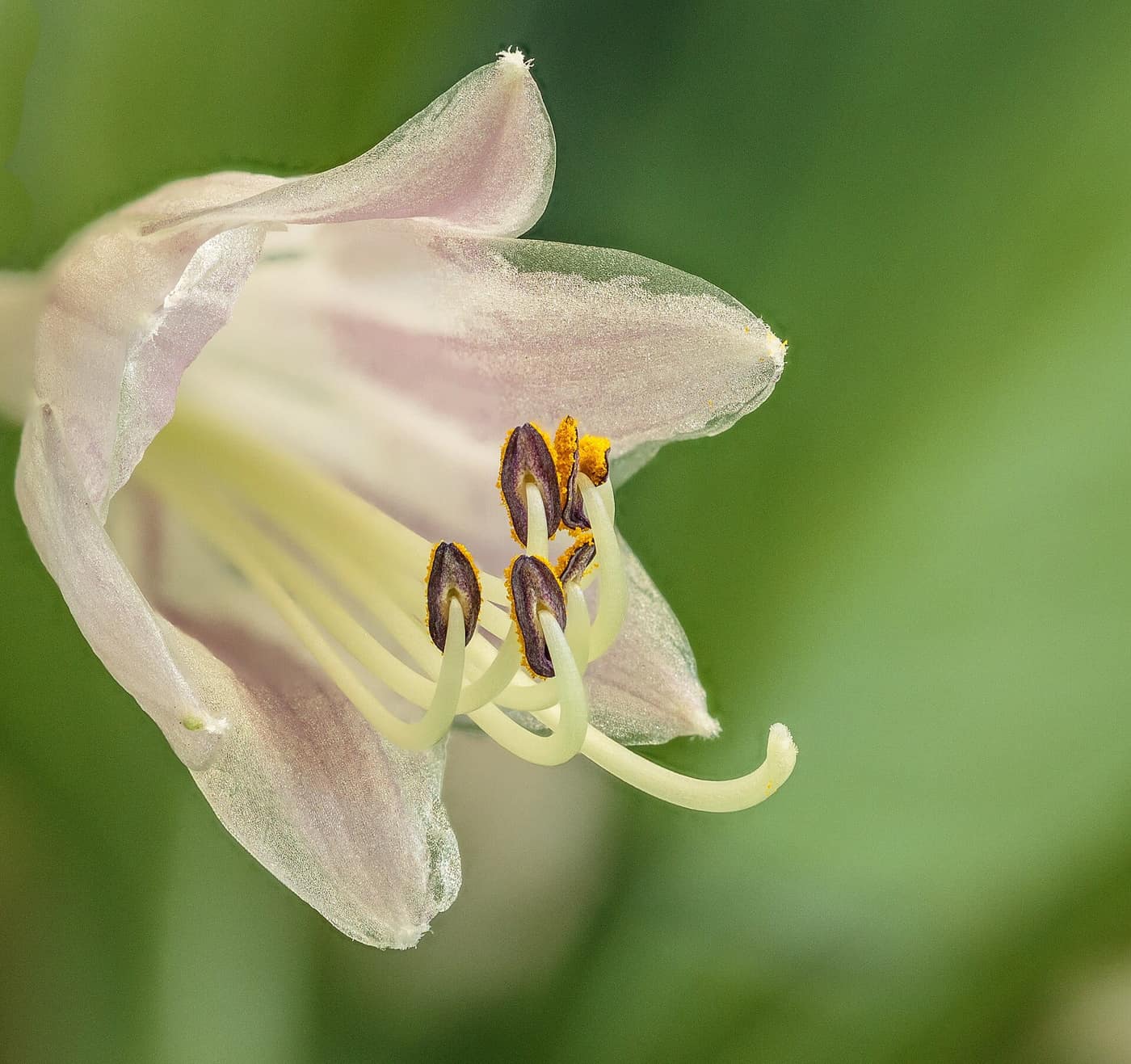
A bumble bee in a hosta flower, central Pennsylvania. The scapes stand above the leaves in July and August, and a cage sized to the foliage leaves them exposed.Photo by Audrey, CC BY 2.0, via Wikimedia Commons. 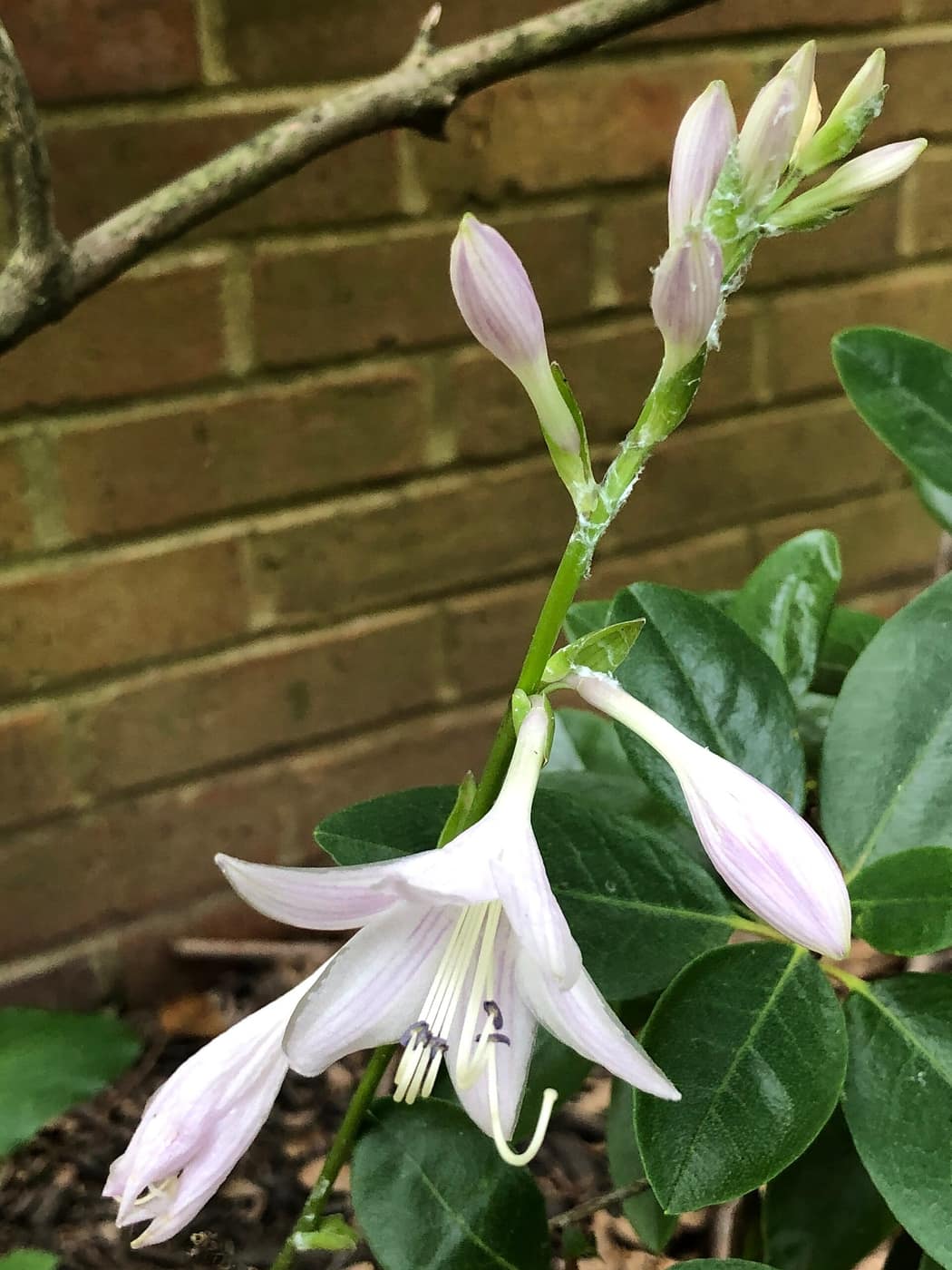
Hosta scapes on a street planting in Ewing Township, New Jersey, July 2023. A busy roadside is one of the placements Iowa State suggests for plants deer favor.Photo by Famartin, CC BY-SA 4.0, via Wikimedia Commons.
Sources
Numbered as cited in the text. The nursery blog and the magazine article are listed because the essay quotes them.
- 1Rutgers NJAES, Landscape Plants Rated by Deer Resistance (E271).
- 2NC State Extension Gardener Plant Toolbox, Hosta.
- 3Aaron Steil, Iowa State University Extension, Pests and Diseases of Hosta, reviewed June 2025.
- 4Aaron Steil, Iowa State University Extension, How to Protect Gardens from Deer, reviewed January 2025.
- 5University of Minnesota Extension, How to manage deer damage on trees and other plants.
- 6Rhonda Fleming Hayes, David C. Zlesak and Kristine Moncada, University of Minnesota Extension, Hostas, reviewed 2024.
- 7University of Maryland Extension, Deer Damage.
- 8University of Missouri Extension, Preventing and Controlling Damage Caused by Cottontail Rabbits (G9441).
- 9Brian MacGowan, Purdue Extension, Protecting Spring Plants From Wildlife Damage Using Repellents, April 14, 2025.
- 10Colorado State University Extension, Preventing Deer Damage (6.520).
- 11VerCauteren, Van Deelen, Lavelle and Hall, Assessment of Abilities of White-Tailed Deer to Jump Fences, 2010.
- 12ASPCA Animal Poison Control, Hosta.
- 13Hostalists.org, Deer-Resistant Hostas, lists updated November 2, 2023.
- 14Hostalists.org, Slug-Resistant, Slug-Susceptible, Fragrant-Flowered and Very Large Hostas lists, updated November 2, 2023.
- 15Chicago Botanic Garden, Hosta plant profile.
- 16Ask Extension, Steve Miles, Master Gardener, Hennepin County, University of Minnesota Extension, Hostas eaten by deer, June 20, 2024.
- 17Ask Extension, Home and Garden Information Center, University of Maryland Extension, Eaten Hosta leaves, Montgomery County, July 26, 2022.
- 18Ask Extension, Home and Garden Information Center, University of Maryland Extension, Hosta buds eaten through mesh fence, Baltimore County, August 18–19, 2022.
- 19Sienna Hosta (nursery blog, UK), Deer-Resistant Hostas: How to Keep Wildlife Away.
- 20The Spruce, Do Deer Eat Hostas? 5 Ways to Keep Them From Destroying Your Plants, May 20, 2026.
What to plant instead of Hosta
Same plant type, hardy in the same zones, and rated better for deer. If Hosta keeps getting eaten, these go in the same spot.
- Bleeding HeartLamprocapnos spectabilisZones 3–9Rarely damaged
- Cardinal FlowerLobelia cardinalisZones 3–9Seldom damaged
- Fringed Bleeding HeartDicentra eximiaZones 3–9Rarely damaged
- MintMentha sp.Zones 3–9, genus rangeRarely damaged
- Obedient PlantPhysostegia sp.Zones 3–9, genus rangeSeldom damaged
- VioletsViola sp.Zones 3–9, genus rangeSeldom damaged
Soil and care
- Soil pH
- 6 to 7.5
- Drainage
- Consistently moist
- Water
- Moderate
- Fertility
- Moderate
- Spacing
- 18 to 35 in apart
- Growth rate
- Moderate
- Maintenance
- Low
Tolerances and uses
- Drought
- Low
- Salt
- Low
- Pollinators
- Low
Containers
What to plant it with
- Daffodil
Daffodils flower and die back just as hosta foliage unfurls to cover the fading leaves. Same hole, two seasons.
Keep apart from
- Rosemary
Same conflict. Rosemary needs sharp drainage and full sun, hosta needs moist shade.
Growing them anyway
Hostas are rated Frequently Severely Damaged, the worst tier on the scale, and nothing here changes that. They are also the best foliage plant for deep shade there is, which is why people keep buying them after losing a bed of them. If you are going to, plan the protection before the first spring rather than after it.
The cheapest protection that works
A bed of 8 by 16 feet has been excluded successfully by a fence only 50 inches high, where protecting a whole property needs eight feet. A deer will not jump into a space it cannot see a landing in, and a small enclosure does not offer one. Waist height, four posts, one weekend.
Keep the mesh tight to the ground. Deer go under far more often than over, and six inches is enough of a gap.
The links below are affiliate links. If you buy through one, this site earns a small commission at no extra cost to you. Nothing is recommended because it pays better, and this page still rates hostas in the worst tier on the scale. Full terms at /legal.
- Hosta plants
Shade tolerance is the reason to want them. Deer resistance is not on the list.
- More hosta varieties
Bigger, bluer and more corrugated leaves are reported to be browsed slightly less. Reported, not measured.
Nothing here has been tested by this site, so there are no ratings or review markup on it, and prices are not shown because they change faster than a page can. If you would rather not fight for them, ferns do the same job in the same shade and sit in the top tier.
Where Hosta is used
8 guides on this site plant it, and say where and what beside it.
- Best Deer Repellent: What the Trials Rank FirstA 20 percent egg spray ties the best commercial product on the Colorado State table and costs about two dollars a batch. What scored, what failed, and what nobody has tested.5 min
- Deer Fencing for Raised BedsRaised beds are the easiest thing in the garden to protect properly, and the most commonly protected badly.5 min
- Does Irish Spring Soap Repel Deer?It is the most repeated deer remedy on the internet. The one trial that scored it rated it low to medium, and some deer ate the soap.4 min
- Homemade Deer Repellent That Actually WorksOne homemade recipe rates as well as the best commercial products. It is eggs and water, and the details that make it work are small and specific.6 min
- How Tall Does a Deer Fence Need to Be?Eight feet is the answer. Here is why, and the two situations where you can get away with less.6 min
- How to Keep Deer Out of Your GardenWhat actually works, in the order worth trying it. Most gardens are lost at the ground line and the gate rather than to the jump everyone plans against.8 min
- How to Tell If Deer Are Eating Your PlantsDeer have no upper incisors, so they tear rather than cut. That one fact separates them from every other animal in the garden.5 min
- Rabbits, Groundhogs and VolesIf the damage is below knee height it is probably not deer. Four other animals account for most of what gets blamed on them.5 min
Where Hosta grows
Hardy across every state on zone range alone. Mountain and coastal areas sit outside the ranges used here, so check your own zone before ordering. Select any state, including one it will not grow in, for what is resistant there.
Choose a state from the listeasier on a phone
- Pennsylvania
- New Jersey
- New York
- Connecticut
- Massachusetts
- Virginia
- Maryland
- Michigan
- Wisconsin
- Ohio
- Indiana
- Illinois
- Minnesota
- Missouri
- North Carolina
- Tennessee
- Georgia
- Texas
- Colorado
- California
- Oregon
- Washington
- New Hampshire
- Vermont
- Maine
- Rhode Island
- Delaware
- West Virginia
- Kentucky
- South Carolina
- Florida
- Alabama
- Mississippi
- Louisiana
- Arkansas
- Oklahoma
- Kansas
- Nebraska
- Iowa
- North Dakota
- South Dakota
- Montana
- Wyoming
- Idaho
- Utah
- Nevada
- Arizona
- New Mexico
- Alaska
- District of Columbia
- Hawaii
Common questions about Hosta
- Will hostas grow back after deer eat them?
- Yes, that season. Extension answers from Minnesota in June 2024 and Maryland in July 2022 both say to leave the stalks standing, because the green that is left feeds the crown that regrows. A vole in the roots is the one thing a hosta does not come back from.
- Do deer eat hosta flowers?
- Buds and scapes get taken the way leaves do. Which animal took them is read the same way: torn stubs at height are deer, clean low cuts are rabbits, which is how a Baltimore County case inside a five-foot mesh fence was settled in 2022. A cage sized to the leaves leaves the scapes exposed in July.
- What eats hostas besides deer?
- Rabbits, which cut the leaf stalk clean "as if it was cut by scissors" in Iowa State's words; slugs, which leave large irregular holes in the blade; and voles, which eat the roots. Each has a different fix, and the damage chart on this page separates them.
- Are blue hostas deer resistant?
- No source consulted for this page rates them apart from any other hosta. The blue is a wax that rain washes off, according to Chicago Botanic Garden. Thick leaves slow down slugs, which rasp at the blade. A deer pulls the whole leaf off at the stalk, so thickness does not come into it.
- Does Irish Spring soap keep deer off hostas?
- The trials give scent products a weak result at best, and Minnesota Extension's benchmark for a whole repellent program is a 50 percent reduction in browse as very successful and 30 percent as the likelier result. The Irish Spring page on this site has what was measured.
- Do deer eat hostas in winter?
- Not in cold zones, because there is nothing above ground. Hostas die back after frost and stay dormant until the pips come up in spring, and that is when the first repellent coat goes on, on Purdue's timing.
Browse from here
Every list Hosta belongs to.
All perennials·Deer favorites·Shade plants