
Plant record · Perennial · Ranunculaceae
Is Hellebore deer resistant?
Helleborus orientalis
Yes. Deer almost always leave this alone.
- Type
- Perennial
- Hardiness
- Zones 4–9
- Height
- 12–18 in
- Bloom
- February–April
- Maintenance
- Low
- Family
- Ranunculaceae
- Toxic to
- cats, dogs, and horses
Damage steps follow a published university field scale. How plants are rated.
About Hellebore
Toxic in every part, leathery in texture, and consequently ignored by deer, rabbits and voles. It also flowers in February, which almost nothing else does.
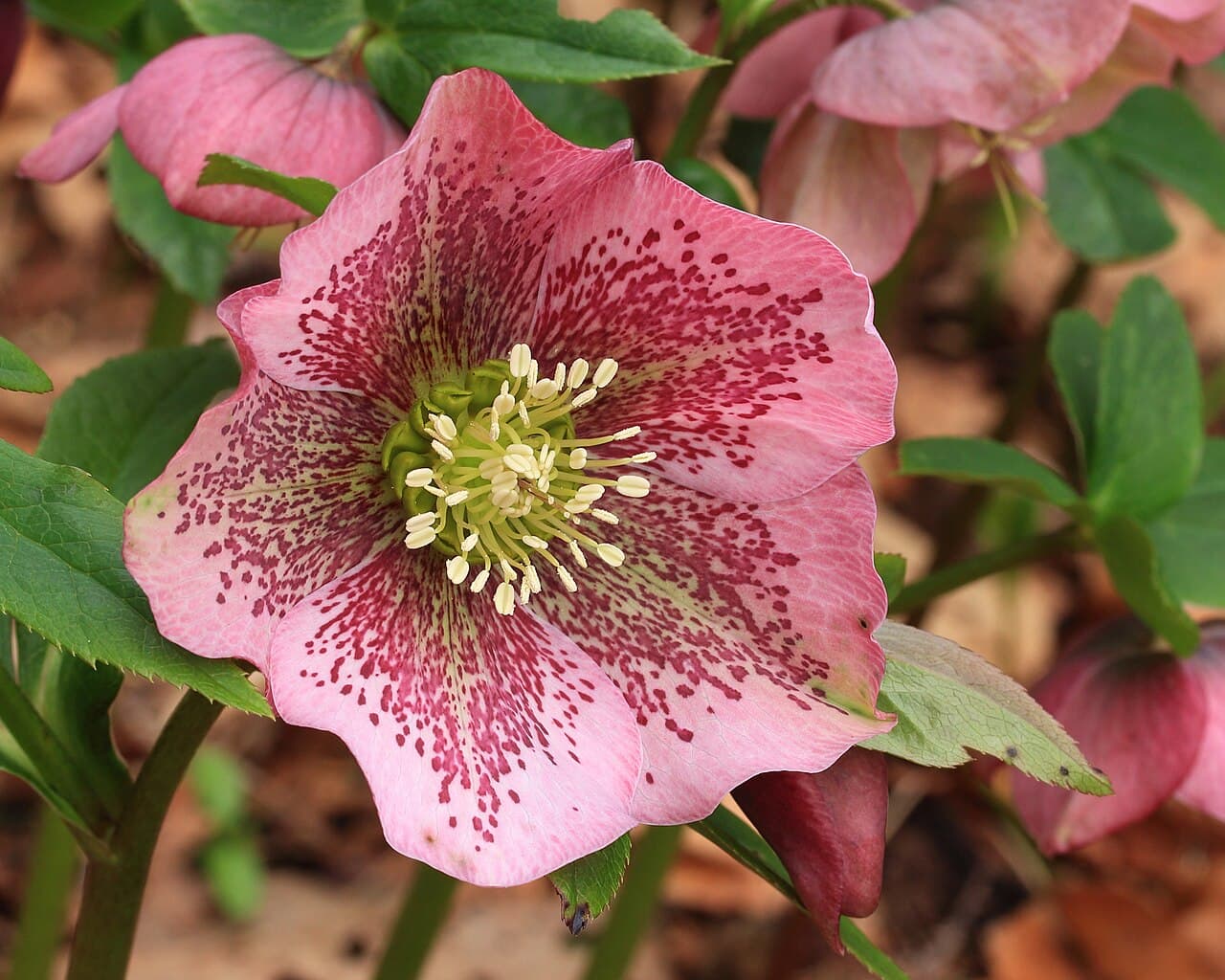
The flowers hang downward and face the ground, so plant it raised if you can, on a bank or beside a path where you look at it from the side rather than from above. Newer strains have been bred to hold the flowers outward.
The one bit of maintenance worth doing is cutting last year's leaves off at the base in late winter, just as the buds push. The old foliage is usually blackened and tatty by then, it hides the flowers, and it carries the leaf spot that would otherwise infect the new growth. Wear gloves, because the sap irritates skin.
Soil and care
- Soil pH
- 6.5 to 7.5
- Drainage
- Well drained
- Water
- Moderate
- Fertility
- Moderate
- Spacing
- 18 to 24 in apart
- Growth rate
- Slow
- Maintenance
- Low
Tolerances and uses
- Drought
- Moderate
- Salt
- Low
- Pollinators
- Moderate
Evergreen·Containers
What to plant it with
- Japanese Forest Grass
Fine texture against leathery. Solves the shade border without a single hosta.
- Boxwood
Evergreen structure with something flowering at its feet in February.
- Christmas Fern
The core of a deer-proof shade planting. Both evergreen, both ignored, both happy in dry shade once established.
Similar to Hellebore
Other perennials with the same deer rating.
- Anise HyssopAgastache sp.Zones 4–9, genus rangeRarely damaged
- Basket of GoldAurinia saxatilisZones 3–7Rarely damaged
- Bearded IrisIris germanicaZones 3–9Rarely damaged
- Bigleaf GoldenrayLigularia dentataZones 4–8Rarely damaged
- Bleeding HeartLamprocapnos spectabilisZones 3–9Rarely damaged
- Butter and EggsLinaria vulgarisZones 3–9Rarely damaged
Where Hellebore is used
3 guides on this site plant it, and say where and what beside it.
- Deer-Resistant Garden Design FAQLayout questions: where the vulnerable plants go, whether to fence the bed or the boundary, and what a browse line is telling you.5 min
- Theme: Let the Style Choose the PlantsSome themes are deer-resistant almost by accident. Choosing one of those is easier than defending a theme that fights you.6 min
- Wall and Foundation Planting PlanThe strip at the base of a wall is the driest ground you own, and a wall stops nothing. Aspect decides the planting; the rain shadow decides whether it lives.6 min
Where Hellebore grows
Hardy across every state on zone range alone. Mountain and coastal areas sit outside the ranges used here, so check your own zone before ordering. Select any state, including one it will not grow in, for what is resistant there.
Choose a state from the listeasier on a phone
- Pennsylvania
- New Jersey
- New York
- Connecticut
- Massachusetts
- Virginia
- Maryland
- Michigan
- Wisconsin
- Ohio
- Indiana
- Illinois
- Minnesota
- Missouri
- North Carolina
- Tennessee
- Georgia
- Texas
- Colorado
- California
- Oregon
- Washington
- New Hampshire
- Vermont
- Maine
- Rhode Island
- Delaware
- West Virginia
- Kentucky
- South Carolina
- Florida
- Alabama
- Mississippi
- Louisiana
- Arkansas
- Oklahoma
- Kansas
- Nebraska
- Iowa
- North Dakota
- South Dakota
- Montana
- Wyoming
- Idaho
- Utah
- Nevada
- Arizona
- New Mexico
- Alaska
- District of Columbia
- Hawaii
Common questions about Hellebore
- Is Hellebore deer resistant?
- Hellebore (Helleborus orientalis) is rated Rarely Damaged, step 1 of 4 on the damage scale this site uses. Deer almost always leave this alone.
- What hardiness zones does Hellebore grow in?
- Hellebore is hardy in USDA zones 4 to 9. Outside that range it will either not survive winter or will struggle with summer heat.
- Does Hellebore grow in shade?
- Yes. Hellebore tolerates full shade to part shade, which makes it one of the options for a shaded bed where deer also browse.
- How big does Hellebore get?
- Mature height is roughly 12–18 in. Growth rate is slow.
- When does Hellebore bloom?
- Hellebore flowers from February–April.
- Is Hellebore toxic to dogs or cats?
- Yes. The ASPCA lists Hellebore as toxic to cats, dogs, and horses. Site it away from where animals graze, or choose something else if you have a dog that chews.
Browse from here
Every list Hellebore belongs to.
All perennials·Rarely damaged·Shade plants·Evergreen shrubs