
Plant record · Fern · Dryopteridaceae
Is Christmas Fern deer resistant?
Polystichum acrostichoides
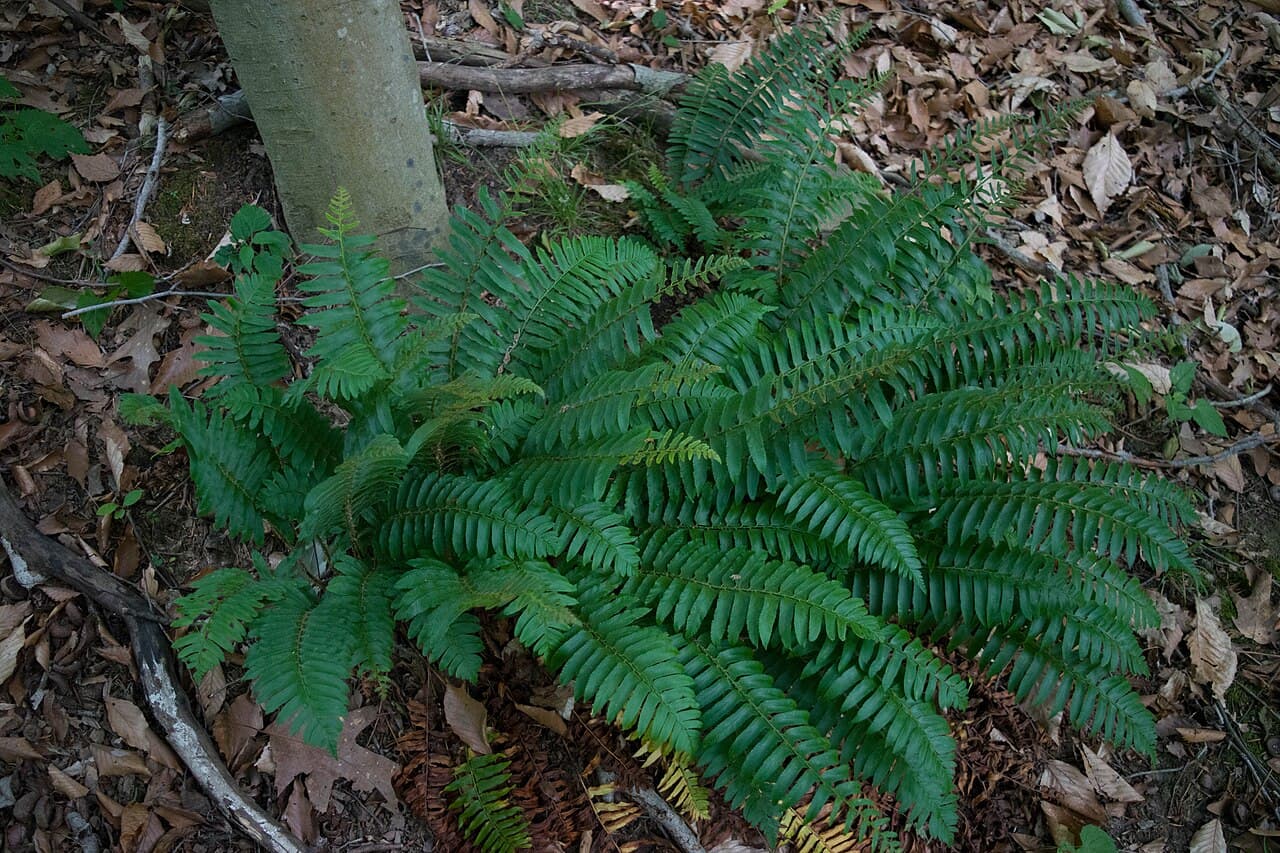
Yes. Deer almost always leave this alone.
Damage steps follow a published university field scale. How plants are rated.
About Christmas Fern
Near-universally deer-proof, like almost all ferns, and evergreen through winter, which is unusual and useful.
The fronds stay green under snow and then flatten themselves to the ground in late winter, which looks like damage but is not. That flattening is thought to mulch the crown and let the new fiddleheads through in spring. Cut the old fronds off in March, before the new ones unfurl, and the plant looks sharp all season.
Native across eastern North America and genuinely tough for a fern: it takes drier shade than most, which makes it one of the few things that works under a mature maple where the roots take all the moisture.
Soil and care
- Soil pH
- 5 to 7
- Drainage
- Consistently moist
- Water
- Moderate
- Fertility
- Low
- Spacing
- 18 to 24 in apart
- Growth rate
- Slow
- Maintenance
- Low
Tolerances and uses
- Drought
- Moderate
- Salt
- Low
- Pollinators
- None
Evergreen·Containers
What to plant it with
- Hellebore
The core of a deer-proof shade planting. Both evergreen, both ignored, both happy in dry shade once established.
Similar to Christmas Fern
Other ferns with the same deer rating.
- Cinnamon FernOsmunda cinnamomeaZones 4–9Rarely damaged
- Hayscented FernDennstaedtia punctilobulaZones 3–8Rarely damaged
- Holly FernCyrtomium falcatumZones 7–10Rarely damaged
- Japanese Painted FernAthyrium niponicumZones 4–9Rarely damaged
- New York FernThelypteris noveboracensisZones 3–8Rarely damaged
- Ostrich FernMatteuccia struthiopterisZones 3–8Rarely damaged
Where Christmas Fern is used
4 guides on this site plant it, and say where and what beside it.
- Contrast: Texture Over Flower ColorThe resistant palette is short of coarse texture, which is the one thing a composition needs to hold together. Here is what fills the gap.5 min
- Deer-Resistant Garden Design FAQLayout questions: where the vulnerable plants go, whether to fence the bed or the boundary, and what a browse line is telling you.5 min
- Theme: Let the Style Choose the PlantsSome themes are deer-resistant almost by accident. Choosing one of those is easier than defending a theme that fights you.6 min
- Wall and Foundation Planting PlanThe strip at the base of a wall is the driest ground you own, and a wall stops nothing. Aspect decides the planting; the rain shadow decides whether it lives.6 min
Where Christmas Fern grows
Hardy across every state on zone range alone, and native to 35 of them. Mountain and coastal areas sit outside the ranges used here, so check your own zone before ordering. Select any state, including one it will not grow in, for what is resistant there.
Choose a state from the listeasier on a phone
- Pennsylvania
- New Jersey
- New York
- Connecticut
- Massachusetts
- Virginia
- Maryland
- Michigan
- Wisconsin
- Ohio
- Indiana
- Illinois
- Minnesota
- Missouri
- North Carolina
- Tennessee
- Georgia
- Texas
- Colorado
- California
- Oregon
- Washington
- New Hampshire
- Vermont
- Maine
- Rhode Island
- Delaware
- West Virginia
- Kentucky
- South Carolina
- Florida
- Alabama
- Mississippi
- Louisiana
- Arkansas
- Oklahoma
- Kansas
- Nebraska
- Iowa
- North Dakota
- South Dakota
- Montana
- Wyoming
- Idaho
- Utah
- Nevada
- Arizona
- New Mexico
- Alaska
- District of Columbia
- Hawaii
Common questions about Christmas Fern
- Is Christmas Fern deer resistant?
- Christmas Fern (Polystichum acrostichoides) is rated Rarely Damaged, step 1 of 4 on the damage scale this site uses. Deer almost always leave this alone.
- What hardiness zones does Christmas Fern grow in?
- Christmas Fern is hardy in USDA zones 3 to 9. Outside that range it will either not survive winter or will struggle with summer heat.
- Does Christmas Fern grow in shade?
- Yes. Christmas Fern tolerates full shade to part shade, which makes it one of the options for a shaded bed where deer also browse.
- How big does Christmas Fern get?
- Mature height is roughly 12–36 in. Growth rate is slow.
Browse from here
Every list Christmas Fern belongs to.
All ferns·Rarely damaged·Shade plants·Evergreen shrubs