
Plant record · Shrub · Buxaceae
Is Boxwood deer resistant?
Buxus sempervirens
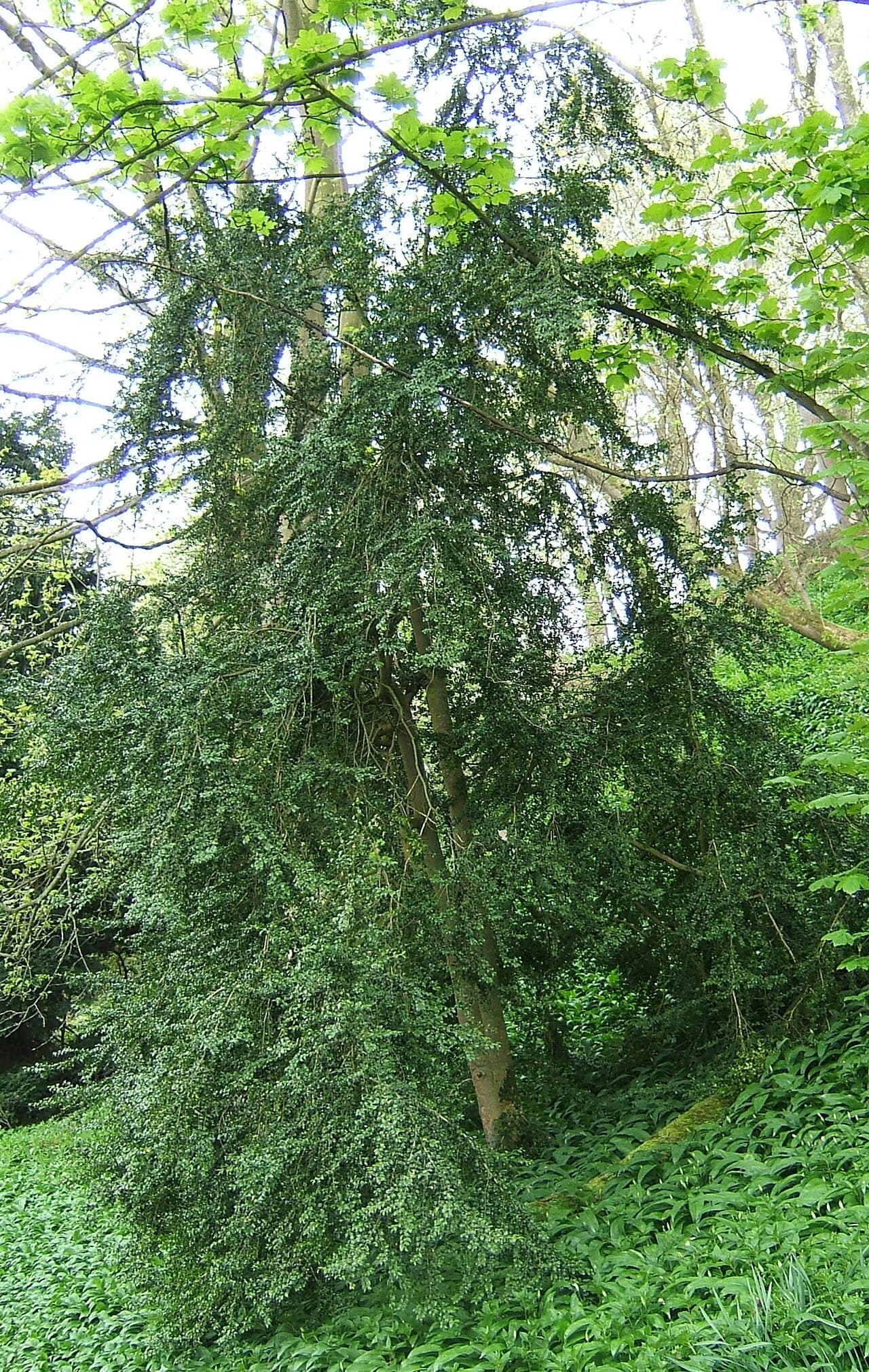
Yes. Deer almost always leave this alone.
- Type
- Shrub
- Hardiness
- Zones 5–8
- Light
- Part shade
- Height
- 60–240 in
- Bloom
- Spring
- Maintenance
- Moderate
- Family
- Buxaceae
- Toxic to
- cats, dogs, and horses
Damage steps follow a published university field scale. How plants are rated.
About Boxwood
Alkaloids make it genuinely unpalatable, and it is the default evergreen hedge for gardens where deer have eaten everything else.
The modern problem is boxwood blight, a fungal disease that has spread widely since arriving in North America around 2011. It shows as dark leaf spots and black streaks on the stems, then rapid defoliation from the bottom up. There is no cure. It survives in fallen leaves and on tools, so buy from a clean source, avoid overhead watering, and clear debris out from under the plants.
Boxwood leafminer is the other common complaint and is cosmetic by comparison. Roots are shallow and resent cultivation, so mulch rather than dig around an established hedge.
Do deer eat boxwood?
Rarely. Rutgers rates Buxus sempervirens Rarely Damaged, A, and NC State calls it "generally tolerant of rabbits and deer," with drought on the same list. The leaf carries steroidal alkaloids and the whole shrub smells of something a deer does not want, which NC State files, fairly, as "malodorous." A clipped boxwood hedge in deer country is the one hedge that reliably reaches the height it was planted for, and the evergreen shrubs page ranks it first for that reason.
Where it grows
NC State: zones 5a to 8b, 5 to 20 feet in time, full sun or partial shade, inconspicuous spring flowers. The ASPCA lists boxwood as toxic to cats, dogs and horses; NC State rates the severity Low, "nausea, vomiting, diarrhea," and the callout below carries it. What kills boxwood is blight, and winter burn, and the deer get blamed for the second: a browse line is ragged and low, winter burn is bronze and on the exposed side.
Protecting boxwood
Nothing from deer. From blight, a clean source, no overhead watering and the fallen leaves cleared, since there is no cure once it is in.
If it is browsed
Boxwood breaks new growth from old wood, which is why it can be clipped, and a shrub browsed in a hard winter fills in over the following season. Buy the largest plants the budget allows rather than more small ones; boxwood is slow, and the years are the cost.
Soil and care
- Soil pH
- 6.5 to 7.5
- Drainage
- Well drained
- Water
- Moderate
- Fertility
- Moderate
- Spacing
- 24 to 47 in apart
- Growth rate
- Slow
- Maintenance
- Moderate
Tolerances and uses
- Drought
- Moderate
- Salt
- Moderate
- Pollinators
- None
Evergreen·Containers
What to plant it with
- Hellebore
Evergreen structure with something flowering at its feet in February.
Keep apart from
- English Ivy
Ivy climbs into shrubs and shades them out. Keep it well away from anything you want to keep.
Similar to Boxwood
Other shrubs with the same deer rating.
- Arrowwood ViburnumViburnum dentatumZones 2–8Rarely damaged
- BarberryBerberis sp.Zones 4–8, genus rangeRarely damaged
- BayberryMyrica pensylvanicaZones 3–7Rarely damaged
- Blue Mist ShrubCaryopteris clandonensisZones 6–9Rarely damaged
- BroomCytisus sp.Zones 5–8, genus rangeRarely damaged
- Bush CinquefoilPotentilla fruticosaZones 2–7Rarely damaged
Where Boxwood is used
2 guides on this site plant it, and say where and what beside it.
- Deer-Resistant Garden Design FAQLayout questions: where the vulnerable plants go, whether to fence the bed or the boundary, and what a browse line is telling you.5 min
- Structure: Build the Bones from Resistant PlantsWinter is when structure carries the garden and when browse pressure peaks. The decision that matters is not what gets eaten but what grows back.6 min
Where Boxwood grows
Hardy across 49 states on zone range alone. Mountain and coastal areas sit outside the ranges used here, so check your own zone before ordering. Select any state, including one it will not grow in, for what is resistant there.
Choose a state from the listeasier on a phone
- Pennsylvania
- New Jersey
- New York
- Connecticut
- Massachusetts
- Virginia
- Maryland
- Michigan
- Wisconsin
- Ohio
- Indiana
- Illinois
- Minnesota
- Missouri
- North Carolina
- Tennessee
- Georgia
- Texas
- Colorado
- California
- Oregon
- Washington
- New Hampshire
- Vermont
- Maine
- Rhode Island
- Delaware
- West Virginia
- Kentucky
- South Carolina
- Florida
- Alabama
- Mississippi
- Louisiana
- Arkansas
- Oklahoma
- Kansas
- Nebraska
- Iowa
- North Dakota
- South Dakota
- Montana
- Wyoming
- Idaho
- Utah
- Nevada
- Arizona
- New Mexico
- Alaska
- District of Columbia
- Hawaii
Common questions about Boxwood
- Is Boxwood deer resistant?
- Boxwood (Buxus sempervirens) is rated Rarely Damaged, step 1 of 4 on the damage scale this site uses. Deer almost always leave this alone.
- What hardiness zones does Boxwood grow in?
- Boxwood is hardy in USDA zones 5 to 8. Outside that range it will either not survive winter or will struggle with summer heat.
- Does Boxwood grow in shade?
- Yes. Boxwood tolerates part shade, which makes it one of the options for a shaded bed where deer also browse.
- How big does Boxwood get?
- Mature height is roughly 60–240 in. Growth rate is slow.
- Is Boxwood toxic to dogs or cats?
- Yes. The ASPCA lists Boxwood as toxic to cats, dogs, and horses. Site it away from where animals graze, or choose something else if you have a dog that chews.
Browse from here
Every list Boxwood belongs to.
All shrubs·Rarely damaged·Part shade plants·Evergreen shrubs