
Plant record · Shrub
Is Barberry deer resistant?
Berberis sp.
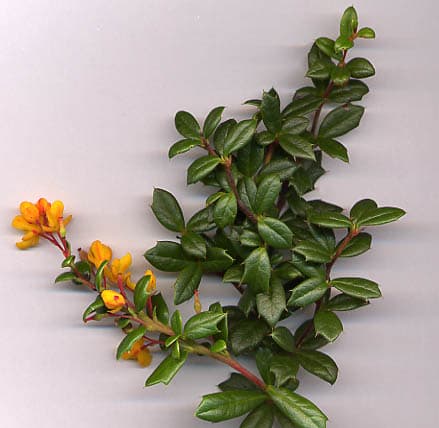
Yes. Deer almost always leave this alone.
- Type
- Shrub
- Hardiness
- Zones 4–8, genus range
- Light
- Part shade
- Bloom
- Spring
- Maintenance
- Low
Damage steps follow a published university field scale. How plants are rated.
About Barberry
Thorny and genuinely unpalatable. Check your state list before buying, because Japanese barberry is banned or restricted across much of the northeast.
Do deer eat barberry?
Rarely. Rutgers rates the genus Rarely Damaged, A, and NC State's entry for Japanese barberry says "seldom damaged by deer," with drought, dry soil, salt, heat and urban conditions on the same resistance list. The thorns do the work, one at every leaf node, and the leaf is small and sour.
Where it grows
Zones 4a to 8b, 3 to 6 feet, full sun or partial shade, yellow flowers in spring and red berries after. NC State: "It spreads by root suckers and colonizes to form thickets, which may outcompete nearby plants," and "Birds eating the berries contribute to spreading the seeds far and wide."
Should you plant it?
Not in the ten states where the encyclopedia records it as listed, and probably not in the others. Japanese barberry is on the NC Invasive Plant Council's list, and the Japanese barberry page carries the public-health reason several state bans cite. Deer leaving a plant alone is not a reason to plant it, and inkberry and bayberry give the same structure without the thicket in the woods.
If it is browsed
It regrows from the base and the suckers without noticing. The plant that survives everything is the plant that ends up everywhere, which is the whole argument against it.
Soil and care
- Soil pH
- 6 to 7.5
- Drainage
- Well drained
- Water
- Low
- Spacing
- 35 to 59 in apart
- Growth rate
- Moderate
- Maintenance
- Low
Similar to Barberry
Other shrubs with the same deer rating.
- Arrowwood ViburnumViburnum dentatumZones 2–8Rarely damaged
- BayberryMyrica pensylvanicaZones 3–7Rarely damaged
- Blue Mist ShrubCaryopteris clandonensisZones 6–9Rarely damaged
- BoxwoodBuxus sempervirensZones 5–8Rarely damaged
- BroomCytisus sp.Zones 5–8, genus rangeRarely damaged
- Bush CinquefoilPotentilla fruticosaZones 2–7Rarely damaged
Where Barberry grows
Hardy across 50 states on zone range alone. Mountain and coastal areas sit outside the ranges used here, so check your own zone before ordering. Select any state, including one it will not grow in, for what is resistant there.
Choose a state from the listeasier on a phone
- Pennsylvania
- New Jersey
- New York
- Connecticut
- Massachusetts
- Virginia
- Maryland
- Michigan
- Wisconsin
- Ohio
- Indiana
- Illinois
- Minnesota
- Missouri
- North Carolina
- Tennessee
- Georgia
- Texas
- Colorado
- California
- Oregon
- Washington
- New Hampshire
- Vermont
- Maine
- Rhode Island
- Delaware
- West Virginia
- Kentucky
- South Carolina
- Florida
- Alabama
- Mississippi
- Louisiana
- Arkansas
- Oklahoma
- Kansas
- Nebraska
- Iowa
- North Dakota
- South Dakota
- Montana
- Wyoming
- Idaho
- Utah
- Nevada
- Arizona
- New Mexico
- Alaska
- District of Columbia
- Hawaii
Common questions about Barberry
- Is Barberry deer resistant?
- Barberry (Berberis sp.) is rated Rarely Damaged, step 1 of 4 on the damage scale this site uses. Deer almost always leave this alone.
- What hardiness zones does Barberry grow in?
- Barberry is hardy in USDA zones 4 to 8. Outside that range it will either not survive winter or will struggle with summer heat. That is the range across the genus, so a named species or cultivar may be narrower.
- Does Barberry grow in shade?
- Yes. Barberry tolerates part shade, which makes it one of the options for a shaded bed where deer also browse.
- Is Barberry invasive?
- Barberry is listed as invasive or restricted in NY, PA, MA, NH, ME, CT, RI, WV, VT, NJ. Deer leaving it alone is not a reason to plant it. Check your own state before buying.
Browse from here
Every list Barberry belongs to.
All shrubs·Rarely damaged·Part shade plants