
Plant record · Shrub · Berberidaceae
Is Japanese Barberry deer resistant?
Berberis thunbergii
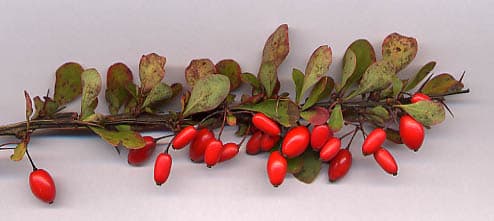
Yes. Deer almost always leave this alone.
- Type
- Shrub
- Hardiness
- Zones 4–8
- Light
- Part shade
- Height
- 36–72 in
- Bloom
- April–May
- Maintenance
- Low
- Family
- Berberidaceae
Damage steps follow a published university field scale. How plants are rated.
About Japanese Barberry
Thorny and genuinely unpalatable, which is why it was planted by the million and why it is now banned or restricted across much of the northeast.
It escapes into woodland and forms dense thickets. There is also a documented public health angle: barberry stands hold humidity at ground level, which supports higher densities of the mice that carry Lyme disease and of the ticks themselves. Several state bans cite it.
Check your own state before buying. Sterile cultivars have been released in response to the bans and are legal in some places where the species is not, but the rules change yearly.
Deer avoiding a plant is not a reason to plant it. Inkberry and bayberry give similar structure without the problem.
Soil and care
- Soil pH
- 6 to 7.5
- Drainage
- Well drained
- Water
- Low
- Fertility
- Low
- Spacing
- 35 to 59 in apart
- Growth rate
- Moderate
- Maintenance
- Low
Tolerances and uses
- Drought
- High
- Salt
- Moderate
- Pollinators
- Low
Similar to Japanese Barberry
Other shrubs with the same deer rating.
- Arrowwood ViburnumViburnum dentatumZones 2–8Rarely damaged
- BarberryBerberis sp.Zones 4–8, genus rangeRarely damaged
- BayberryMyrica pensylvanicaZones 3–7Rarely damaged
- Blue Mist ShrubCaryopteris clandonensisZones 6–9Rarely damaged
- BoxwoodBuxus sempervirensZones 5–8Rarely damaged
- BroomCytisus sp.Zones 5–8, genus rangeRarely damaged
Where Japanese Barberry grows
Hardy across 50 states on zone range alone. Mountain and coastal areas sit outside the ranges used here, so check your own zone before ordering. Select any state, including one it will not grow in, for what is resistant there.
Choose a state from the listeasier on a phone
- Pennsylvania
- New Jersey
- New York
- Connecticut
- Massachusetts
- Virginia
- Maryland
- Michigan
- Wisconsin
- Ohio
- Indiana
- Illinois
- Minnesota
- Missouri
- North Carolina
- Tennessee
- Georgia
- Texas
- Colorado
- California
- Oregon
- Washington
- New Hampshire
- Vermont
- Maine
- Rhode Island
- Delaware
- West Virginia
- Kentucky
- South Carolina
- Florida
- Alabama
- Mississippi
- Louisiana
- Arkansas
- Oklahoma
- Kansas
- Nebraska
- Iowa
- North Dakota
- South Dakota
- Montana
- Wyoming
- Idaho
- Utah
- Nevada
- Arizona
- New Mexico
- Alaska
- District of Columbia
- Hawaii
Common questions about Japanese Barberry
- Is Japanese Barberry deer resistant?
- Japanese Barberry (Berberis thunbergii) is rated Rarely Damaged, step 1 of 4 on the damage scale this site uses. Deer almost always leave this alone.
- What hardiness zones does Japanese Barberry grow in?
- Japanese Barberry is hardy in USDA zones 4 to 8. Outside that range it will either not survive winter or will struggle with summer heat.
- Does Japanese Barberry grow in shade?
- Yes. Japanese Barberry tolerates part shade, which makes it one of the options for a shaded bed where deer also browse.
- How big does Japanese Barberry get?
- Mature height is roughly 36–72 in. Growth rate is moderate.
- When does Japanese Barberry bloom?
- Japanese Barberry flowers from April–May.
- Is Japanese Barberry invasive?
- Japanese Barberry is listed as invasive or restricted in NY, PA, MA, NH, ME, CT, RI, WV. Deer leaving it alone is not a reason to plant it. Check your own state before buying.
Browse from here
Every list Japanese Barberry belongs to.
All shrubs·Rarely damaged·Part shade plants