
Plant record · Groundcover · Apocynaceae
Is Periwinkle (Vinca) deer resistant?
Vinca minor
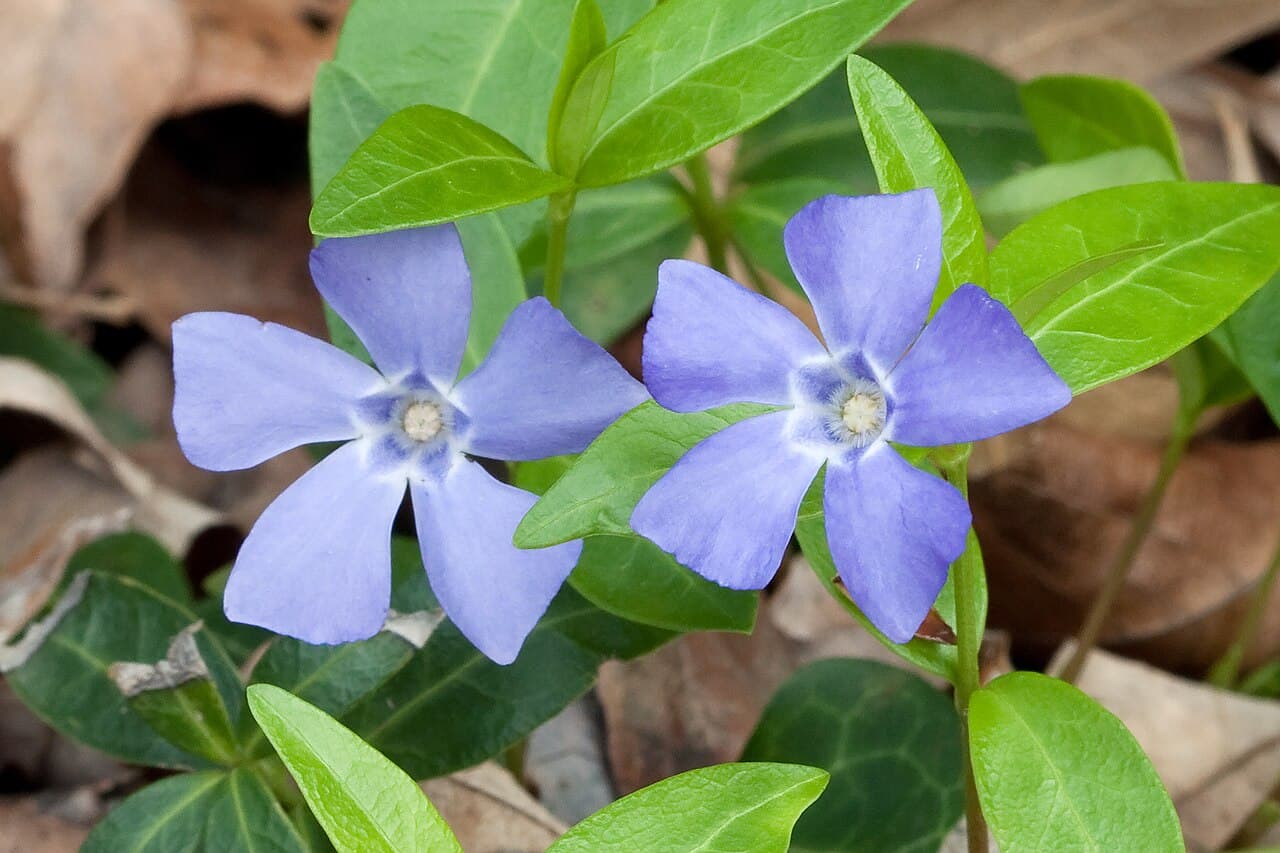
Mostly. Light browsing at worst; rarely ruined.
- Type
- Groundcover
- Hardiness
- Zones 4–9
- Height
- 3–6 in
- Bloom
- April–May
- Maintenance
- Low
- Family
- Apocynaceae
Damage steps follow a published university field scale. How plants are rated.
About Periwinkle
Evergreen, shade-tolerant and effective at covering ground, which is why it was planted so widely and why it is now a problem across much of the eastern United States.
It escapes gardens into woodland and forms a dense mat that stops tree seedlings regenerating. Several states list it. Check before planting, and if you have it already, know that it spreads by rooting at every node, so pulling it out means getting every fragment.
Deer browse it lightly, mostly in winter. If you want an evergreen shade carpet without the ecological cost, Siberian cypress and Allegheny spurge both do the job and neither runs.
Do deer eat vinca?
Seldom. Rutgers rates Vinca minor, the periwinkle, Seldom Severely Damaged, B, and NC State lists deer among what it resists with drought, dry soil, erosion, heavy shade, poor soil and salt. The leathery evergreen leaf is the reason; it is browsed lightly in winter and left in summer.
This is the groundcover vinca. The bedding plant sold as vinca, annual vinca, is Catharanthus, a different plant that Rutgers rates A among the annuals.
Should you plant it?
Probably not, and NC State says why: "Its aggressive nature has won periwinkle a spot on many states' most unwanted lists," and it "is classified as an invasive species by the NC Invasive Plant Council." The encyclopedia records it as listed in six states. It roots at every node and forms a mat that stops tree seedlings, and a deer leaving it alone is not a reason to add it to a woodland edge. Allegheny spurge and Russian cypress give an evergreen shade carpet without the escape.
Where it grows
NC State: zones 4a to 9b, 3 to 6 inches, dappled or full sun to partial shade, blue flowers spring into summer.
If it is browsed
It regrows from the runners without noticing. The plant that survives everything is the plant that ends up everywhere, and that is the argument.
Soil and care
- Soil pH
- 6 to 7.5
- Drainage
- Average garden soil
- Water
- Moderate
- Fertility
- Low
- Spacing
- 12 to 18 in apart
- Growth rate
- Fast
- Maintenance
- Low
Tolerances and uses
- Drought
- Moderate
- Salt
- Low
- Pollinators
- Low
Evergreen·Containers·Erosion control
What to plant it with
Keep apart from
- Coral Bells
Vinca spreads aggressively and will smother a clumping perennial within two seasons.
Similar to Periwinkle
Other groundcovers with the same deer rating.
Where Periwinkle grows
Hardy across every state on zone range alone. Mountain and coastal areas sit outside the ranges used here, so check your own zone before ordering. Select any state, including one it will not grow in, for what is resistant there.
Choose a state from the listeasier on a phone
- Pennsylvania
- New Jersey
- New York
- Connecticut
- Massachusetts
- Virginia
- Maryland
- Michigan
- Wisconsin
- Ohio
- Indiana
- Illinois
- Minnesota
- Missouri
- North Carolina
- Tennessee
- Georgia
- Texas
- Colorado
- California
- Oregon
- Washington
- New Hampshire
- Vermont
- Maine
- Rhode Island
- Delaware
- West Virginia
- Kentucky
- South Carolina
- Florida
- Alabama
- Mississippi
- Louisiana
- Arkansas
- Oklahoma
- Kansas
- Nebraska
- Iowa
- North Dakota
- South Dakota
- Montana
- Wyoming
- Idaho
- Utah
- Nevada
- Arizona
- New Mexico
- Alaska
- District of Columbia
- Hawaii
Common questions about Periwinkle
- Is Periwinkle deer resistant?
- Periwinkle (Vinca minor) is rated Seldom Severely Damaged, step 2 of 4 on the damage scale this site uses. Light browsing at worst; rarely ruined.
- What hardiness zones does Periwinkle grow in?
- Periwinkle is hardy in USDA zones 4 to 9. Outside that range it will either not survive winter or will struggle with summer heat.
- Does Periwinkle grow in shade?
- Yes. Periwinkle tolerates full shade to part shade, which makes it one of the options for a shaded bed where deer also browse.
- How big does Periwinkle get?
- Mature height is roughly 3–6 in. Growth rate is fast.
- When does Periwinkle bloom?
- Periwinkle flowers from April–May.
- Is Periwinkle invasive?
- Periwinkle is listed as invasive or restricted in OR, WA, KY, TN, MO, IN. Deer leaving it alone is not a reason to plant it. Check your own state before buying.
Browse from here
Every list Periwinkle belongs to.
All groundcovers·Seldom damaged·Shade plants·Evergreen shrubs