
Plant record · Perennial · Saxifragaceae
Is Coral Bells (Heuchera) deer resistant?
Heuchera americana
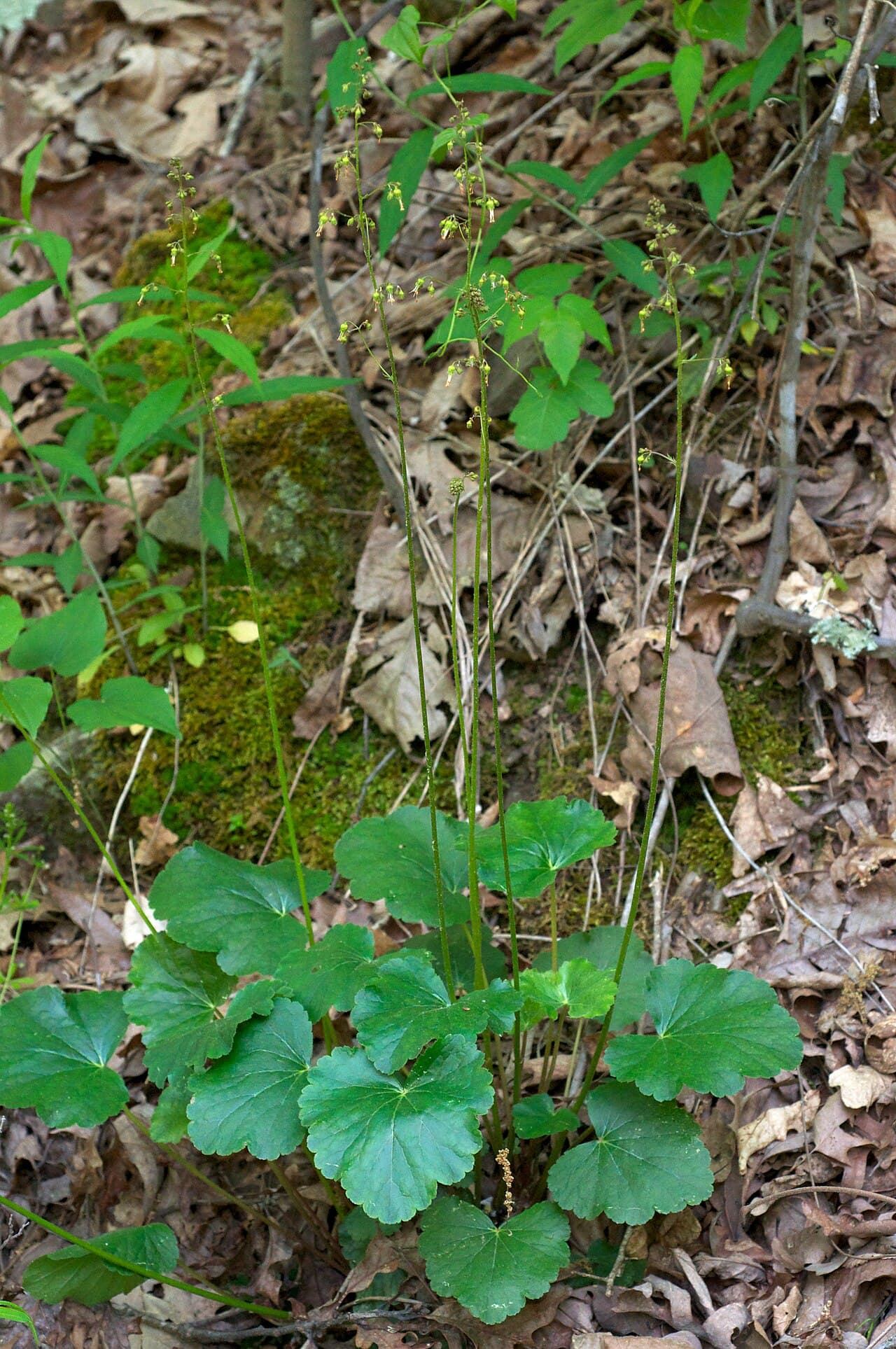
Mostly. Light browsing at worst; rarely ruined.
- Type
- Perennial
- Hardiness
- Zones 4–9
- Height
- 12–36 in
- Bloom
- May–July
- Maintenance
- Low
- Native range
- 27 US states
- Family
- Saxifragaceae
Damage steps follow a published university field scale. How plants are rated.
About Coral Bells
Shade-tolerant, evergreen in mild winters, and grown almost entirely for foliage color that runs from lime through caramel to near black.
Deer browse it lightly in hard winters and leave it otherwise. The bigger threat is frost heave: heuchera has a shallow woody crown that lifts itself out of the ground over a freeze-thaw winter, exposing the roots to dry out. Check plants in late winter and firm any that have risen, or replant them slightly deeper.
Divide every three or four years for the same reason, cutting the woody base back and replanting the rooted pieces.
The darkest cultivars hold color best with a few hours of morning sun. In deep shade they revert toward green.
Do deer eat coral bells?
Seldom. Rutgers rates Heuchera Seldom Severely Damaged, B, and NC State says why: "Tannin in the leaves is unappetizing to deer and rabbits." The leaf is the whole plant, evergreen in mild winters, and a hard winter is when it is browsed, lightly, by a deer with nothing better. The second tier is the honest tier for it: a clump loses a few leaves in February and is not harmed.
Are coral bells deer resistant?
More than most shade perennials and less than the top tier. Coral bells sit with astilbe, columbine and foam flower in the band deer browse and rarely ruin, one step below hellebore and bleeding heart, and several steps above the hosta they are usually planted beside. In a shaded bed that has lost its hostas, coral bells are the plant that was left.
Where it grows
NC State: zones 3a to 9b, 6 inches to 1 foot 8 inches, full sun to partial shade, summer flowers on wiry stems, with leaf scorch in full sun during hot dry weather and root rot in wet ground as the listed troubles. Frost heave in freeze-thaw winters lifts the shallow woody crown and is the usual cause of death.
Protecting coral bells
Rarely needed. Where winter browse is a problem, a mulch over the crown does more good against the heaving than any spray does against the deer.
If it is browsed
New leaves come from the crown in spring, and a browsed plant is indistinguishable from an unbrowsed one by May. A crown that has heaved out of the ground is the one to worry about; firm it or replant it deeper.
Soil and care
- Soil pH
- 6 to 7
- Drainage
- Well drained
- Water
- Moderate
- Fertility
- Moderate
- Spacing
- 12 to 18 in apart
- Growth rate
- Moderate
- Maintenance
- Low
Tolerances and uses
- Drought
- Moderate
- Salt
- Low
- Pollinators
- Moderate
Evergreen·Containers·Attracts birds
What to plant it with
Keep apart from
- Periwinkle
Vinca spreads aggressively and will smother a clumping perennial within two seasons.
Similar to Coral Bells
Other perennials with the same deer rating.
- African LilyAgapanthus sp.Zones 8–11, genus rangeSeldom damaged
- AsparagusAsparagus officinalisZones 2–9Seldom damaged
- AsterAster sp.Zones 3–8, genus rangeSeldom damaged
- AstilbeAstilbe x arendsiiZones 3–8Seldom damaged
- Baby's BreathGypsophila sp.Zones 3–9, genus rangeSeldom damaged
- BastardsageEriogonum wrightiiZones 5–10Seldom damaged
Where Coral Bells grows
Hardy across every state on zone range alone, and native to 27 of them. Mountain and coastal areas sit outside the ranges used here, so check your own zone before ordering. Select any state, including one it will not grow in, for what is resistant there.
Choose a state from the listeasier on a phone
- Pennsylvania
- New Jersey
- New York
- Connecticut
- Massachusetts
- Virginia
- Maryland
- Michigan
- Wisconsin
- Ohio
- Indiana
- Illinois
- Minnesota
- Missouri
- North Carolina
- Tennessee
- Georgia
- Texas
- Colorado
- California
- Oregon
- Washington
- New Hampshire
- Vermont
- Maine
- Rhode Island
- Delaware
- West Virginia
- Kentucky
- South Carolina
- Florida
- Alabama
- Mississippi
- Louisiana
- Arkansas
- Oklahoma
- Kansas
- Nebraska
- Iowa
- North Dakota
- South Dakota
- Montana
- Wyoming
- Idaho
- Utah
- Nevada
- Arizona
- New Mexico
- Alaska
- District of Columbia
- Hawaii
Common questions about Coral Bells
- Is Coral Bells deer resistant?
- Coral Bells (Heuchera americana) is rated Seldom Severely Damaged, step 2 of 4 on the damage scale this site uses. Light browsing at worst; rarely ruined.
- What hardiness zones does Coral Bells grow in?
- Coral Bells is hardy in USDA zones 4 to 9. Outside that range it will either not survive winter or will struggle with summer heat.
- Does Coral Bells grow in shade?
- Yes. Coral Bells tolerates full shade to part shade, which makes it one of the options for a shaded bed where deer also browse.
- How big does Coral Bells get?
- Mature height is roughly 12–36 in. Growth rate is moderate.
- When does Coral Bells bloom?
- Coral Bells flowers from May–July.
Browse from here
Every list Coral Bells belongs to.
All perennials·Seldom damaged·Shade plants·Evergreen shrubs