
Plant record · Annual · Asteraceae
Is Marigold deer resistant?
Tagetes patula
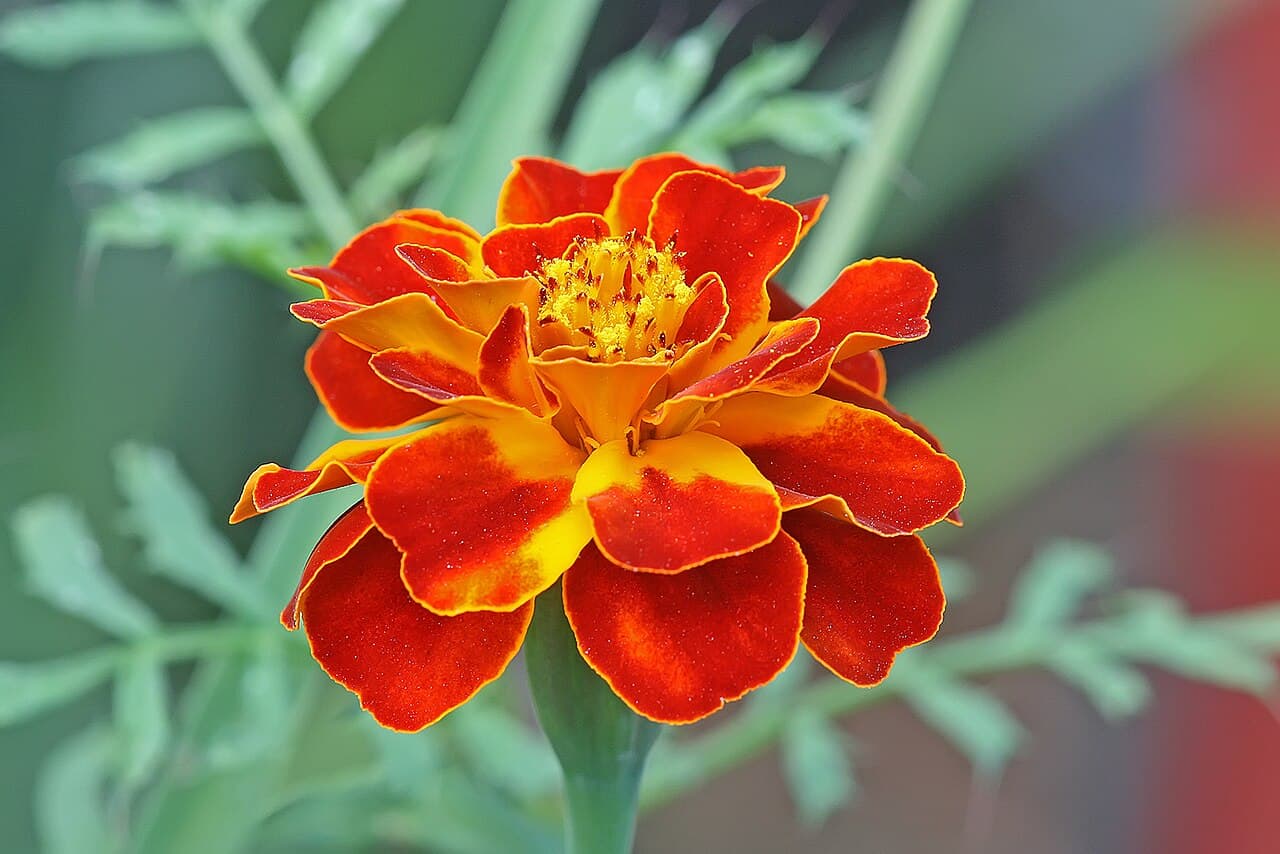
Mostly. Light browsing at worst; rarely ruined.
- Type
- Annual
- Hardiness
- Grown as an annual, any zone
- Light
- Full sun
- Height
- 6–12 in
- Bloom
- June–October
- Maintenance
- Low
- Family
- Asteraceae
Damage steps follow a published university field scale. How plants are rated.
About Marigold
Pungent foliage that deer generally avoid, and the plant most often recommended as a living repellent to interplant through a vegetable bed.
Treat that claim carefully. Marigolds do have real documented effects against certain soil nematodes, which is a different mechanism entirely and requires growing a dense stand and turning it in, not dotting a few plants between tomatoes. The idea that the smell deters deer or rabbits from neighboring plants does not hold up.
As a plant in its own right it is hard to fault. It flowers from planting until frost, tolerates heat and poor soil, and self-sows gently. Deadhead it and it keeps going.
Do deer eat marigolds?
Seldom. Rutgers rates marigold Seldom Severely Damaged, and NC State's entries agree in their own words: the French marigold, Tagetes patula, which is the one on this page, "is deer-resistant and drought-tolerant once established," and the taller African marigold, T. erecta, "is seldom damaged by deer." The pungent leaf, "fragrant when brushed or crushed," is the mechanism. Under heavy pressure the flower heads get eaten, as flower heads do on nearly everything, and a bed browsed to the ground has rabbits in it as often as deer.
Do marigolds keep deer out of a vegetable garden?
Not the deer. No trial consulted here shows a marigold protecting the tomato beside it, and the USDA's twenty-product repellent trial found that scent in the air around a plant did not reduce browsing unless the material reached the foliage. The nematode claim is the real one and it is a different job: NC State's instruction is to "chop up the plant once it is killed by frost and work it into the soil," a dense stand turned in, not a border of them.
Recovery
A marigold browsed in July regrows from the leaf axils and is flowering again inside a month; they "bloom from spring into fall if kept deadheaded," and a deer is a rough deadheader. The plant is 6 to 12 inches high and cheap enough that replacing one is faster than protecting it.
Soil and care
- Soil pH
- 6 to 7.5
- Drainage
- Well drained
- Water
- Moderate
- Fertility
- Moderate
- Spacing
- 8 to 12 in apart
- Growth rate
- Fast
- Maintenance
- Low
Tolerances and uses
- Drought
- Moderate
- Salt
- Moderate
- Pollinators
- Moderate
Containers
What to plant it with
- Zinnia
Straightforward annual bed. Both take full sun and neither is a deer favourite.
Similar to Marigold
Other annuals with the same deer rating.
- Annual CandytuftIberis umbellataGrown as an annual, any zoneSeldom damaged
- Annual SalviaSalvia splendensGrown as an annual, any zoneSeldom damaged
- Annual VerbenaVerbena x hybridaGrown as an annual, any zoneSeldom damaged
- Bachelor's ButtonsCentaurea cyanusGrown as an annual, any zoneSeldom damaged
- BasilOcimum basilicumGrown as an annual, any zoneSeldom damaged
- BorageBorago officinalisGrown as an annual, any zoneSeldom damaged
Where Marigold grows
Hardy across every state on zone range alone. Mountain and coastal areas sit outside the ranges used here, so check your own zone before ordering. Select any state, including one it will not grow in, for what is resistant there.
Choose a state from the listeasier on a phone
- Pennsylvania
- New Jersey
- New York
- Connecticut
- Massachusetts
- Virginia
- Maryland
- Michigan
- Wisconsin
- Ohio
- Indiana
- Illinois
- Minnesota
- Missouri
- North Carolina
- Tennessee
- Georgia
- Texas
- Colorado
- California
- Oregon
- Washington
- New Hampshire
- Vermont
- Maine
- Rhode Island
- Delaware
- West Virginia
- Kentucky
- South Carolina
- Florida
- Alabama
- Mississippi
- Louisiana
- Arkansas
- Oklahoma
- Kansas
- Nebraska
- Iowa
- North Dakota
- South Dakota
- Montana
- Wyoming
- Idaho
- Utah
- Nevada
- Arizona
- New Mexico
- Alaska
- District of Columbia
- Hawaii
Common questions about Marigold
- Is Marigold deer resistant?
- Marigold (Tagetes patula) is rated Seldom Severely Damaged, step 2 of 4 on the damage scale this site uses. Light browsing at worst; rarely ruined.
- What hardiness zones does Marigold grow in?
- Marigold is hardy in USDA zones 2 to 11. Outside that range it will either not survive winter or will struggle with summer heat.
- Does Marigold grow in shade?
- No. Marigold wants full sun and will grow thin and flop in shade.
- How big does Marigold get?
- Mature height is roughly 6–12 in. Growth rate is fast.
- When does Marigold bloom?
- Marigold flowers from June–October.
Browse from here
Every list Marigold belongs to.
All annuals·Seldom damaged·Full sun plants