
Plant record · Annual
Is Borage deer resistant?
Borago officinalis
Mostly. Light browsing at worst; rarely ruined.
- Type
- Annual
- Hardiness
- Grown as an annual, any zone
- Light
- Full sun
- Height
- 19–38 in
- Bloom
- Summer and Fall
- Maintenance
- Low
- Toxic to
- dogs, cats, and horses
Damage steps follow a published university field scale. How plants are rated.
About Borage
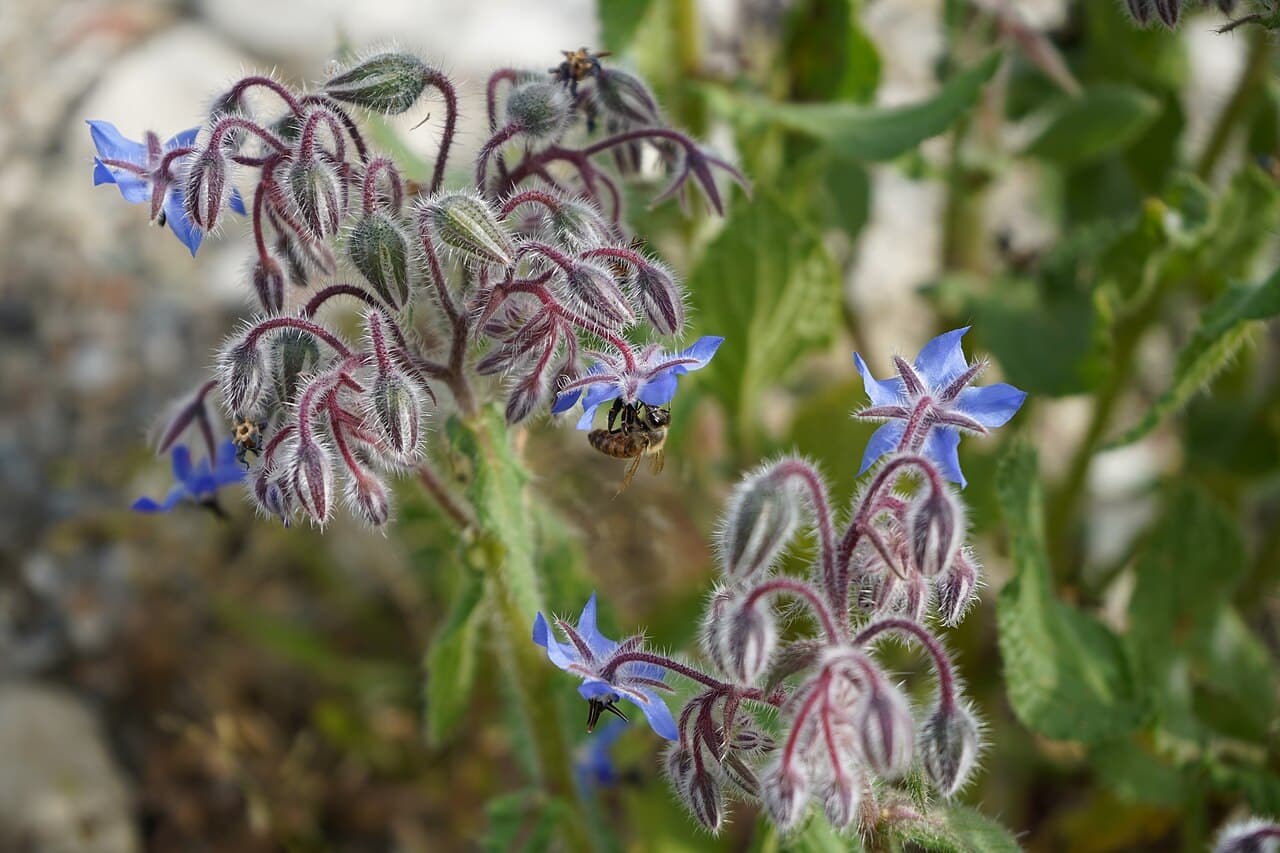
Bristly leaves and stems keep deer off, and bees favor the blue flowers over almost anything else. It self-sows hard, so pull the seedlings you do not want early.
Do deer eat borage?
Seldom. Rutgers rates it B, Iowa State lists it in the second tier of herbs, and NC State lists deer and rabbits among what it resists. The bristles are the reason: every leaf and stem is covered in stiff hairs, and a mouthful of borage is a mouthful of wool with a cucumber taste. Under pressure the blue flowers are taken.
Where it grows
An annual in every zone, NC State giving 2a through 11b, 1 1/2 to 3 feet, full sun or partial shade, flowering summer into fall and "self-seeding and will remain in your garden year after year." Bees favor it above most of what flowers beside it. The ASPCA lists borage as toxic to dogs, cats and horses; NC State rates the severity Low, pyrrolizidine alkaloids "that can damage the liver," and the callout below carries it.
Protecting borage
Nothing. Pulling the seedlings you do not want is the only management.
If it is browsed
It regrows from the nodes and flowers on the new growth; a plant browsed in June is flowering again in July, and its seedlings are already coming up around it.
Soil and care
- Soil pH
- 6 to 7.5
- Drainage
- Average garden soil
- Water
- Low
- Spacing
- 18 to 24 in apart
- Growth rate
- Fast
- Maintenance
- Low
Similar to Borage
Other annuals with the same deer rating.
- Annual CandytuftIberis umbellataGrown as an annual, any zoneSeldom damaged
- Annual SalviaSalvia splendensGrown as an annual, any zoneSeldom damaged
- Annual VerbenaVerbena x hybridaGrown as an annual, any zoneSeldom damaged
- Bachelor's ButtonsCentaurea cyanusGrown as an annual, any zoneSeldom damaged
- BasilOcimum basilicumGrown as an annual, any zoneSeldom damaged
- California PoppyEschscholzia californicaGrown as an annual, any zoneSeldom damaged
Where Borage is used
One guide on this site plants it, and says where and what beside it.
Where Borage grows
Hardy across every state on zone range alone. Mountain and coastal areas sit outside the ranges used here, so check your own zone before ordering. Select any state, including one it will not grow in, for what is resistant there.
Choose a state from the listeasier on a phone
- Pennsylvania
- New Jersey
- New York
- Connecticut
- Massachusetts
- Virginia
- Maryland
- Michigan
- Wisconsin
- Ohio
- Indiana
- Illinois
- Minnesota
- Missouri
- North Carolina
- Tennessee
- Georgia
- Texas
- Colorado
- California
- Oregon
- Washington
- New Hampshire
- Vermont
- Maine
- Rhode Island
- Delaware
- West Virginia
- Kentucky
- South Carolina
- Florida
- Alabama
- Mississippi
- Louisiana
- Arkansas
- Oklahoma
- Kansas
- Nebraska
- Iowa
- North Dakota
- South Dakota
- Montana
- Wyoming
- Idaho
- Utah
- Nevada
- Arizona
- New Mexico
- Alaska
- District of Columbia
- Hawaii
Common questions about Borage
- Is Borage deer resistant?
- Borage (Borago officinalis) is rated Seldom Severely Damaged, step 2 of 4 on the damage scale this site uses. Light browsing at worst; rarely ruined.
- What hardiness zones does Borage grow in?
- Borage is hardy in USDA zones 2 to 11. Outside that range it will either not survive winter or will struggle with summer heat.
- Does Borage grow in shade?
- No. Borage wants full sun and will grow thin and flop in shade.
- How big does Borage get?
- Mature height is roughly 19–38 in. Growth rate is fast.
- Is Borage toxic to dogs or cats?
- Yes. The ASPCA lists Borage as toxic to dogs, cats, and horses. Site it away from where animals graze, or choose something else if you have a dog that chews.
Browse from here
Every list Borage belongs to.
All annuals·Seldom damaged·Full sun plants