
Plant record · Shrub
Is Japanese Spirea deer resistant?
Spiraea japonica
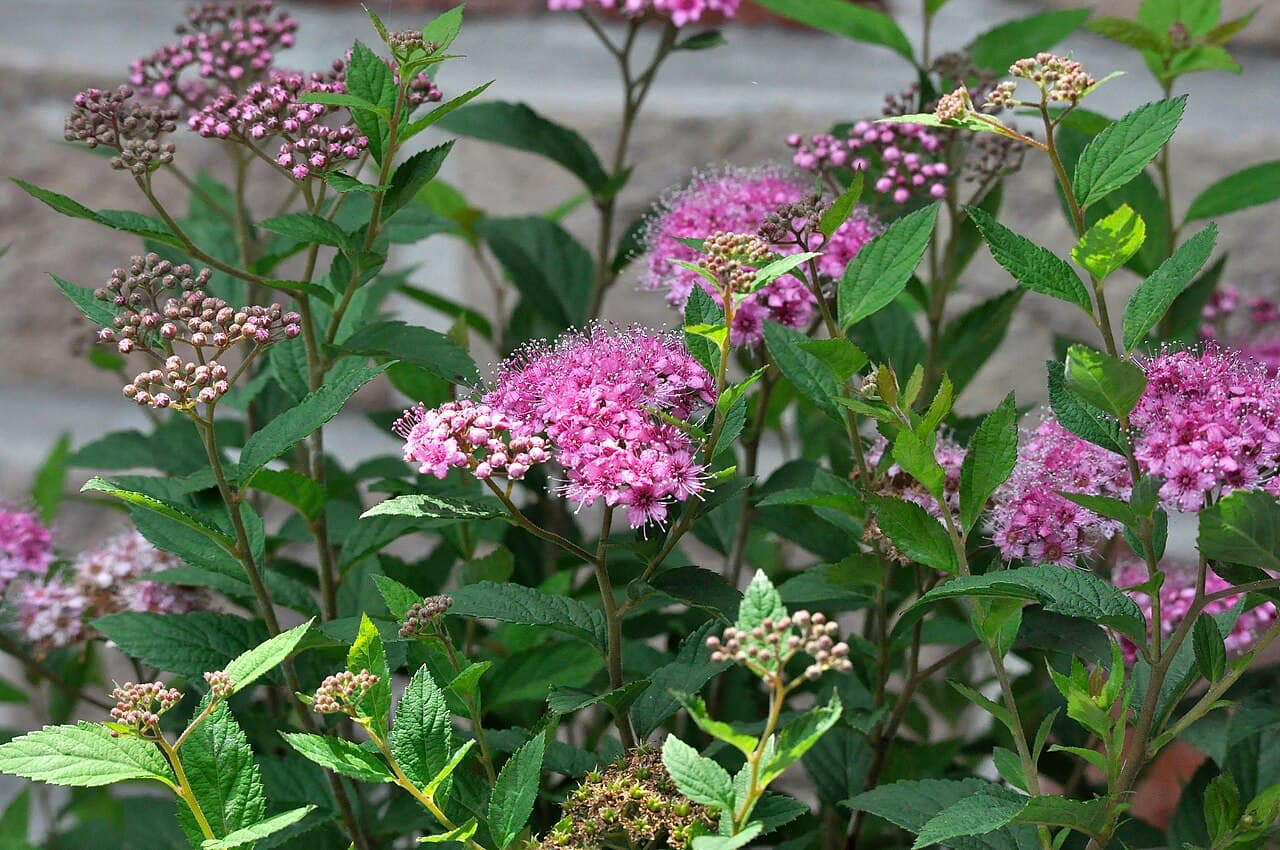
Mostly. Light browsing at worst; rarely ruined.
- Type
- Shrub
- Hardiness
- Zones 3–8
- Light
- Full sun
- Height
- 48–72 in
- Bloom
- Spring and Summer
- Maintenance
- Low
Damage steps follow a published university field scale. How plants are rated.
About Japanese Spirea
Flowers on new wood, so cut it back hard in early spring and shear the spent heads for a second flush. Golden-leaved forms scorch in full afternoon sun in hot regions. It seeds into woodland and roadsides across the northeast and is listed as invasive in several states, so check locally before planting.
Do deer eat Japanese spirea?
Sometimes. Rutgers rates Spiraea japonica Seldom Severely Damaged, B, and Iowa State lists it in the same tier, and NC State singles it out among its relatives: "Unlike some other species of spiraea, this plant may be damaged by deer." The soft new growth and the summer flower heads are what a deer takes, and the shrub survives it.
Where it grows
NC State: zones 3a to 8b, 4 to 6 feet, full sun or partial shade, flowering spring into summer, resisting drought and erosion. It is "classified as an invasive species by the NC Invasive Plant Council" and "listed as invasive in Virginia, Georgia, South Carolina, Tennessee, Kentucky and others including the Great Smoky Mountains." A shrub that deer only sometimes eat and that seeds into every roadside is not a bargain, and the sterile cultivars are the only version worth considering where it is not already listed.
Protecting Japanese spirea
Where the flower heads are being taken, one application of the 20 percent egg spray Colorado State rates High at bud stage. In most gardens, nothing.
If it is browsed
It flowers on new wood and is cut hard in early spring in any case, so the browse costs nothing the pruning does not. Shear the eaten heads and it reblooms.
Soil and care
- Soil pH
- 5.5 to 7.5
- Drainage
- Average garden soil
- Water
- Moderate
- Spacing
- 35 to 59 in apart
- Growth rate
- Fast
- Maintenance
- Low
Similar to Japanese Spirea
Other shrubs with the same deer rating.
- Antelope BitterbrushPurshia tridentataSeldom damaged
- Anthony Waterer SpireaSpiraea x bumaldaZones 3–8Seldom damaged
- Apache PlumeFallugia paradoxaZones 6–10Seldom damaged
- Armstrong JuniperJuniperus chinensis 'Armstrongii'Zones 4–9Seldom damaged
- Autumn OliveElaeagnus umbellataZones 4–9Seldom damaged
- Autumn SageSalvia greggiiZones 6–9Seldom damaged
Where Japanese Spirea grows
Hardy across 50 states on zone range alone. Mountain and coastal areas sit outside the ranges used here, so check your own zone before ordering. Select any state, including one it will not grow in, for what is resistant there.
Choose a state from the listeasier on a phone
- Pennsylvania
- New Jersey
- New York
- Connecticut
- Massachusetts
- Virginia
- Maryland
- Michigan
- Wisconsin
- Ohio
- Indiana
- Illinois
- Minnesota
- Missouri
- North Carolina
- Tennessee
- Georgia
- Texas
- Colorado
- California
- Oregon
- Washington
- New Hampshire
- Vermont
- Maine
- Rhode Island
- Delaware
- West Virginia
- Kentucky
- South Carolina
- Florida
- Alabama
- Mississippi
- Louisiana
- Arkansas
- Oklahoma
- Kansas
- Nebraska
- Iowa
- North Dakota
- South Dakota
- Montana
- Wyoming
- Idaho
- Utah
- Nevada
- Arizona
- New Mexico
- Alaska
- District of Columbia
- Hawaii
Common questions about Japanese Spirea
- Is Japanese Spirea deer resistant?
- Japanese Spirea (Spiraea japonica) is rated Seldom Severely Damaged, step 2 of 4 on the damage scale this site uses. Light browsing at worst; rarely ruined.
- What hardiness zones does Japanese Spirea grow in?
- Japanese Spirea is hardy in USDA zones 3 to 8. Outside that range it will either not survive winter or will struggle with summer heat.
- Does Japanese Spirea grow in shade?
- No. Japanese Spirea wants full sun and will grow thin and flop in shade.
- How big does Japanese Spirea get?
- Mature height is roughly 48–72 in. Growth rate is fast.
Browse from here
Every list Japanese Spirea belongs to.
All shrubs·Seldom damaged·Full sun plants