
Plant record · Perennial · Lamiaceae
Is Bee Balm deer resistant?
Monarda didyma
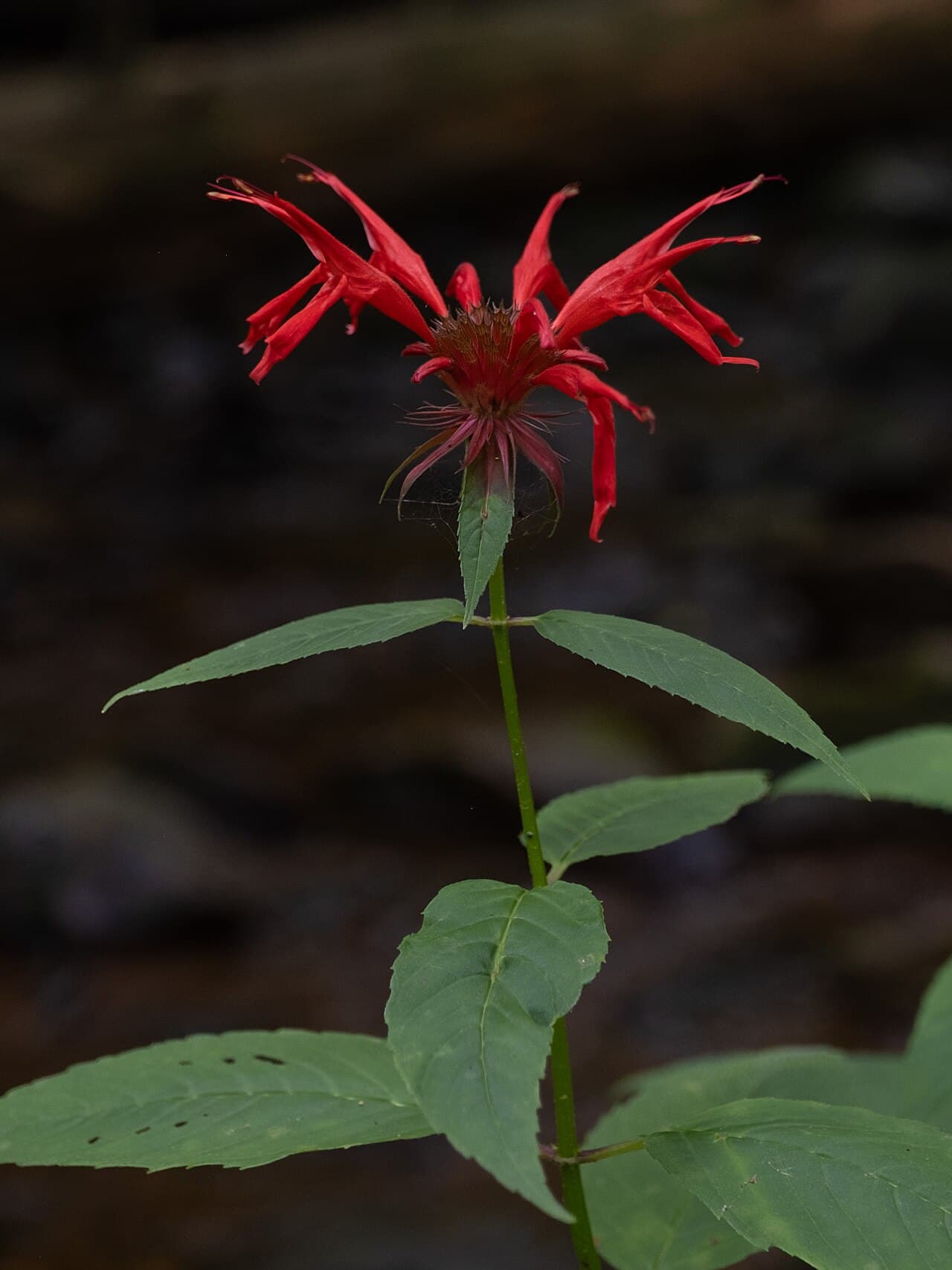
Mostly. Light browsing at worst; rarely ruined.
- Type
- Perennial
- Hardiness
- Zones 4–9
- Light
- Part shade
- Height
- 24–48 in
- Bloom
- July–September
- Maintenance
- Moderate
- Native range
- 27 US states
- Family
- Lamiaceae
Damage steps follow a published university field scale. How plants are rated.
About Bee Balm
Mint family, strongly aromatic, and a magnet for hummingbirds. Deer browse it lightly at worst.
Two things to plan for. It spreads by runners like the mint it is related to, so it will travel through a bed and needs lifting and reducing every couple of years. And it is prone to powdery mildew, which turns the foliage gray and ugly by August in humid summers.
Mildew is mostly solvable at the point of purchase. Cultivars bred for resistance hold up far better than the species, and giving the plant real air movement rather than cramming it into the middle of a packed bed does more than any spray. Cutting a third of the stems out at the base in June opens it up and helps.
Do deer eat bee balm?
Seldom. Rutgers rates Monarda didyma Seldom Severely Damaged, B, and NC State: "This plant is resistant to damage by deer and rabbits." It is a mint, the leaf smells of oregano and bergamot when brushed, and the scent is the defense. Under pressure the flower heads are taken as they open, and the stand is not harmed.
Bee balm is not lemon balm. The two are confused in searches often enough to say so: lemon balm is Melissa, a small lemon-scented herb one tier higher; bee balm is this plant, the tall native with the shaggy red or purple heads that hummingbirds work.
Where it grows
NC State: zones 4a to 9b, 2 to 4 feet, full sun, flowering summer into fall, tolerating wet soil and black walnut, and "will spread rapidly by underground stolons." The problem is the one NC State names: "Plants are susceptible to powdery mildew and rust," with the note that "some cultivars have shown a fair amount of resistance." Air and the right cultivar do more than any spray.
Protecting bee balm
Where the heads are being taken, one application of the 20 percent egg spray Colorado State rates High as they form. Most years, nothing.
If it is browsed
It regrows from the runners and flowers on the side shoots, and a stand cut back by a third in June, which is the mildew treatment, flowers later and shorter anyway. A browsed bee balm looks like a pruned one by August.
Soil and care
- Soil pH
- 6 to 7
- Drainage
- Consistently moist
- Water
- Moderate
- Fertility
- Moderate
- Spacing
- 18 to 24 in apart
- Growth rate
- Fast
- Maintenance
- Moderate
Tolerances and uses
- Drought
- Low
- Salt
- Low
- Pollinators
- High
Rain gardens·Attracts birds
What to plant it with
- Switchgrass
Prairie pairing. Grass gives winter structure, bee balm gives mid-summer colour and pollinators.
Similar to Bee Balm
Other perennials with the same deer rating.
- African LilyAgapanthus sp.Zones 8–11, genus rangeSeldom damaged
- AsparagusAsparagus officinalisZones 2–9Seldom damaged
- AsterAster sp.Zones 3–8, genus rangeSeldom damaged
- AstilbeAstilbe x arendsiiZones 3–8Seldom damaged
- Baby's BreathGypsophila sp.Zones 3–9, genus rangeSeldom damaged
- BastardsageEriogonum wrightiiZones 5–10Seldom damaged
Where Bee Balm grows
Hardy across every state on zone range alone, and native to 27 of them. Mountain and coastal areas sit outside the ranges used here, so check your own zone before ordering. Select any state, including one it will not grow in, for what is resistant there.
Choose a state from the listeasier on a phone
- Pennsylvania
- New Jersey
- New York
- Connecticut
- Massachusetts
- Virginia
- Maryland
- Michigan
- Wisconsin
- Ohio
- Indiana
- Illinois
- Minnesota
- Missouri
- North Carolina
- Tennessee
- Georgia
- Texas
- Colorado
- California
- Oregon
- Washington
- New Hampshire
- Vermont
- Maine
- Rhode Island
- Delaware
- West Virginia
- Kentucky
- South Carolina
- Florida
- Alabama
- Mississippi
- Louisiana
- Arkansas
- Oklahoma
- Kansas
- Nebraska
- Iowa
- North Dakota
- South Dakota
- Montana
- Wyoming
- Idaho
- Utah
- Nevada
- Arizona
- New Mexico
- Alaska
- District of Columbia
- Hawaii
Common questions about Bee Balm
- Is Bee Balm deer resistant?
- Bee Balm (Monarda didyma) is rated Seldom Severely Damaged, step 2 of 4 on the damage scale this site uses. Light browsing at worst; rarely ruined.
- What hardiness zones does Bee Balm grow in?
- Bee Balm is hardy in USDA zones 4 to 9. Outside that range it will either not survive winter or will struggle with summer heat.
- Does Bee Balm grow in shade?
- Yes. Bee Balm tolerates part shade, which makes it one of the options for a shaded bed where deer also browse.
- How big does Bee Balm get?
- Mature height is roughly 24–48 in. Growth rate is fast.
- When does Bee Balm bloom?
- Bee Balm flowers from July–September.
Browse from here
Every list Bee Balm belongs to.
All perennials·Seldom damaged·Part shade plants