
Plant record · Ornamental grass · Poaceae
Is Switchgrass deer resistant?
Panicum virgatum
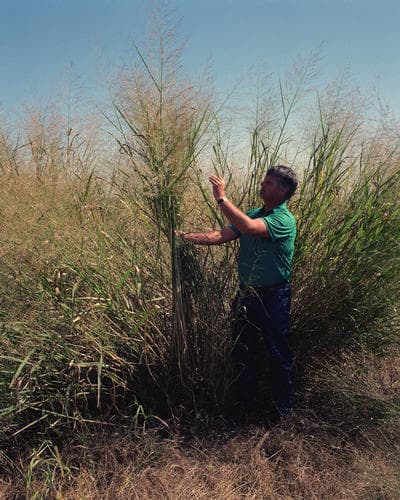
Yes. Deer almost always leave this alone.
- Type
- Ornamental grass
- Hardiness
- Zones 5–9
- Light
- Full sun
- Height
- 36–84 in
- Bloom
- August–October
- Maintenance
- Low
- Native range
- 46 US states
- Family
- Poaceae
Damage steps follow a published university field scale. How plants are rated.
About Switchgrass
Ornamental grasses are broadly deer-resistant and switchgrass is among the most reliable, ignored even in bad winters.
Native across most of North America, which is unusual for a grass this widely planted. It stands through snow, holds seed heads for birds, and turns gold or burgundy depending on the cultivar.
Cut it to the ground in late winter, before new growth starts. Leaving the old stems up through winter is the point of growing it, so resist tidying in fall.
It flops in rich soil and shade. Poor dry ground in full sun produces the upright plant people want; a fed, watered switchgrass falls open from the center after the first heavy rain in August.
Soil and care
- Soil pH
- 5.5 to 7.5
- Drainage
- Average garden soil
- Water
- Low
- Fertility
- Low
- Spacing
- 24 to 35 in apart
- Growth rate
- Fast
- Maintenance
- Low
Tolerances and uses
- Drought
- High
- Salt
- High
- Pollinators
- Low
Erosion control·Rain gardens·Coastal sites·Attracts birds
What to plant it with
Similar to Switchgrass
Other ornamental grasss with the same deer rating.
- Big BluestemAndropogon sp.Zones 3–9, genus rangeRarely damaged
- Blue FescueFestuca glaucaZones 4–8Rarely damaged
- Blue Oat GrassHelictotrichon sempervirensZones 4–8Rarely damaged
- Clump BambooFargesia sp.Zones 5–9, genus rangeRarely damaged
- Feather Reed GrassCalamagrostis sp.Zones 4–9, genus rangeRarely damaged
- Fountain GrassPennisetum alopecuroidesZones 6–9Rarely damaged
Where Switchgrass is used
One guide on this site plants it, and says where and what beside it.
Where Switchgrass grows
Hardy across 50 states on zone range alone, and native to 45 of them. Mountain and coastal areas sit outside the ranges used here, so check your own zone before ordering. Select any state, including one it will not grow in, for what is resistant there.
Choose a state from the listeasier on a phone
- Pennsylvania
- New Jersey
- New York
- Connecticut
- Massachusetts
- Virginia
- Maryland
- Michigan
- Wisconsin
- Ohio
- Indiana
- Illinois
- Minnesota
- Missouri
- North Carolina
- Tennessee
- Georgia
- Texas
- Colorado
- California
- Oregon
- Washington
- New Hampshire
- Vermont
- Maine
- Rhode Island
- Delaware
- West Virginia
- Kentucky
- South Carolina
- Florida
- Alabama
- Mississippi
- Louisiana
- Arkansas
- Oklahoma
- Kansas
- Nebraska
- Iowa
- North Dakota
- South Dakota
- Montana
- Wyoming
- Idaho
- Utah
- Nevada
- Arizona
- New Mexico
- Alaska
- District of Columbia
- Hawaii
Common questions about Switchgrass
- Is Switchgrass deer resistant?
- Switchgrass (Panicum virgatum) is rated Rarely Damaged, step 1 of 4 on the damage scale this site uses. Deer almost always leave this alone.
- What hardiness zones does Switchgrass grow in?
- Switchgrass is hardy in USDA zones 5 to 9. Outside that range it will either not survive winter or will struggle with summer heat.
- Does Switchgrass grow in shade?
- No. Switchgrass wants full sun and will grow thin and flop in shade.
- How big does Switchgrass get?
- Mature height is roughly 36–84 in. Growth rate is fast.
- When does Switchgrass bloom?
- Switchgrass flowers from August–October.
Browse from here
Every list Switchgrass belongs to.
All ornamental grasss·Rarely damaged·Full sun plants