
Plant record · Perennial · Crassulaceae
Is Stonecrop (Sedum) deer resistant?
Hylotelephium spectabile
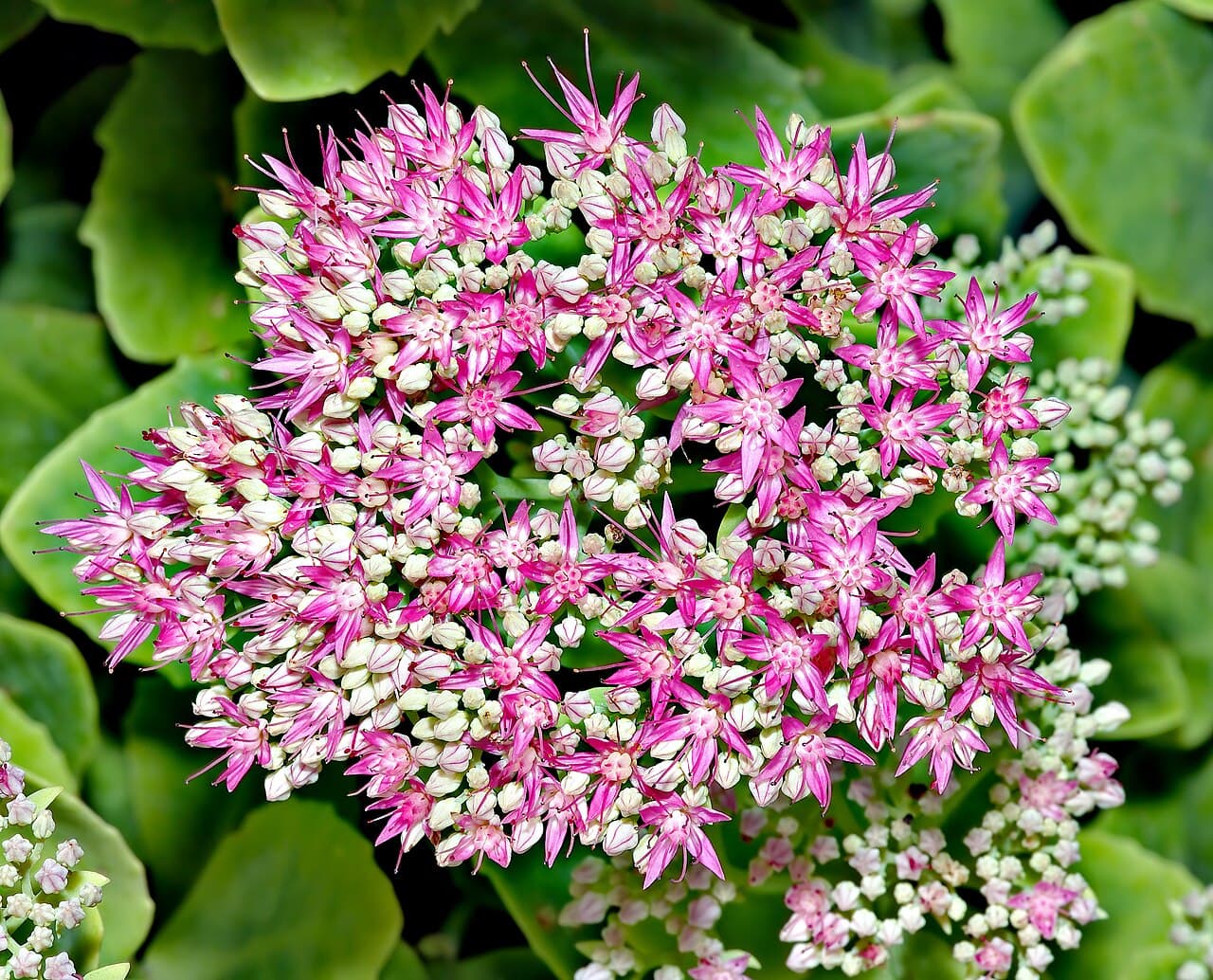
Partly. Browsed where deer pressure is high. Protect it.
- Type
- Perennial
- Hardiness
- Zones 4–9
- Light
- Full sun
- Height
- 12–24 in
- Bloom
- August–October
- Maintenance
- Low
- Family
- Crassulaceae
Damage steps follow a published university field scale. How plants are rated.
About Stonecrop
Succulent leaves that deer sometimes nibble in a drought and rarely destroy. In a wet year they ignore it entirely.
The universal failure is flopping. A sedum that opens out from the middle in August, splayed flat with a bare center, has been fed or watered or grown in shade, usually all three. It wants poor, sharp, sunny ground and no attention at all.
If yours already flops, cut every stem back by half in late May. The Chelsea chop delays flowering slightly and produces a shorter, self-supporting plant. Leave the seed heads standing over winter: they hold snow well and are one of the few things worth looking at in a January bed.
Do deer eat sedum?
Yes, more than its reputation allows. Rutgers rates showy sedum Occasionally Severely Damaged, the third tier, "Showy Sedum, Sedum spectabile," which is the plant now sold as Hylotelephium spectabile, Autumn Joy and its relatives, and NC State lists white-tailed deer under Problems rather than among the challenges it resists. The succulent leaves that make it drought-proof are water in a dry August, and that is when it is eaten: the flower heads just as they color, and the tops of the stems. Rabbits it resists. Deer it does not.
Where it grows
NC State: zones 4a to 9b, full sun to partial shade, 1 to 2 feet, flowering "late summer to fall" in flat heads "4-6 inches across." Drought, rabbits and salt are on its resistance list. NC State on shape: "To maintain a bushy shape and thick stems, cut or pinch back the stems in early spring."
Protecting sedum
The heads are the target and the season is short, so the 20 percent egg spray Colorado State rates High goes on in August as the buds form, once, and again at about thirty days if the display is meant to stand into October. In a dry summer, earlier.
If it is browsed
A sedum topped in August produces side shoots and small late heads, and the plant is not harmed; the loss is the year's display, and the flower was the point. Stems cut back by half in May flower later and shorter anyway, and a browsed plant behaves like a chopped one.
Protecting Stonecrop
Whether this survives comes down to local pressure, so decide on the options before it gets browsed rather than after.
- 1How tall a deer fence needs to beEight feet, and six is the most common expensive mistake in deer fencing.
- 2Repellent that actually worksThe egg-based recipe that reproduces the active ingredient in the commercial sprays that win university trials.
- 3Fencing a raised bedA deer jumps from ground level, so measure the barrier from the ground and not from the top of the bed.
- 4Check it is actually deerDeer tear and leave a ragged stub. A clean 45-degree cut is rabbits, and slug holes get blamed on deer constantly.
What to plant instead of Stonecrop
Same plant type, hardy in the same zones, and rated better for deer. If Stonecrop keeps getting eaten, these go in the same spot.
- Anise HyssopAgastache sp.Zones 4–9, genus rangeRarely damaged
- Bearded IrisIris germanicaZones 3–9Rarely damaged
- Butter and EggsLinaria vulgarisZones 3–9Rarely damaged
- False IndigoBaptisia australisZones 3–9Rarely damaged
- HorehoundMarrubium vulgareZones 3–9Rarely damaged
- HorseradishArmoracia rusticanaZones 4–9Rarely damaged
Soil and care
- Soil pH
- 6 to 7.5
- Drainage
- Sharp, gritty. Will rot in wet soil
- Water
- Low
- Fertility
- Low
- Spacing
- 18 to 24 in apart
- Growth rate
- Moderate
- Maintenance
- Low
Tolerances and uses
- Drought
- High
- Salt
- High
- Pollinators
- High
Containers·Coastal sites
What to plant it with
- Switchgrass
Late-season pairing that holds structure right through winter.
Keep apart from
- Astilbe
Succulent foliage rots in the constantly moist soil astilbe requires.
Where Stonecrop is used
3 guides on this site plant it, and say where and what beside it.
- Mailbox Garden PlanFull sun, no water, road salt and total deer exposure. Plants that survive all four.4 min
- Roadside Bed PlanSalt, plow spray and deer moving along the verge. Plus the sight-line rule that can have the town cut your planting down and bill you for it.6 min
- Theme: Let the Style Choose the PlantsSome themes are deer-resistant almost by accident. Choosing one of those is easier than defending a theme that fights you.6 min
Where Stonecrop grows
Hardy across every state on zone range alone. Mountain and coastal areas sit outside the ranges used here, so check your own zone before ordering. Select any state, including one it will not grow in, for what is resistant there.
Choose a state from the listeasier on a phone
- Pennsylvania
- New Jersey
- New York
- Connecticut
- Massachusetts
- Virginia
- Maryland
- Michigan
- Wisconsin
- Ohio
- Indiana
- Illinois
- Minnesota
- Missouri
- North Carolina
- Tennessee
- Georgia
- Texas
- Colorado
- California
- Oregon
- Washington
- New Hampshire
- Vermont
- Maine
- Rhode Island
- Delaware
- West Virginia
- Kentucky
- South Carolina
- Florida
- Alabama
- Mississippi
- Louisiana
- Arkansas
- Oklahoma
- Kansas
- Nebraska
- Iowa
- North Dakota
- South Dakota
- Montana
- Wyoming
- Idaho
- Utah
- Nevada
- Arizona
- New Mexico
- Alaska
- District of Columbia
- Hawaii
Common questions about Stonecrop
- Is Stonecrop deer resistant?
- Stonecrop (Hylotelephium spectabile) is rated Occasionally Severely Damaged, step 3 of 4 on the damage scale this site uses. Browsed where deer pressure is high. Protect it.
- What hardiness zones does Stonecrop grow in?
- Stonecrop is hardy in USDA zones 4 to 9. Outside that range it will either not survive winter or will struggle with summer heat.
- Does Stonecrop grow in shade?
- No. Stonecrop wants full sun and will grow thin and flop in shade.
- How big does Stonecrop get?
- Mature height is roughly 12–24 in. Growth rate is moderate.
- When does Stonecrop bloom?
- Stonecrop flowers from August–October.
Browse from here
Every list Stonecrop belongs to.
All perennials·Sometimes destroyed·Full sun plants