
Deer-resistant vines
Vines get browsed at the bottom and left alone higher up, so an established vine usually survives while a newly planted one does not. Protect the first two seasons and the problem tends to solve itself.
9 plants
A climber is only vulnerable while it is short
The encyclopedia holds 9 vines. Three are seldom severely damaged, six are occasionally severely damaged, and not one is rated rarely damaged. Setting aside the forage crops, which are planted to attract deer on purpose, this is the only category on the site where the top tier is empty.
That reads like a reason to give up on climbers. It is not, and the reason is geometry.
Deer feed from the ground to about five feet. On a perennial that is the entire plant, every year, for as long as you grow it, so a rating on a perennial describes a permanent condition. On a climber it describes a stage. A vine that finishes at 20 feet spends two or three years inside the browse zone and the rest of its life above it, and once the growth is up on the wire it is out of reach for good.
Eight of the nine here are recorded as fast growers. Only climbing hydrangea is slow. That matters more than any rating on this page, because growth rate sets how long the vulnerable window lasts.
Trees get half of this benefit. A tree grows out of the zone too, but it leaves behind a trunk at exactly the diameter a buck wants to rub against, so its problem never ends. A vine on a support presents no rubbable trunk, and the few feet of thin stem you do have to defend is the smallest protection target of any woody plant on this site.
The useful question here is not which climber deer will refuse. It is whether you can get this one through its first five feet.
Nine plants, and what the gaps mean
Nine is a short list, and it is worth being straight about why.
Rutgers E271 rates very few climbers. It is practitioner consensus from northern New Jersey rather than a controlled trial, and it covers what those practitioners were asked about. A vine missing from it has not been judged and found risky. It has not been judged. Read the list below as the climbers with a published rating rather than the climbers worth growing, and read all of it as white-tailed deer guidance.
Two thirds sit in the middle tier. So the working assumption for this page is that most climbers need protecting while they establish, and that the three in the seldom tier buy less than the same rating buys on a shrub, which is safe at year one where a vine is not.
Nothing here is deer proof. Nothing anywhere is.
Where the geometry fails
The argument above has holes in it, and three of the nine fall straight through.
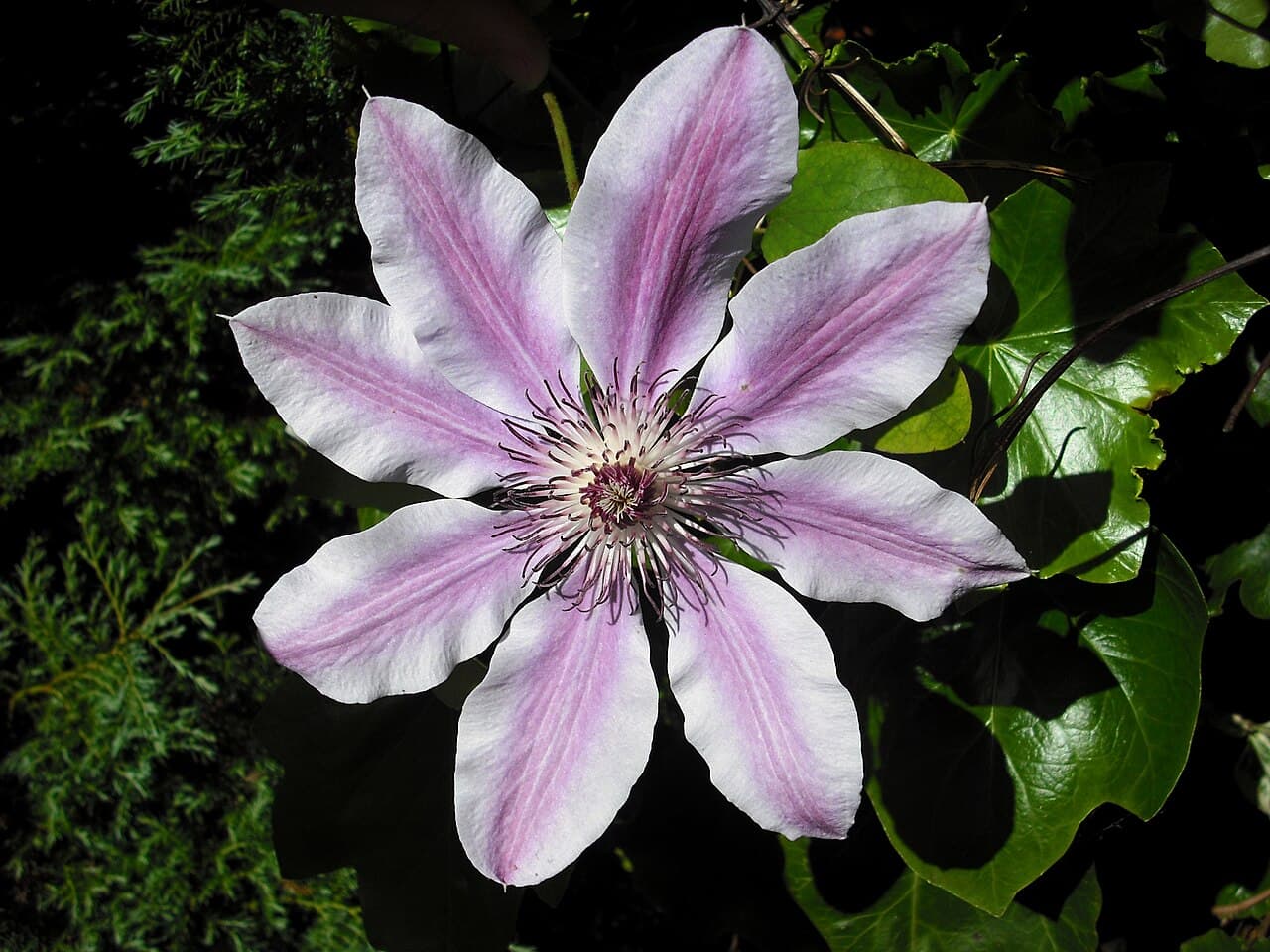
Clematis gets cut back to the ground. Clematis falls into one of three pruning groups, and group three is cut hard every spring. A plant pruned that way re-enters the browse zone every year, which cancels the advantage entirely. The pruning group decides whether you protect this plant once or forever. Keep the label.
Winter jasmine does not climb by itself. Winter jasmine is not self-clinging. Tied to wires it goes up. Left alone it sprawls sideways and covers a bank, which is a good use for it and also means it never leaves the browse zone at all.
Ivy on the ground stays on the ground. Most English ivy goes in as groundcover, and groundcover sits permanently at feeding height. Its record notes something the rating alone does not tell you: the browsing happens in winter, when other food has run out, and it is largely ignored the rest of the year. Ivy is also the only evergreen among these nine. Evergreen and reachable in February is the precise profile of winter browse.
One more thing undercuts the geometry, and it is seasonal. A foot of settled snow lifts the animal a foot, so the browse line rises with it. Growth you measured as safe in August is not necessarily safe in January.
One number worth not confusing with another: five feet is reach, not jump. A deer that cannot browse above five feet will still clear a six-foot fence, which is why fence height is a different figure.
Protecting the first few feet
First be reasonably sure deer are the cause. On a young vine at ground level, rabbit and groundhog damage looks similar and wants a different fix, so check the signs.
Because the target is small, the cheap answer is usually the right one.
A wire cylinder or rigid sleeve around the base, tall enough to cover the first five feet and wide enough that a deer cannot press against it and reach through, carries a climber through its whole vulnerable phase for the price of a few feet of fencing material. Compare that with caging a shrub that spreads, or fencing a whole bed.
Spray is the weaker option here, and specifically here rather than everywhere. The egg-based repellent reproduces the active ingredient in the sprays that win university trials, and it earns its place in the first season. But a fast climber pushes out new growth continuously from spring to late summer, and new growth is unsprayed growth. You end up chasing a moving target up a wall. On a shrub the target holds still, which is why repellents rate better there.
How the plant climbs changes the practicalities more than you would expect.
- Self-clinging. Climbing hydrangea and trumpet creeper hold on with aerial roots; Virginia creeper uses adhesive pads and is gentler on masonry. All sit tight against the wall, which makes a base sleeve fiddly to fit and easy to skip.
- Twiners. American bittersweet, wisteria, goldflame honeysuckle and clematis need something to wind around. Wisteria needs metal, not timber.
- Tied in. Winter jasmine, and anything trained flat.
A free-standing structure is the best choice in deer country, for two reasons unrelated to looks. You can cage the legs, and the head of an arbour or pergola starts at seven or eight feet, above the line from the day it is built. Trumpet creeper wants one regardless of deer, for reasons below.
The three that hold up, and the catch on two of them
| Plant | Rating | Zones | The catch |
|---|---|---|---|
| American bittersweet | Seldom severely damaged | 3 to 8 | Confused in the trade with an invasive relative |
| Winter jasmine | Seldom severely damaged | 6 to 10 | Least hardy here, and will not climb unaided |
| Wisteria | Seldom severely damaged | 4 to 9 | Invasive in 13 states, destructive on a house |
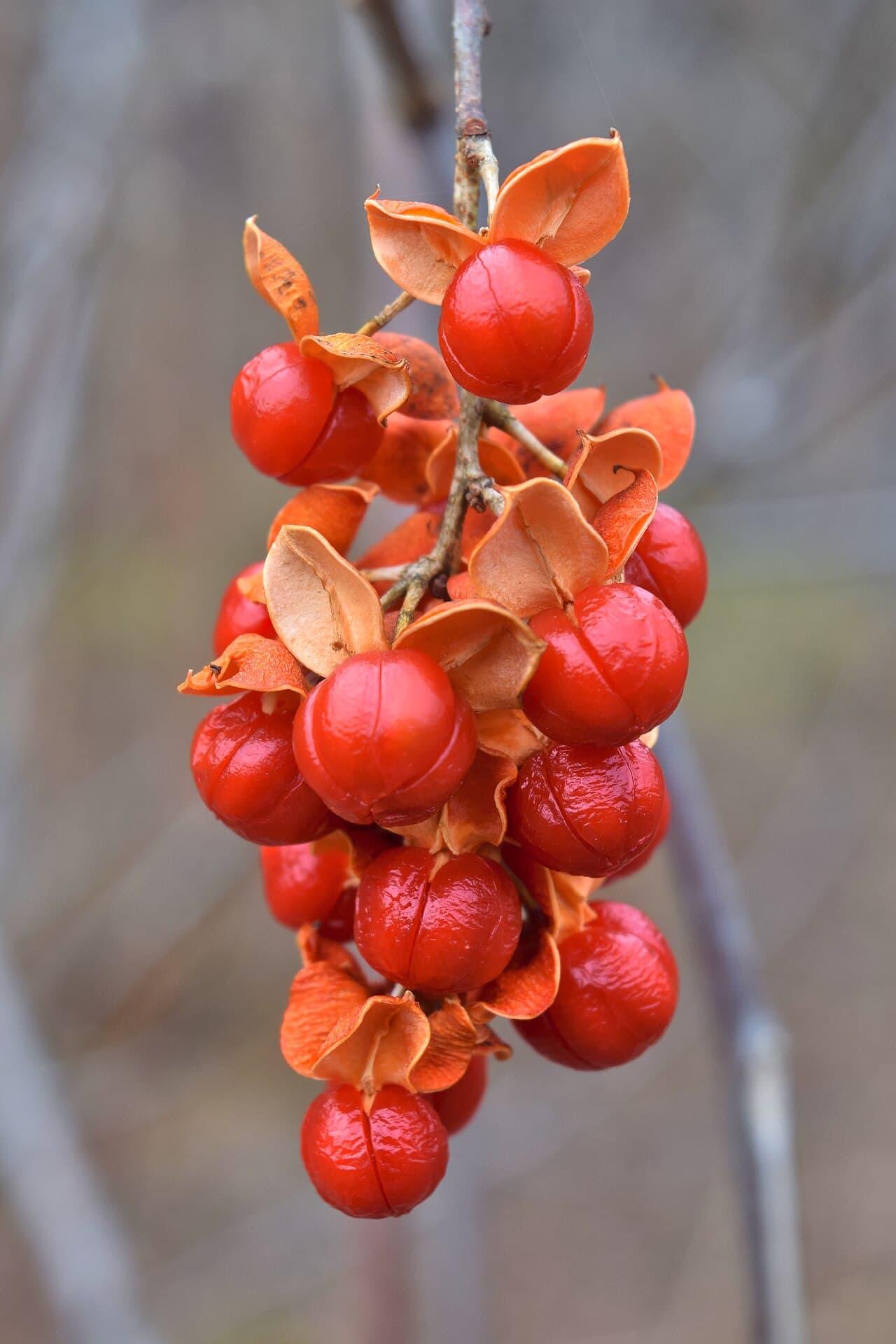
American bittersweet (Celastrus scandens) is native across 39 states and is not flagged invasive anywhere in our records. Its relative Oriental bittersweet is the invasive one, and the two are mislabelled in the trade often enough that it is worth buying by botanical name rather than by whatever is printed on the pot. Two other things. You need a male and a female plant to get the orange capsules and scarlet seeds people grow it for, and it runs to 20 or 25 feet.
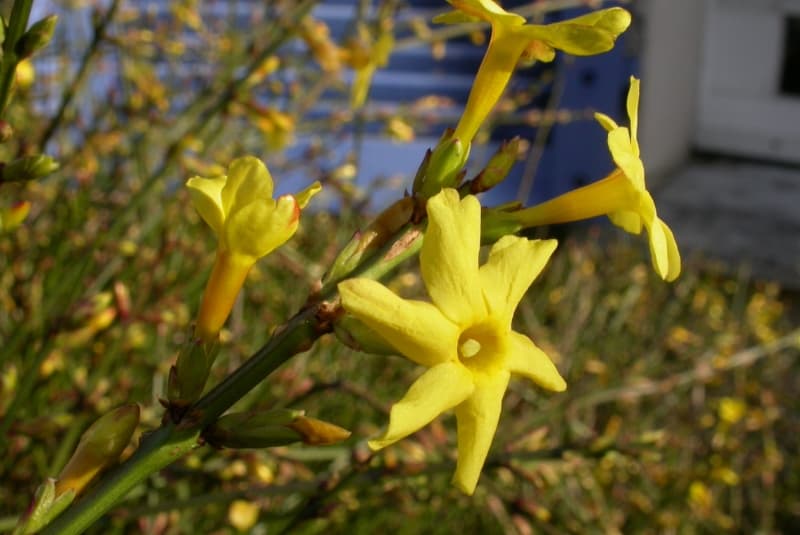
Winter jasmine (Jasminum nudiflorum) carries yellow flowers on bare green stems through the worst of winter, which is rare and useful. It is also the least hardy plant here, and despite the name it has no scent at all.
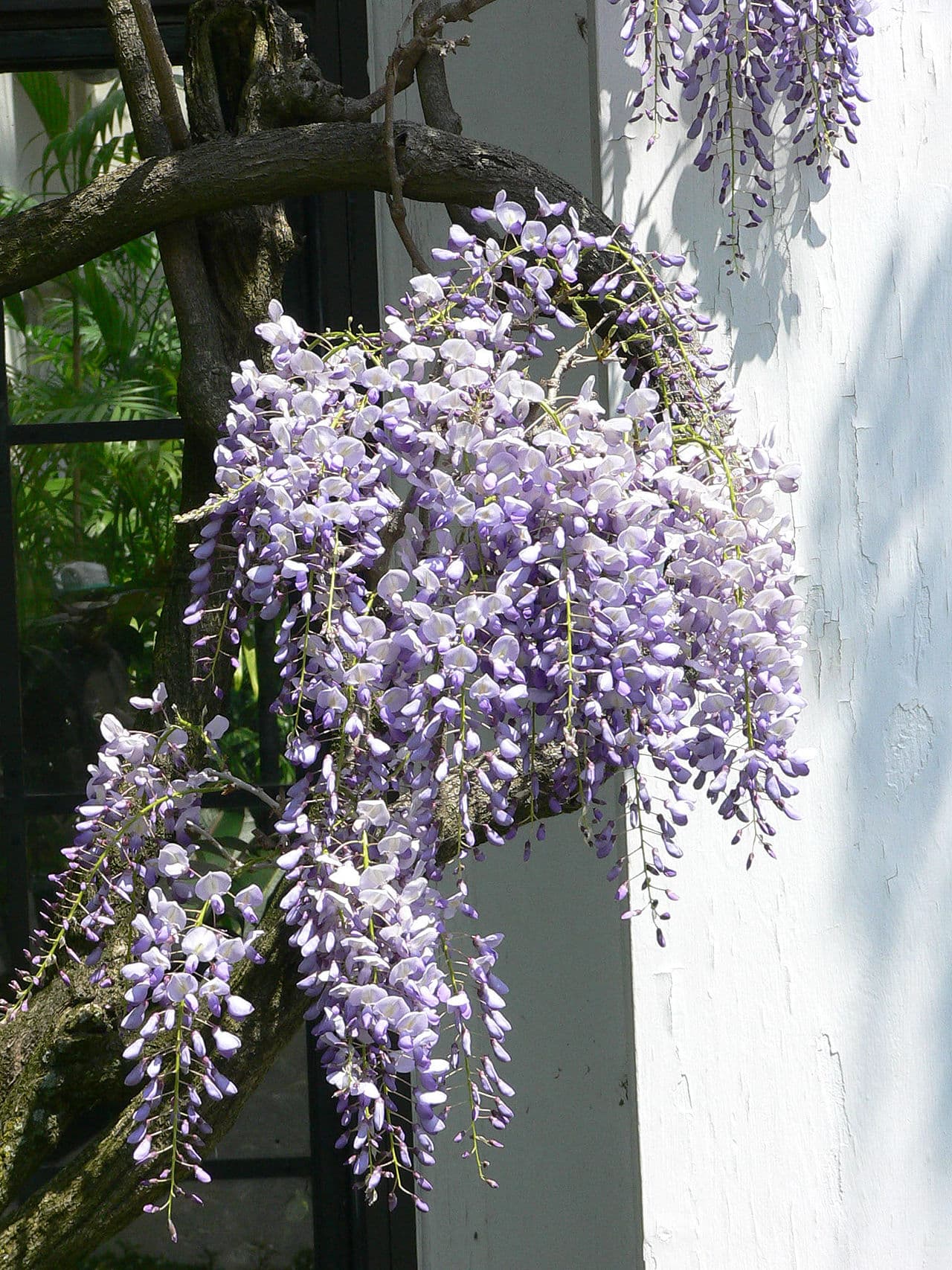
Wisteria is the one to think hard about, and deer are not the reason. The plant in our records is Wisteria floribunda, Japanese wisteria, flagged invasive in 13 states. It is one of the two vines here rated high maintenance, trumpet creeper being the other. Mature stems crush gutters, lift roof tiles and strangle trees, and the plant wants serious metal support plus pruning twice a year. A deer-resistant rating on something that can pull a gutter off a house is not the fact that should decide it.
The invasive question outweighs the deer question
Two of the nine are flagged invasive in our records, 26 state listings between them.
English ivy is listed in 13. It escapes into woodland, mats over the ground until tree seedlings cannot regenerate, and climbs mature trees until the added weight and sail area bring them down in a storm. It also changes form in light: adult growth flowers and fruits, and birds carry the seed well beyond your garden, so keeping it off vertical surfaces keeps it sterile. If a groundcover for shade was the actual goal, Allegheny spurge and Siberian cypress are both rated rarely damaged and neither one runs. Allegheny spurge is the one for genuine shade, down to an hour of sun. Siberian cypress is the evergreen of the two but wants three.
Japanese wisteria accounts for the other 13, running from Maryland and Kentucky south to Florida and west into Texas.
Trumpet creeper needs a correction, because it gets called invasive constantly and our record does not say that. It is native across 39 states. What it is, is aggressive: rated high maintenance, aerial roots into mortar, suckers surfacing in the lawn. Native and badly behaved is not the same thing as invasive, and the distinction matters if you are planting for hummingbirds, which work the orange trumpets all summer.
Virginia creeper is likewise native across 39 states and carries no invasive flag. Learn to count its leaflets: five is Virginia creeper, three is poison ivy, and the two grow together more often than people expect.
Goldflame honeysuckle is a hybrid, unflagged, and far better behaved than Japanese honeysuckle. It mildews in still air, so give it room.
A shaded wall is the hard case, again
Three of these nine tolerate real shade. English ivy will take an hour of direct sun, climbing hydrangea and Virginia creeper two. One of those three is the invasive one.
So a north wall in a garden with deer comes down to climbing hydrangea or Virginia creeper, both occasionally severely damaged. There is no resistant answer for a shaded wall: take the middle tier and protect it, or plant something else. Scent-based defenses belong to sun plants, which is why a shaded bed is short of options in every category here.
Climbing hydrangea is the better wall plant and the harder one to establish. It is the only slow grower here, and its record is blunt: it sulks for three or four years, then grows strongly. Those sulking years are spent inside the browse zone, which gives it the longest vulnerable window of any vine on this page. It is both the plant most worth caging and the one people are least likely to cage, because it looks like it is doing nothing.
Afterwards it asks for very little. It is self-clinging, needs no support, and flowers on a north wall where almost nothing else does. For a worked example, see the wall and foundation plan.
Six of the nine are toxic to pets
American bittersweet, wisteria, clematis, climbing hydrangea, English ivy and Virginia creeper are all flagged toxic to pets. Winter jasmine, goldflame honeysuckle and trumpet creeper are not.
This deserves more weight on a climber than on a bed plant. Vines get trained over doorways, along patio walls and across seating, which puts foliage at head height exactly where children and dogs spend time, and drops leaves and berries onto paving. Virginia creeper berries are toxic to people too.
The toxic six also fail to line up with the resistant three. Wisteria is toxic and resistant. Goldflame honeysuckle is not toxic and gets browsed. Toxicity predicts browsing no better here than it does among the shrubs.
How to use the list below
Nine plants is short enough to read all of. They are grouped by rating, best first, with sun requirement, hardiness range and mature size on each entry.
Read the rating as a description of the first few years rather than of the plant. Then ask the question that actually settles the outcome: how quickly does this one clear five feet, and will anything I do later put it back down there. Hard pruning and sprawling are the two answers that should worry you.
If a climber will spend three years within reach, budget for a sleeve at planting. That is most of the difference between a vine that establishes and one you buy twice.
Seldom Severely Damaged3
Occasionally Severely Damaged6
Clematis
Occasionally damagedClematis sp.
- Type
- Vine
- Hardiness
- Zones 4–9, genus range
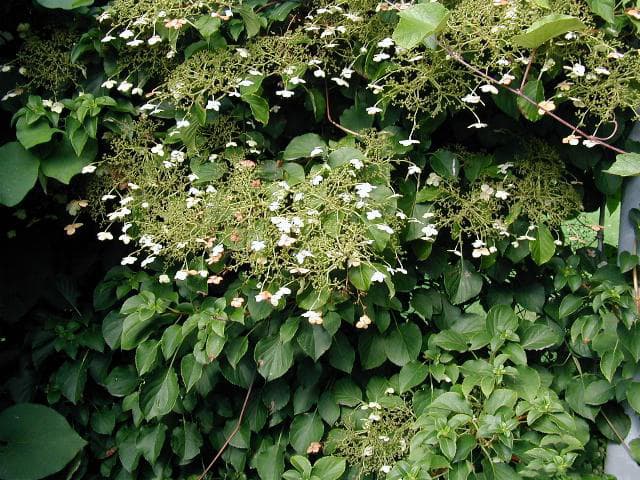
Climbing Hydrangea
Occasionally damagedHydrangea anomala petiolaris
- Type
- Vine
- Hardiness
- Zones 4–8
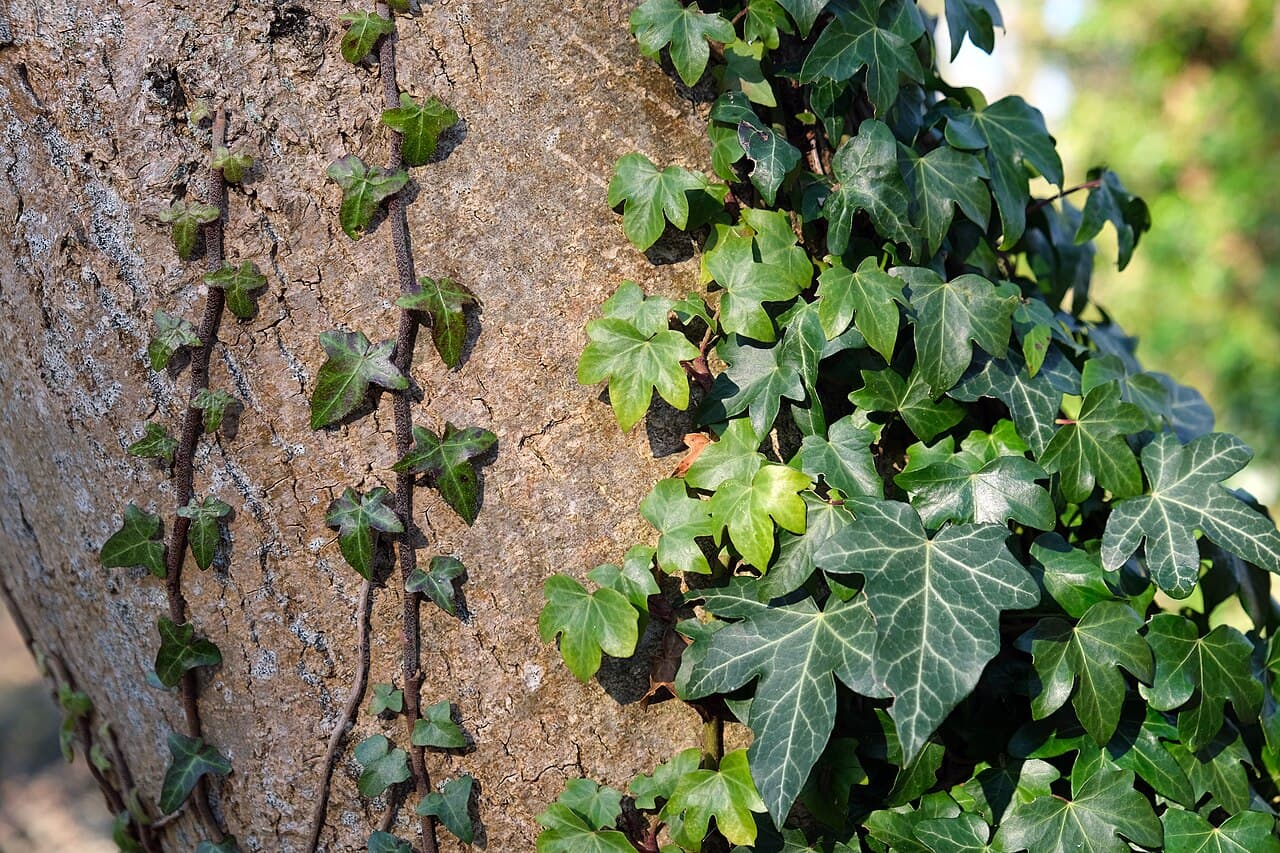
English Ivy
Occasionally damagedHedera helix
- Type
- Vine
- Hardiness
- Zones 4–9
- Height
- 6–787 in
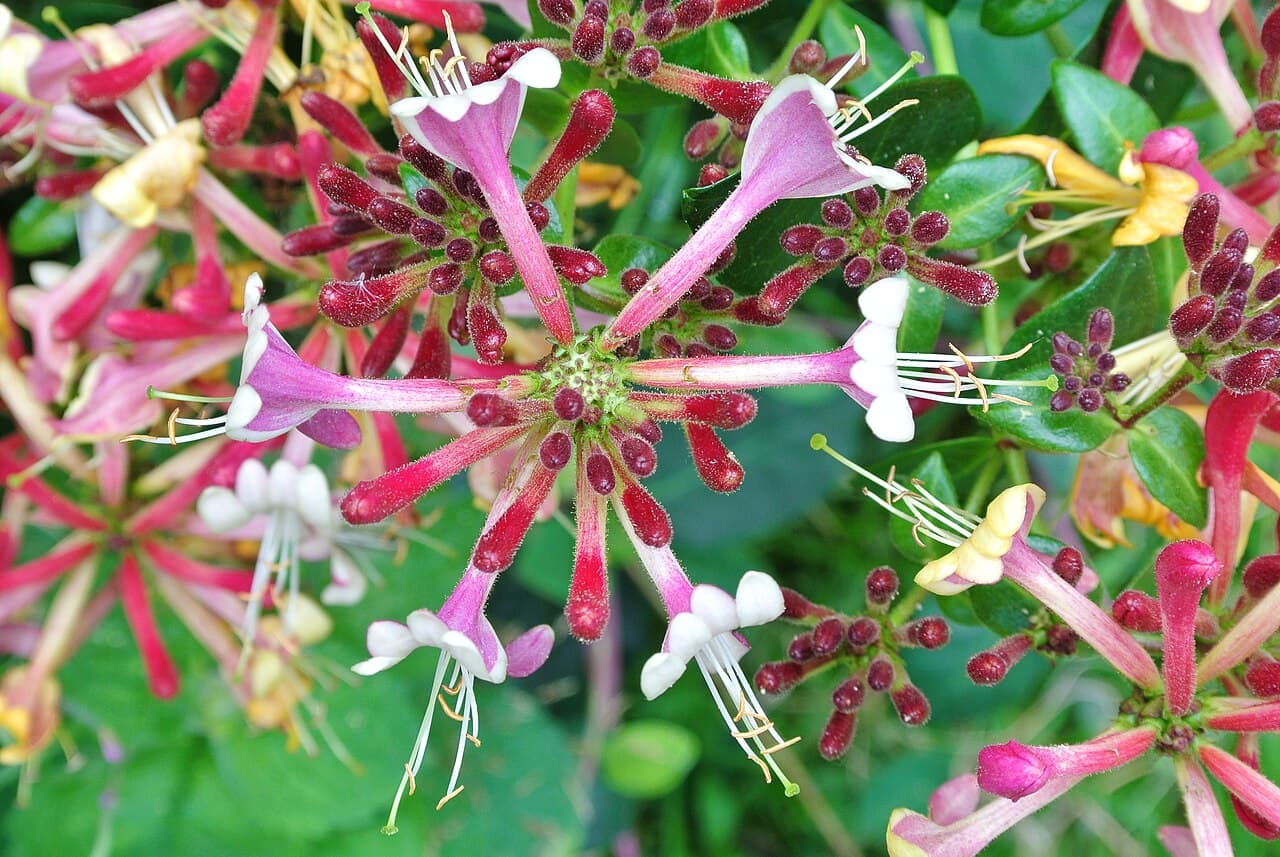
Goldflame Honeysuckle
Occasionally damagedLonicera x heckrottii
- Type
- Vine
- Hardiness
- Zones 5–9
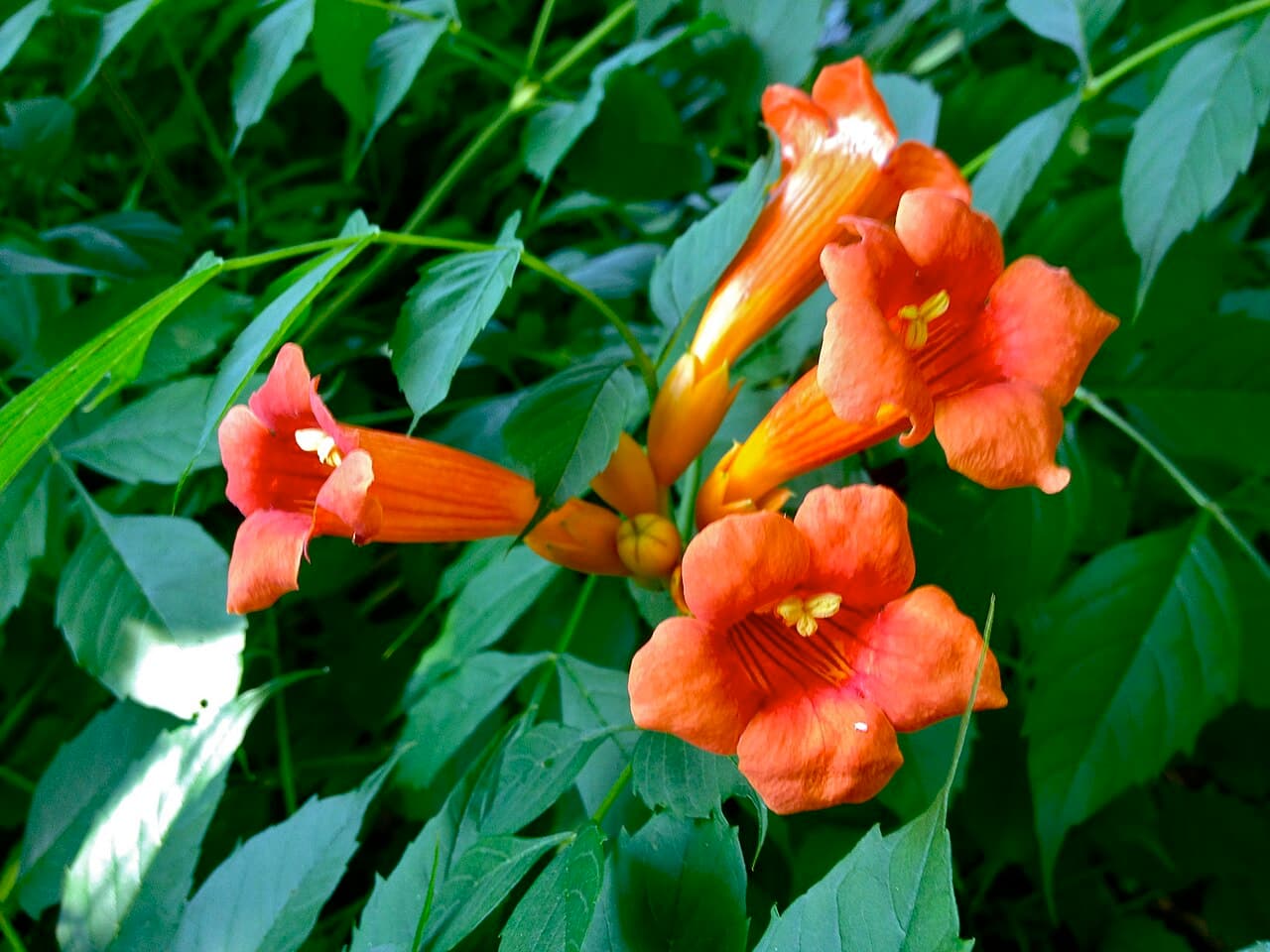
Trumpet Creeper
Occasionally damagedCampsis radicans
- Type
- Vine
- Hardiness
- Zones 4–10
- Height
- 360–480 in
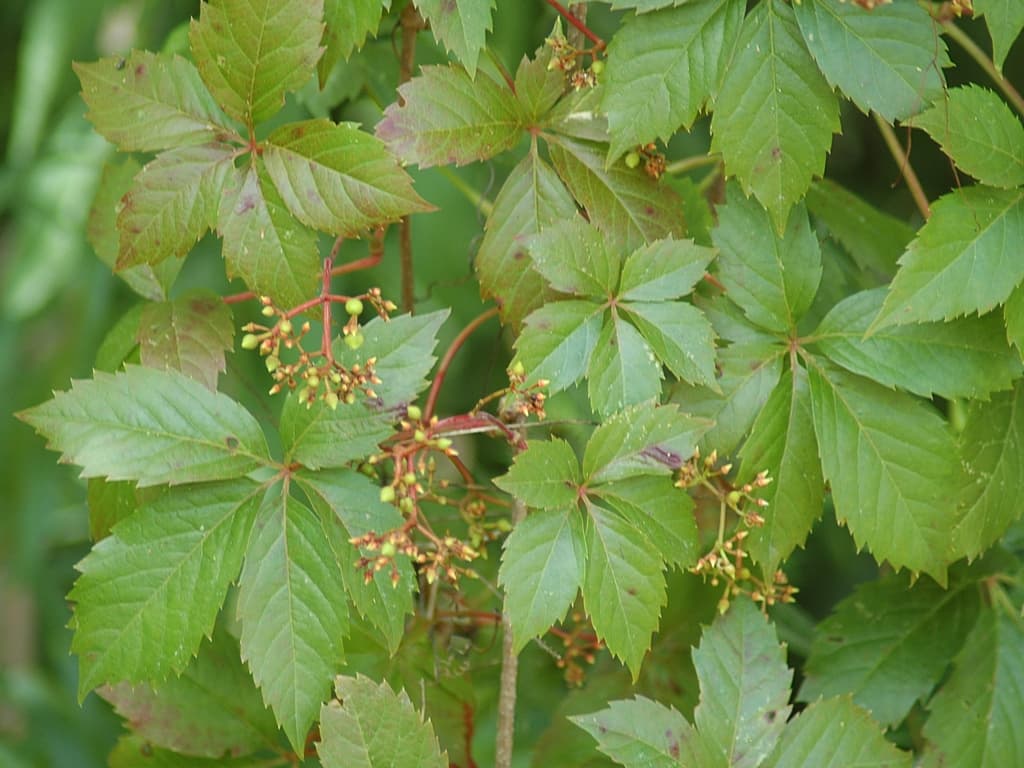
Virginia Creeper
Occasionally damagedParthenocissus quinquefolia
- Type
- Vine
- Hardiness
- Zones 3–10
- Height
- 360–600 in