
Plant record · Vine
Is Clematis deer resistant?
Clematis sp.
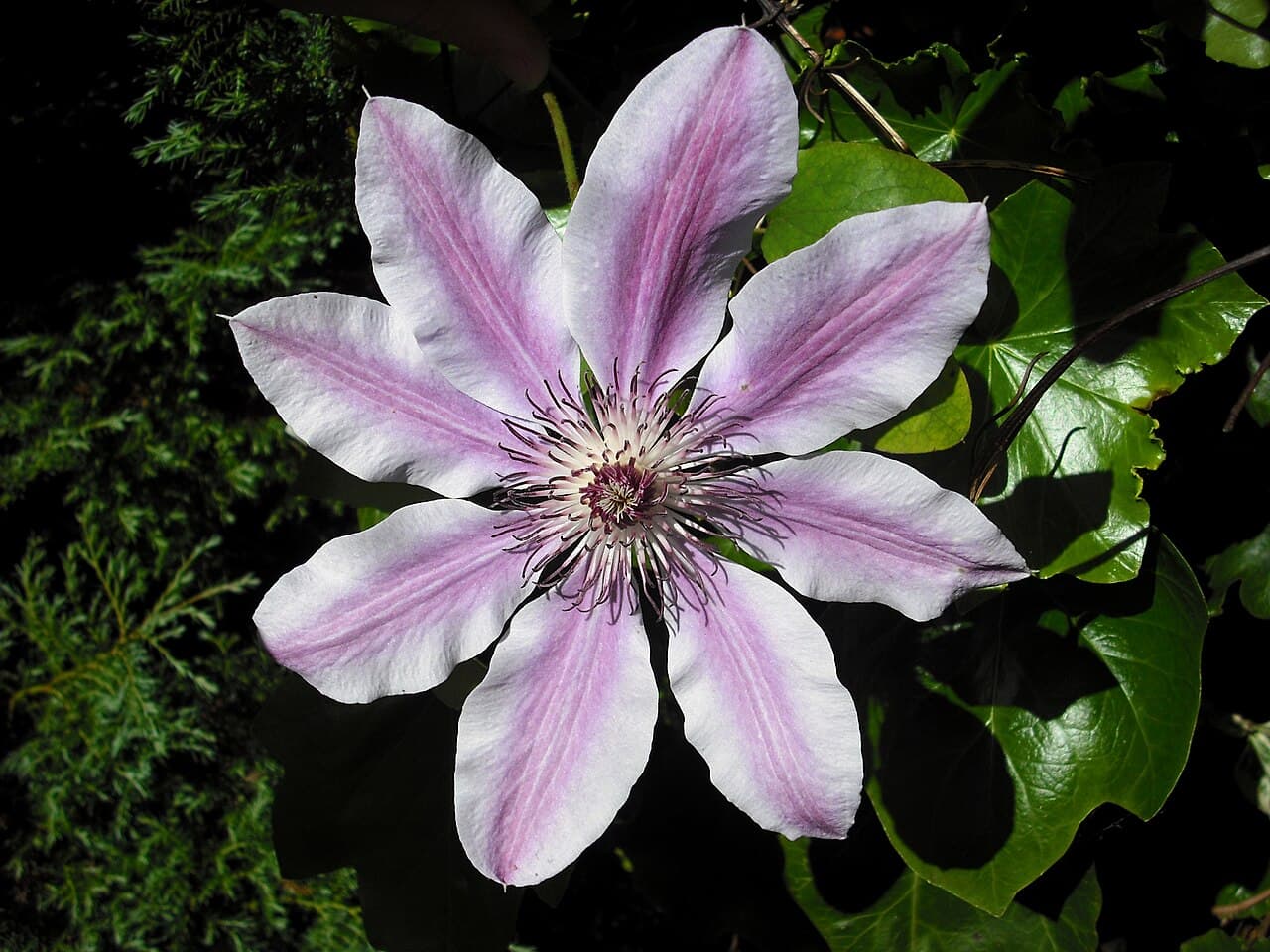
Partly. Browsed where deer pressure is high. Protect it.
- Type
- Vine
- Hardiness
- Zones 4–9, genus range
- Light
- Part shade
- Maintenance
- Moderate
- Toxic to
- dogs, cats, and horses
Damage steps follow a published university field scale. How plants are rated.
About Clematis
Pruning depends entirely on which of three groups your plant belongs to, and getting it wrong means no flowers, so keep the label. The old rule of thumb is heads in sun, feet in shade: mulch the root run and shade the base. Clematis wilt collapses whole stems suddenly; cut back to healthy growth and it usually recovers.
Do deer eat clematis?
Sometimes. Rutgers rates the genus Occasionally Severely Damaged, the third tier, and NC State's entry says the opposite for the same plant: "The plants are deer- and rabbit-resistant." Both are looking at a vine that carries protoanemonin in every leaf, which NC State rates a High-severity poison, "severe mouth pain and ulcers if ingested," and which Rutgers nonetheless recorded as damaged often enough for the third tier. The soft spring shoots at ground level, before the vine has climbed out of reach, are what a deer takes, and on a young plant that is the whole plant.
Where it grows
NC State: zones 3a to 9b, 1 to 18 feet depending on species and support, full sun or partial shade with the roots shaded, flowering spring, summer or fall by group. Black walnut is on its resistance list. The ASPCA lists clematis as toxic to dogs, cats and horses; NC State adds contact dermatitis from the sap, and the callout below carries it.
Protecting clematis
The vulnerable weeks are the first two springs, when the new growth is within reach. A cylinder of wire around the base until the shoots are above 4 feet, or the 20 percent egg spray Colorado State rates High on the emerging stems in April, once and again at about thirty days. A clematis that has climbed a trellis is mostly out of reach after that, and a deer standing at a railing can still reach 6 feet of it.
If it is browsed
A clematis in the group that is cut to the ground every spring is not harmed by a spring browse; it regrows from the base the way it was going to. One in the group that flowers on old wood loses the year's flowers on the eaten stems. Clematis wilt, which drops a whole stem overnight, is the thing people mistake for browsing, and the cut end is the difference: a deer leaves a ragged tear, wilt leaves a blackened stem.
Protecting Clematis
Whether this survives comes down to local pressure, so decide on the options before it gets browsed rather than after.
- 1How tall a deer fence needs to beEight feet, and six is the most common expensive mistake in deer fencing.
- 2Repellent that actually worksThe egg-based recipe that reproduces the active ingredient in the commercial sprays that win university trials.
- 3Check it is actually deerDeer tear and leave a ragged stub. A clean 45-degree cut is rabbits, and slug holes get blamed on deer constantly.
Soil and care
- Soil pH
- 6.5 to 7.5
- Drainage
- Consistently moist
- Water
- Moderate
- Spacing
- 35 to 47 in apart
- Growth rate
- Fast
- Maintenance
- Moderate
Where Clematis is used
One guide on this site plants it, and says where and what beside it.
Where Clematis grows
Hardy across every state on zone range alone. Mountain and coastal areas sit outside the ranges used here, so check your own zone before ordering. Select any state, including one it will not grow in, for what is resistant there.
Choose a state from the listeasier on a phone
- Pennsylvania
- New Jersey
- New York
- Connecticut
- Massachusetts
- Virginia
- Maryland
- Michigan
- Wisconsin
- Ohio
- Indiana
- Illinois
- Minnesota
- Missouri
- North Carolina
- Tennessee
- Georgia
- Texas
- Colorado
- California
- Oregon
- Washington
- New Hampshire
- Vermont
- Maine
- Rhode Island
- Delaware
- West Virginia
- Kentucky
- South Carolina
- Florida
- Alabama
- Mississippi
- Louisiana
- Arkansas
- Oklahoma
- Kansas
- Nebraska
- Iowa
- North Dakota
- South Dakota
- Montana
- Wyoming
- Idaho
- Utah
- Nevada
- Arizona
- New Mexico
- Alaska
- District of Columbia
- Hawaii
Common questions about Clematis
- Is Clematis deer resistant?
- Clematis (Clematis sp.) is rated Occasionally Severely Damaged, step 3 of 4 on the damage scale this site uses. Browsed where deer pressure is high. Protect it.
- What hardiness zones does Clematis grow in?
- Clematis is hardy in USDA zones 4 to 9. Outside that range it will either not survive winter or will struggle with summer heat. That is the range across the genus, so a named species or cultivar may be narrower.
- Does Clematis grow in shade?
- Yes. Clematis tolerates part shade, which makes it one of the options for a shaded bed where deer also browse.
- Is Clematis toxic to dogs or cats?
- Yes. The ASPCA lists Clematis as toxic to dogs, cats, and horses. Site it away from where animals graze, or choose something else if you have a dog that chews.
Browse from here
Every list Clematis belongs to.
All vines·Sometimes destroyed·Part shade plants