
Plant record · Perennial
Is Swamp Milkweed (Milkweed) deer resistant?
Asclepias incarnata
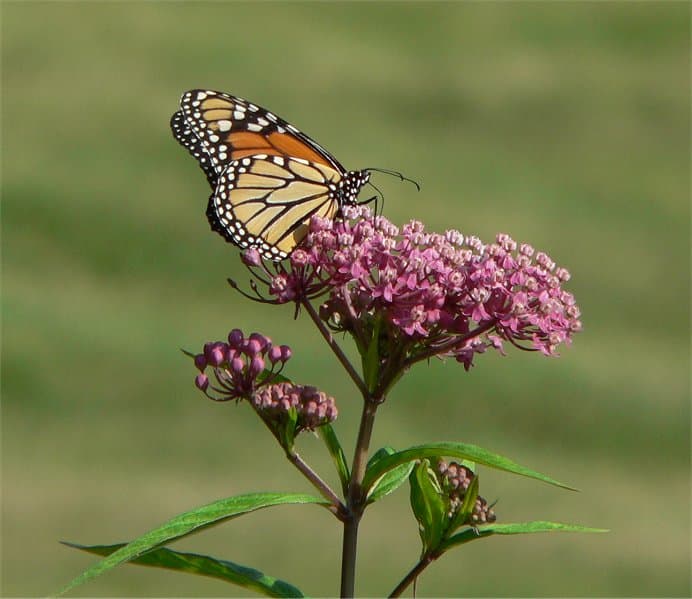
Mostly. Light browsing at worst; rarely ruined.
- Type
- Perennial
- Hardiness
- Zones 3–9
- Light
- Full sun
- Height
- 36–60 in
- Bloom
- Summer and Fall
- Maintenance
- Low
- Native range
- 44 US states
- Toxic to
- dogs, cats, and horses
Damage steps follow a published university field scale. How plants are rated.
About Swamp Milkweed
A monarch host plant that, despite the name, grows perfectly well in ordinary garden soil as long as it does not dry out completely. Better behaved than common milkweed, which runs. Milky sap deters deer and irritates skin. Emerges late, so mark the spot.
Do deer eat milkweed?
Seldom. Rutgers rates swamp milkweed, Asclepias incarnata, Seldom Severely Damaged, B, and butterfly weed, A. tuberosa, the same. NC State: "It is resistant to browsing by deer," and rabbits are on the same list. The milky sap carries cardiac glycosides and resinoids, which NC State rates a Low-severity poison, and a deer that tests it does not come back for more. Common milkweed, A. syriaca, the roadside one, is not in the encyclopedia and not rated by Rutgers; the two that are both sit in the second tier.
Where it grows
NC State: zones 3a to 9b, 3 to 5 feet, full sun or partial shade, flowering summer into fall, tolerant of wet soil and, despite the name, of ordinary garden ground that does not dry out completely. It is "the larval host plant for Monarch (Danaus plexippus) larvae," which is the reason most people plant it, and the caterpillars strip it on purpose. The ASPCA lists milkweed as toxic to dogs, cats and horses; NC State adds contact dermatitis from the sap, and the callout below carries it.
Protecting milkweed
Nothing from deer. From the monarch caterpillars, nothing either, since that is the point; a stripped stem in August regrows or does not, and the plant comes back the next spring from the root.
If it is browsed
It regrows from the base within weeks, and the flowers on the eaten stems are replaced by smaller heads on the side shoots. It emerges late in spring and a bare patch in May is not damage.
Soil and care
- Soil pH
- 5.5 to 7
- Drainage
- Consistently moist
- Water
- High
- Spacing
- 18 to 24 in apart
- Growth rate
- Moderate
- Maintenance
- Low
Similar to Swamp Milkweed
Other perennials with the same deer rating.
- African LilyAgapanthus sp.Zones 8–11, genus rangeSeldom damaged
- AsparagusAsparagus officinalisZones 2–9Seldom damaged
- AsterAster sp.Zones 3–8, genus rangeSeldom damaged
- AstilbeAstilbe x arendsiiZones 3–8Seldom damaged
- Baby's BreathGypsophila sp.Zones 3–9, genus rangeSeldom damaged
- BastardsageEriogonum wrightiiZones 5–10Seldom damaged
Where Swamp Milkweed grows
Hardy across every state on zone range alone, and native to 44 of them. Mountain and coastal areas sit outside the ranges used here, so check your own zone before ordering. Select any state, including one it will not grow in, for what is resistant there.
Choose a state from the listeasier on a phone
- Pennsylvania
- New Jersey
- New York
- Connecticut
- Massachusetts
- Virginia
- Maryland
- Michigan
- Wisconsin
- Ohio
- Indiana
- Illinois
- Minnesota
- Missouri
- North Carolina
- Tennessee
- Georgia
- Texas
- Colorado
- California
- Oregon
- Washington
- New Hampshire
- Vermont
- Maine
- Rhode Island
- Delaware
- West Virginia
- Kentucky
- South Carolina
- Florida
- Alabama
- Mississippi
- Louisiana
- Arkansas
- Oklahoma
- Kansas
- Nebraska
- Iowa
- North Dakota
- South Dakota
- Montana
- Wyoming
- Idaho
- Utah
- Nevada
- Arizona
- New Mexico
- Alaska
- District of Columbia
- Hawaii
Common questions about Swamp Milkweed
- Is Swamp Milkweed deer resistant?
- Swamp Milkweed (Asclepias incarnata) is rated Seldom Severely Damaged, step 2 of 4 on the damage scale this site uses. Light browsing at worst; rarely ruined.
- What hardiness zones does Swamp Milkweed grow in?
- Swamp Milkweed is hardy in USDA zones 3 to 9. Outside that range it will either not survive winter or will struggle with summer heat.
- Does Swamp Milkweed grow in shade?
- No. Swamp Milkweed wants full sun and will grow thin and flop in shade.
- How big does Swamp Milkweed get?
- Mature height is roughly 36–60 in. Growth rate is moderate.
- Is Swamp Milkweed toxic to dogs or cats?
- Yes. The ASPCA lists Swamp Milkweed as toxic to dogs, cats, and horses. Site it away from where animals graze, or choose something else if you have a dog that chews.
Browse from here
Every list Swamp Milkweed belongs to.
All perennials·Seldom damaged·Full sun plants