
Plant record · Annual · Verbenaceae
Is Lantana deer resistant?
Lantana camara
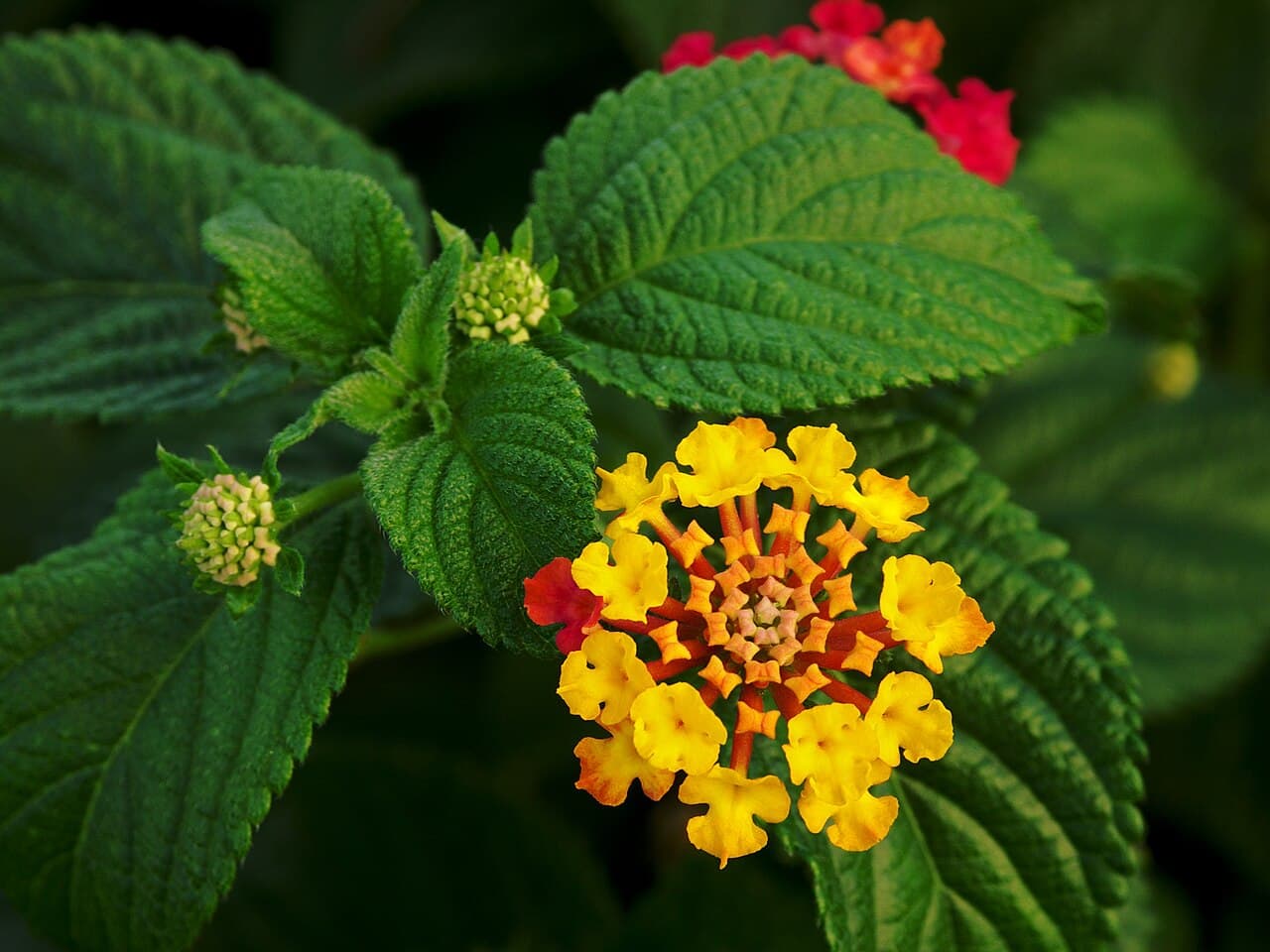
Mostly. Light browsing at worst; rarely ruined.
- Type
- Annual
- Hardiness
- Grown as an annual, any zone
- Light
- Full sun
- Height
- 12–72 in
- Bloom
- May–October
- Maintenance
- Low
- Family
- Verbenaceae
- Toxic to
- cats, dogs, and horses
Damage steps follow a published university field scale. How plants are rated.
About Lantana
Pungent foliage, and deer usually walk past it. It flowers relentlessly from planting to frost with no deadheading, which is rare.
Sold as an annual almost everywhere and perennial only from about zone 9 south. Where it is perennial it becomes a woody shrub several feet across.
That hardiness is exactly the problem in warm regions. Lantana is invasive in Florida, Texas and Hawaii, spread by birds taking the berries, and it forms thickets that displace native vegetation. In those states plant a sterile cultivar or something else entirely. North of zone 9 it dies every winter and the question does not arise.
The berries are toxic to livestock, and to children if eaten green.
Do deer eat lantana?
Seldom. Rutgers rates the genus Seldom Severely Damaged, listed on E271 as "Lantana, Lantana sp." among the annuals, and NC State's Plant Toolbox lists deer, drought, heat, humidity and salt as the challenges Lantana camara resists. The leaf is rough and smells strongly when brushed, and the whole plant carries lantadene, which is why it appears on the poison lists as well as the deer lists. The second tier is not the first. Under pressure the flower clusters and the soft tips are taken, and a bed of newly set plants in May, all soft growth, is at more risk than the same bed in August after the stems have gone woody.
Where it grows
NC State: hardy in zones 7a through 11b, in full sun, 1 to 6 feet depending on the cultivar, flowering "from midsummer until the first frost." North of zone 7 it is an annual and the size question does not arise. NC State also files it as "Weedy," and Florida, Texas and Hawaii list it as invasive.
Protecting lantana
Mostly nothing. Where tips are being taken in the first weeks after planting, one application of the 20 percent egg spray Colorado State rates High, renewed at about thirty days, carries the plants to the point where they are woody. The ASPCA lists lantana as toxic to cats, dogs and horses. NC State puts the poison severity at Medium, with "vomiting, diarrhea, dilated pupils, labored respiration, weakness, liver failure - more common in livestock," and notes the leaves "may cause dermatitis in sensitive individuals." The callout below carries the pet warning.
If it is browsed
It regrows from the nodes below the bite and flowers on the new growth, since it flowers on current growth until frost. Frost, not deer, is what ends it.
Soil and care
- Soil pH
- 6 to 7.5
- Drainage
- Well drained
- Water
- Low
- Fertility
- Low
- Spacing
- 18 to 35 in apart
- Growth rate
- Fast
- Maintenance
- Low
Tolerances and uses
- Drought
- High
- Salt
- High
- Pollinators
- High
Containers·Coastal sites
Similar to Lantana
Other annuals with the same deer rating.
- Annual CandytuftIberis umbellataGrown as an annual, any zoneSeldom damaged
- Annual SalviaSalvia splendensGrown as an annual, any zoneSeldom damaged
- Annual VerbenaVerbena x hybridaGrown as an annual, any zoneSeldom damaged
- Bachelor's ButtonsCentaurea cyanusGrown as an annual, any zoneSeldom damaged
- BasilOcimum basilicumGrown as an annual, any zoneSeldom damaged
- BorageBorago officinalisGrown as an annual, any zoneSeldom damaged
Where Lantana is used
One guide on this site plants it, and says where and what beside it.
Where Lantana grows
Hardy across every state on zone range alone. Mountain and coastal areas sit outside the ranges used here, so check your own zone before ordering. Select any state, including one it will not grow in, for what is resistant there.
Choose a state from the listeasier on a phone
- Pennsylvania
- New Jersey
- New York
- Connecticut
- Massachusetts
- Virginia
- Maryland
- Michigan
- Wisconsin
- Ohio
- Indiana
- Illinois
- Minnesota
- Missouri
- North Carolina
- Tennessee
- Georgia
- Texas
- Colorado
- California
- Oregon
- Washington
- New Hampshire
- Vermont
- Maine
- Rhode Island
- Delaware
- West Virginia
- Kentucky
- South Carolina
- Florida
- Alabama
- Mississippi
- Louisiana
- Arkansas
- Oklahoma
- Kansas
- Nebraska
- Iowa
- North Dakota
- South Dakota
- Montana
- Wyoming
- Idaho
- Utah
- Nevada
- Arizona
- New Mexico
- Alaska
- District of Columbia
- Hawaii
Common questions about Lantana
- Is Lantana deer resistant?
- Lantana (Lantana camara) is rated Seldom Severely Damaged, step 2 of 4 on the damage scale this site uses. Light browsing at worst; rarely ruined.
- What hardiness zones does Lantana grow in?
- Lantana is hardy in USDA zones 2 to 11. Outside that range it will either not survive winter or will struggle with summer heat.
- Does Lantana grow in shade?
- No. Lantana wants full sun and will grow thin and flop in shade.
- How big does Lantana get?
- Mature height is roughly 12–72 in. Growth rate is fast.
- When does Lantana bloom?
- Lantana flowers from May–October.
- Is Lantana toxic to dogs or cats?
- Yes. The ASPCA lists Lantana as toxic to cats, dogs, and horses. Site it away from where animals graze, or choose something else if you have a dog that chews.
- Is Lantana invasive?
- Lantana is listed as invasive or restricted in FL, HI, TX. Deer leaving it alone is not a reason to plant it. Check your own state before buying.
Browse from here
Every list Lantana belongs to.
All annuals·Seldom damaged·Full sun plants