
Plant record · Perennial
Is Rue deer resistant?
Ruta sp.
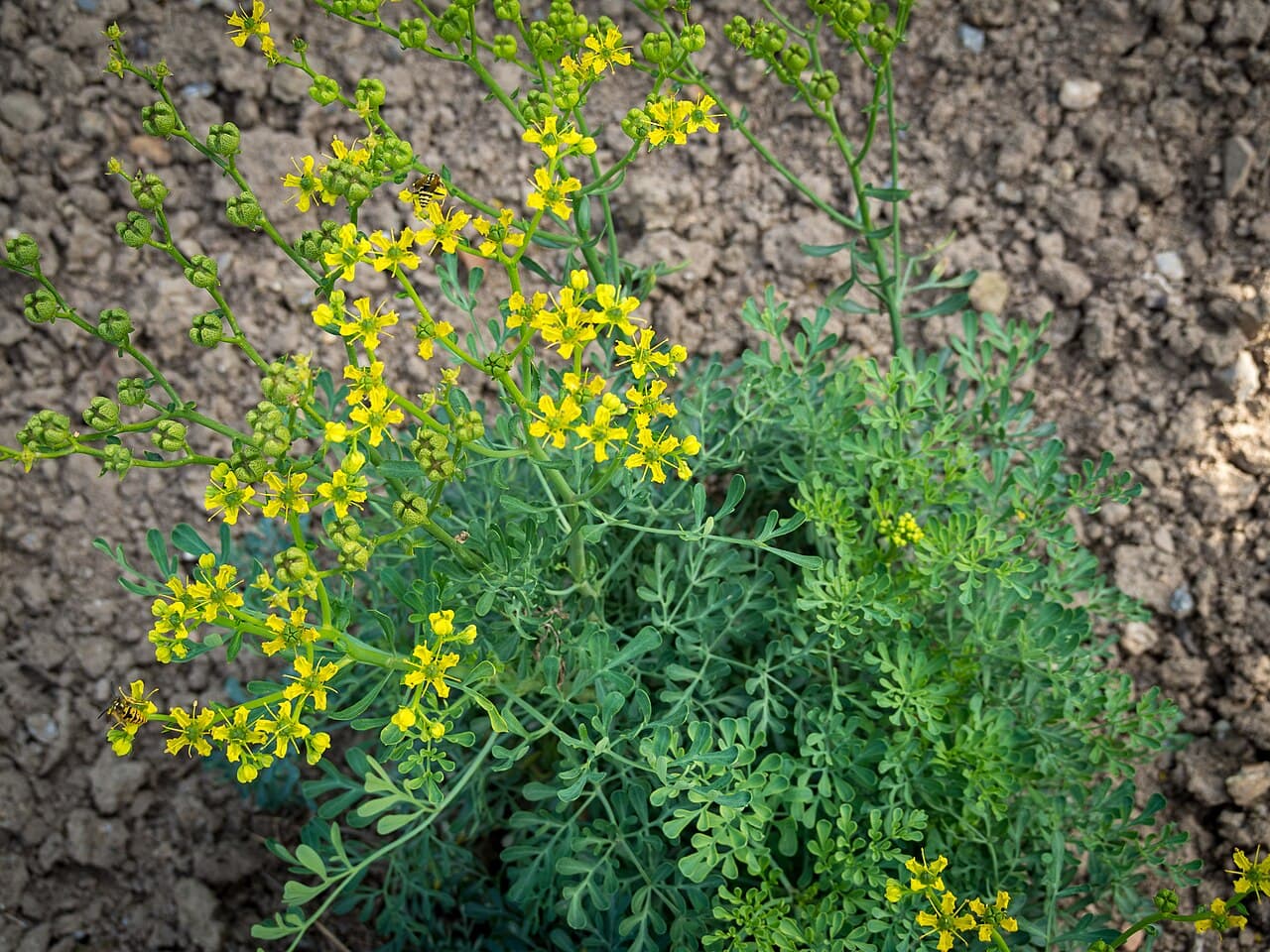
Yes. Deer almost always leave this alone.
- Type
- Perennial
- Hardiness
- Zones 4–9, genus range
- Light
- Full sun
- Bloom
- Summer and Fall
- Maintenance
- Low
Damage steps follow a published university field scale. How plants are rated.
About Rue
Blue-green filigree foliage with a strong bitter smell. The sap causes severe blistering in sunlight on contact with skin, so wear long sleeves and gloves when cutting it back.
Do deer eat rue?
Rarely. Rutgers rates the genus Rarely Damaged, A, Iowa State lists rue in the top tier of herbs, and NC State lists deer and rabbits among what Ruta graveolens resists, along with drought, dry soil, poor soil, insect pests and disease. The bitter, acrid smell is the reason, and it is strong enough that rue was once planted to keep more than deer away.
Where it grows
NC State: zones 4a to 10b, 2 to 3 feet, full sun or partial shade, yellow flowers summer into fall, and one problem, "Short-lived." The other problem is the gardener's. NC State rates rue a Medium-severity poison to people, furocoumarins, "potentially fatal" in quantity, and gives the handling rule twice: "wear gloves when working with the plant," and "Wear long sleeves and gloves when pruning or handling the foliage." The sap on skin in sunlight blisters.
Protecting rue
Nothing from deer. Protect yourself from the rue.
If it is browsed
It regrows from the woody base; it is cut back hard in spring anyway to keep it compact, and a browse does the same job worse. A plant that dies at four or five years was going to.
Soil and care
- Soil pH
- 6 to 7.5
- Drainage
- Sharp, gritty. Will rot in wet soil
- Water
- Low
- Spacing
- 18 to 24 in apart
- Growth rate
- Moderate
- Maintenance
- Low
Similar to Rue
Other perennials with the same deer rating.
- Anise HyssopAgastache sp.Zones 4–9, genus rangeRarely damaged
- Basket of GoldAurinia saxatilisZones 3–7Rarely damaged
- Bearded IrisIris germanicaZones 3–9Rarely damaged
- Bigleaf GoldenrayLigularia dentataZones 4–8Rarely damaged
- Bleeding HeartLamprocapnos spectabilisZones 3–9Rarely damaged
- Butter and EggsLinaria vulgarisZones 3–9Rarely damaged
Where Rue is used
One guide on this site plants it, and says where and what beside it.
Where Rue grows
Hardy across every state on zone range alone. Mountain and coastal areas sit outside the ranges used here, so check your own zone before ordering. Select any state, including one it will not grow in, for what is resistant there.
Choose a state from the listeasier on a phone
- Pennsylvania
- New Jersey
- New York
- Connecticut
- Massachusetts
- Virginia
- Maryland
- Michigan
- Wisconsin
- Ohio
- Indiana
- Illinois
- Minnesota
- Missouri
- North Carolina
- Tennessee
- Georgia
- Texas
- Colorado
- California
- Oregon
- Washington
- New Hampshire
- Vermont
- Maine
- Rhode Island
- Delaware
- West Virginia
- Kentucky
- South Carolina
- Florida
- Alabama
- Mississippi
- Louisiana
- Arkansas
- Oklahoma
- Kansas
- Nebraska
- Iowa
- North Dakota
- South Dakota
- Montana
- Wyoming
- Idaho
- Utah
- Nevada
- Arizona
- New Mexico
- Alaska
- District of Columbia
- Hawaii
Common questions about Rue
- Is Rue deer resistant?
- Rue (Ruta sp.) is rated Rarely Damaged, step 1 of 4 on the damage scale this site uses. Deer almost always leave this alone.
- What hardiness zones does Rue grow in?
- Rue is hardy in USDA zones 4 to 9. Outside that range it will either not survive winter or will struggle with summer heat. That is the range across the genus, so a named species or cultivar may be narrower.
- Does Rue grow in shade?
- No. Rue wants full sun and will grow thin and flop in shade.
Browse from here
Every list Rue belongs to.
All perennials·Rarely damaged·Full sun plants