
Plant record · Perennial
Is Purple Coneflower deer resistant?
Echinacea purpurea
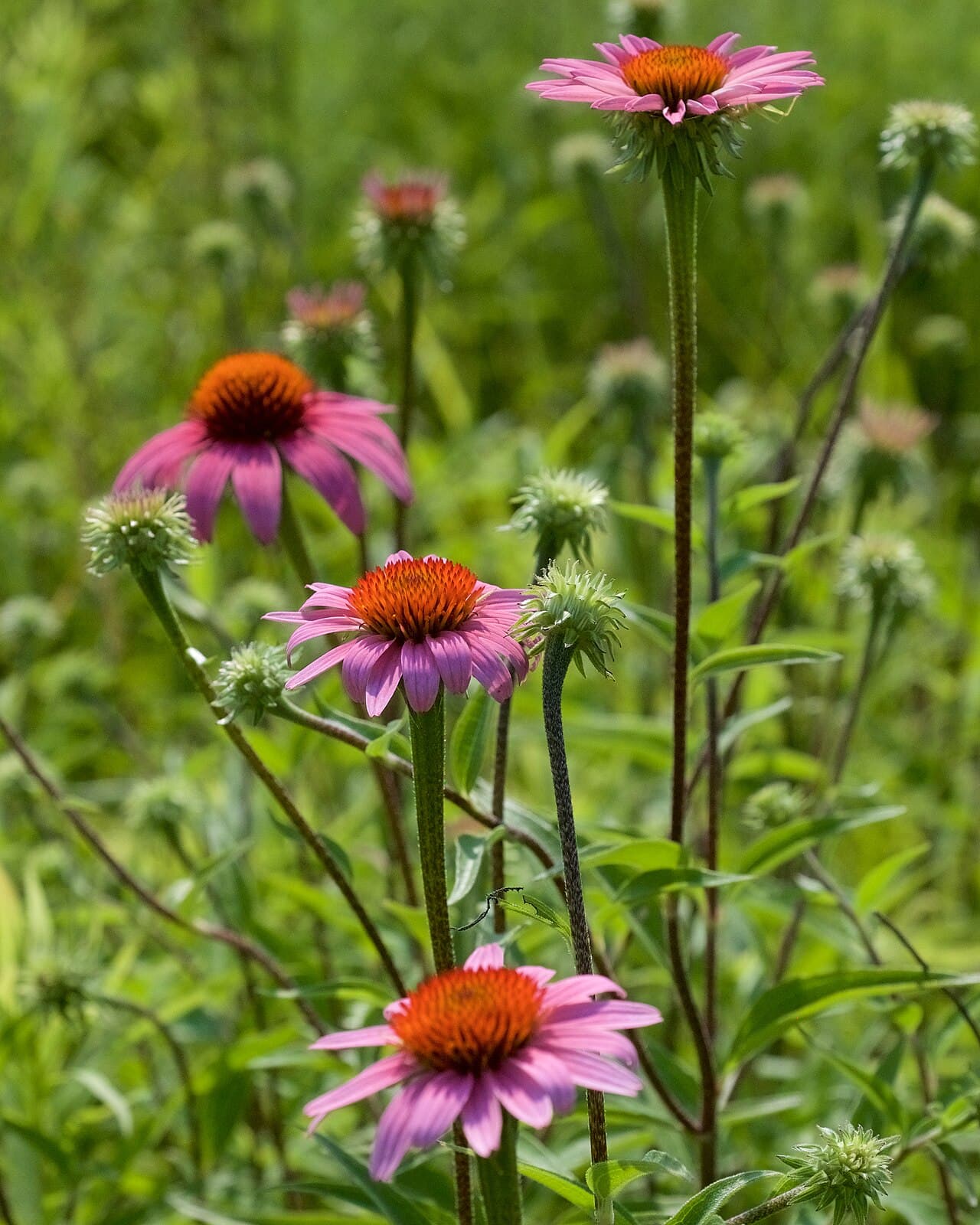
About Purple Coneflower
Coarse bristly leaves are what deter deer, and the stiff cones stand through winter for goldfinches, so leave them standing. The straight species is far longer-lived than the double and orange cultivars, most of which fade out within a few seasons. Aster yellows disease causes distorted green flowers; remove affected plants entirely.
Do deer eat coneflowers?
Seldom. Rutgers rates purple coneflower Seldom Severely Damaged, and NC State's entry for Echinacea purpurea lists deer first among the challenges it resists, ahead of drought, dry soil, heat, humidity, poor soil and salt. The bristle on the leaf is the reason, as above. Under heavy pressure the flower buds get taken in June before they open, which is the usual complaint, and a clump browsed once is rarely browsed again once the cones harden.
Protecting coneflowers
Mostly unnecessary. Where buds are going, one application of the 20 percent egg spray Colorado State rates High at bud set, good for about thirty days, covers the window; after that the cone is a seedhead and nothing wants it but the goldfinches. NC State: "Songbirds, especially American goldfinches, eat the seeds," so "leave some of the flower heads on."
What browsing does to it
A coneflower browsed in bud branches and flowers later and lower; the plant is unharmed. NC State's other reason to leave the stems standing is that "native bees nest in the dead, hollow stems," and its instruction is to cut back to 12 to 24 inches and let them stand until they disintegrate. Bloom runs June through August and into mid-fall on a plant of 3 to 4 feet, and the straight species outlives the cultivars, as above.
Soil and care
- Soil pH
- 6 to 7.5
- Drainage
- Well drained
- Water
- Low
- Spacing
- 18 to 24 in apart
- Growth rate
- Moderate
- Maintenance
- Low
Similar to Purple Coneflower
Other perennials with the same deer rating.
- African LilyAgapanthus sp.Zones 8–11, genus rangeSeldom damaged
- AsparagusAsparagus officinalisZones 2–9Seldom damaged
- AsterAster sp.Zones 3–8, genus rangeSeldom damaged
- AstilbeAstilbe x arendsiiZones 3–8Seldom damaged
- Baby's BreathGypsophila sp.Zones 3–9, genus rangeSeldom damaged
- BastardsageEriogonum wrightiiZones 5–10Seldom damaged
Where Purple Coneflower grows
Hardy across 50 states on zone range alone, and native to 28 of them. Mountain and coastal areas sit outside the ranges used here, so check your own zone before ordering. Select any state, including one it will not grow in, for what is resistant there.
Choose a state from the listeasier on a phone
- Pennsylvania
- New Jersey
- New York
- Connecticut
- Massachusetts
- Virginia
- Maryland
- Michigan
- Wisconsin
- Ohio
- Indiana
- Illinois
- Minnesota
- Missouri
- North Carolina
- Tennessee
- Georgia
- Texas
- Colorado
- California
- Oregon
- Washington
- New Hampshire
- Vermont
- Maine
- Rhode Island
- Delaware
- West Virginia
- Kentucky
- South Carolina
- Florida
- Alabama
- Mississippi
- Louisiana
- Arkansas
- Oklahoma
- Kansas
- Nebraska
- Iowa
- North Dakota
- South Dakota
- Montana
- Wyoming
- Idaho
- Utah
- Nevada
- Arizona
- New Mexico
- Alaska
- District of Columbia
- Hawaii
Common questions about Purple Coneflower
- Is Purple Coneflower deer resistant?
- Purple Coneflower (Echinacea purpurea) is rated Seldom Severely Damaged, step 2 of 4 on the damage scale this site uses. Light browsing at worst; rarely ruined.
- What hardiness zones does Purple Coneflower grow in?
- Purple Coneflower is hardy in USDA zones 3 to 8. Outside that range it will either not survive winter or will struggle with summer heat.
- Does Purple Coneflower grow in shade?
- No. Purple Coneflower wants full sun and will grow thin and flop in shade.
- How big does Purple Coneflower get?
- Mature height is roughly 36–48 in. Growth rate is moderate.
Browse from here
Every list Purple Coneflower belongs to.
All perennials·Seldom damaged·Full sun plants