
Plant record · Annual · Geraniaceae
Is Annual Geranium deer resistant?
Pelargonium x hortorum
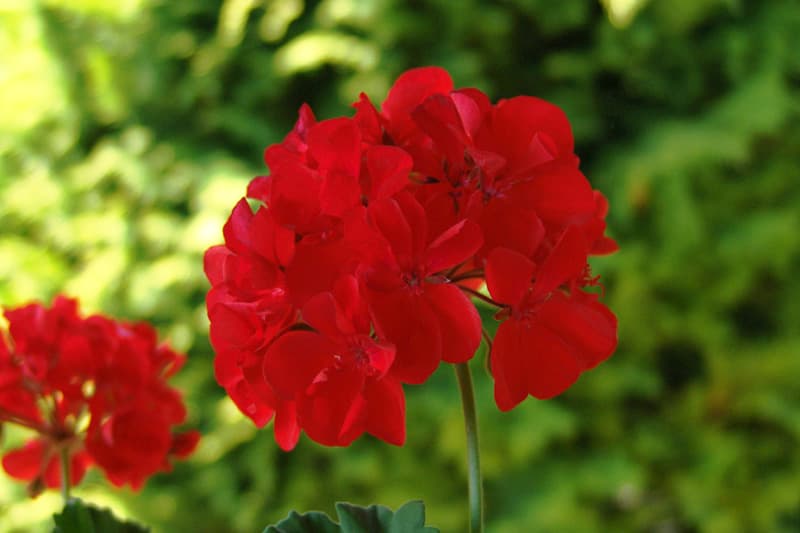
Partly. Browsed where deer pressure is high. Protect it.
- Type
- Annual
- Hardiness
- Grown as an annual, any zone
- Light
- Part shade
- Height
- 12–24 in
- Bloom
- May–October
- Maintenance
- Moderate
- Family
- Geraniaceae
- Toxic to
- cats, dogs, and horses
Damage steps follow a published university field scale. How plants are rated.
About Annual Geranium
Sometimes browsed, which surprises people who bought it as deer-resistant bedding. The scented-leaf zonal pelargonium is aromatic enough to put most deer off, but under pressure it gets eaten.
The confusion is in the name. What everyone calls a geranium is Pelargonium, a tender South African plant grown as summer bedding. True hardy Geranium, the cranesbills, is a different genus entirely, perennial to zone 3 or 4, and considerably more deer-resistant.
If you want the reliable version, ask for cranesbill or hardy geranium by name. Bloody cranesbill and the Rozanne types are ignored almost completely and come back every year.
Pelargoniums overwinter indoors easily if you cut them back hard and keep them nearly dry.
Do deer eat geraniums?
Sometimes, and the answer depends on which plant is meant. The bedding geranium, Pelargonium, is rated Occasionally Severely Damaged by Rutgers: scented enough to be passed over in a light year, eaten in a heavy one, buds and soft tips first. NC State's entry for the zonal geranium does not mention deer. The hardy cranesbills, true Geranium, are the ones the deer-resistant lists mean, and bloody cranesbill is on this site under its own name.
Protecting bedding geraniums
They are container plants, and that is the protection. A pot on a porch or in a window box sits inside the zone of human traffic that the third tier depends on; the same plants in a bed at the property line do not. For a bed, the 20 percent egg spray Colorado State rates High, reapplied at about thirty days through the summer, or the decision to plant cranesbill there instead.
Do they come back after browsing?
Usually, from the stem. A pelargonium browsed to the leaf nodes will normally push new shoots below the bite if the base is left intact, and NC State notes the plant can be cut back hard and overwintered dry indoors, which is rougher treatment than a deer gives it. What does not come back is the flush of flowers that was on it, and a plant browsed twice in a summer is a smaller plant by September. NC State's toxicity note is worth the page's own callout: "vomiting, anorexia when consumed in quantity," with cats the most sensitive.
Protecting Annual Geranium
Whether this survives comes down to local pressure, so decide on the options before it gets browsed rather than after.
- 1How tall a deer fence needs to beEight feet, and six is the most common expensive mistake in deer fencing.
- 2Repellent that actually worksThe egg-based recipe that reproduces the active ingredient in the commercial sprays that win university trials.
- 3Fencing a raised bedA deer jumps from ground level, so measure the barrier from the ground and not from the top of the bed.
- 4Check it is actually deerDeer tear and leave a ragged stub. A clean 45-degree cut is rabbits, and slug holes get blamed on deer constantly.
What to plant instead of Annual Geranium
Same plant type, hardy in the same zones, and rated better for deer. If Annual Geranium keeps getting eaten, these go in the same spot.
Soil and care
- Soil pH
- 6 to 7
- Drainage
- Well drained
- Water
- Moderate
- Fertility
- Moderate
- Spacing
- 12 to 18 in apart
- Growth rate
- Fast
- Maintenance
- Moderate
Tolerances and uses
- Drought
- Moderate
- Salt
- Moderate
- Pollinators
- Low
Containers
Where Annual Geranium grows
Hardy across every state on zone range alone. Mountain and coastal areas sit outside the ranges used here, so check your own zone before ordering. Select any state, including one it will not grow in, for what is resistant there.
Choose a state from the listeasier on a phone
- Pennsylvania
- New Jersey
- New York
- Connecticut
- Massachusetts
- Virginia
- Maryland
- Michigan
- Wisconsin
- Ohio
- Indiana
- Illinois
- Minnesota
- Missouri
- North Carolina
- Tennessee
- Georgia
- Texas
- Colorado
- California
- Oregon
- Washington
- New Hampshire
- Vermont
- Maine
- Rhode Island
- Delaware
- West Virginia
- Kentucky
- South Carolina
- Florida
- Alabama
- Mississippi
- Louisiana
- Arkansas
- Oklahoma
- Kansas
- Nebraska
- Iowa
- North Dakota
- South Dakota
- Montana
- Wyoming
- Idaho
- Utah
- Nevada
- Arizona
- New Mexico
- Alaska
- District of Columbia
- Hawaii
Common questions about Annual Geranium
- Is Annual Geranium deer resistant?
- Annual Geranium (Pelargonium x hortorum) is rated Occasionally Severely Damaged, step 3 of 4 on the damage scale this site uses. Browsed where deer pressure is high. Protect it.
- What hardiness zones does Annual Geranium grow in?
- Annual Geranium is hardy in USDA zones 2 to 11. Outside that range it will either not survive winter or will struggle with summer heat.
- Does Annual Geranium grow in shade?
- Yes. Annual Geranium tolerates part shade, which makes it one of the options for a shaded bed where deer also browse.
- How big does Annual Geranium get?
- Mature height is roughly 12–24 in. Growth rate is fast.
- When does Annual Geranium bloom?
- Annual Geranium flowers from May–October.
- Is Annual Geranium toxic to dogs or cats?
- Yes. The ASPCA lists Annual Geranium as toxic to cats, dogs, and horses. Site it away from where animals graze, or choose something else if you have a dog that chews.
Browse from here
Every list Annual Geranium belongs to.
All annuals·Sometimes destroyed·Part shade plants