
Plant record · Annual
Is Ageratum deer resistant?
Ageratum houstonianum
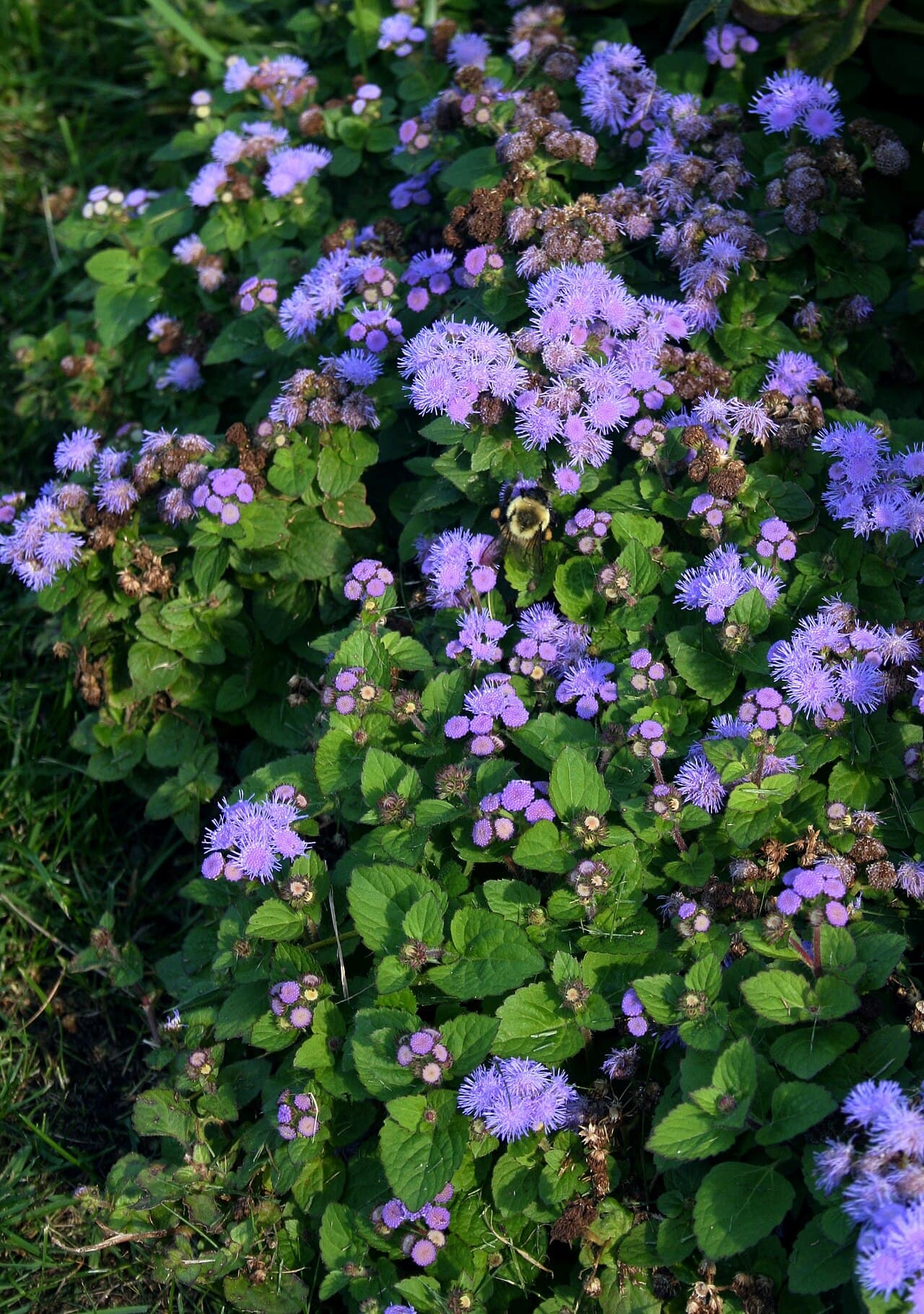
Yes. Deer almost always leave this alone.
- Type
- Annual
- Hardiness
- Grown as an annual, any zone
- Light
- Part shade
- Height
- 6–12 in
- Bloom
- Summer and Fall
- Maintenance
- Low
Damage steps follow a published university field scale. How plants are rated.
About Ageratum
Fluffy blue flower clusters all summer. One of very few annuals deer reliably ignore, and it takes part shade better than most bedding plants.
Do deer eat ageratum?
Rarely. Rutgers rates Ageratum houstonianum Rarely Damaged, A, one of the few bedding annuals in the top tier, and NC State's line covers the other animal too: "This plant is seldom damaged by rabbits and deer." The furred leaf and the flat, fuzzy flower are both wrong for a deer's mouth, and the plant is small enough that there is little to take.
Where it grows
An annual everywhere, NC State giving zones 2a through 11b, 6 to 12 inches, full sun or partial shade, flowering summer into fall, and resisting drought. The one word on its problem list is "Weedy," which in a warm climate means it seeds. It takes part shade better than most bedding plants, which is why it is on the shade page's short list of shade annuals deer leave alone.
Protecting ageratum
Nothing. It is the annual to put where impatiens were.
If it is browsed
It branches below the bite and flowers again within the month; an annual this small is replaced for less than the cost of the spray.
Soil and care
- Soil pH
- 6 to 7
- Drainage
- Consistently moist
- Water
- Moderate
- Spacing
- 8 to 12 in apart
- Growth rate
- Fast
- Maintenance
- Low
Similar to Ageratum
Other annuals with the same deer rating.
- Angel's TrumpetBrugmansia sp.Grown as an annual, any zoneRarely damaged
- AnisePimpinella anisumGrown as an annual, any zoneRarely damaged
- Annual VincaCatharanthus roseusGrown as an annual, any zoneRarely damaged
- Dusty MillerCentaurea cinerariaGrown as an annual, any zoneRarely damaged
- False CamomileMatricaria sp.Grown as an annual, any zoneRarely damaged
- Flowering TobaccoNicotiana sp.Grown as an annual, any zoneRarely damaged
Where Ageratum grows
Hardy across every state on zone range alone. Mountain and coastal areas sit outside the ranges used here, so check your own zone before ordering. Select any state, including one it will not grow in, for what is resistant there.
Choose a state from the listeasier on a phone
- Pennsylvania
- New Jersey
- New York
- Connecticut
- Massachusetts
- Virginia
- Maryland
- Michigan
- Wisconsin
- Ohio
- Indiana
- Illinois
- Minnesota
- Missouri
- North Carolina
- Tennessee
- Georgia
- Texas
- Colorado
- California
- Oregon
- Washington
- New Hampshire
- Vermont
- Maine
- Rhode Island
- Delaware
- West Virginia
- Kentucky
- South Carolina
- Florida
- Alabama
- Mississippi
- Louisiana
- Arkansas
- Oklahoma
- Kansas
- Nebraska
- Iowa
- North Dakota
- South Dakota
- Montana
- Wyoming
- Idaho
- Utah
- Nevada
- Arizona
- New Mexico
- Alaska
- District of Columbia
- Hawaii
Common questions about Ageratum
- Is Ageratum deer resistant?
- Ageratum (Ageratum houstonianum) is rated Rarely Damaged, step 1 of 4 on the damage scale this site uses. Deer almost always leave this alone.
- What hardiness zones does Ageratum grow in?
- Ageratum is hardy in USDA zones 2 to 11. Outside that range it will either not survive winter or will struggle with summer heat.
- Does Ageratum grow in shade?
- Yes. Ageratum tolerates part shade, which makes it one of the options for a shaded bed where deer also browse.
- How big does Ageratum get?
- Mature height is roughly 6–12 in. Growth rate is fast.
Browse from here
Every list Ageratum belongs to.
All annuals·Rarely damaged·Part shade plants