
Plant record · Bulb
Is Calla Lily deer resistant?
Zantedeschia sp.
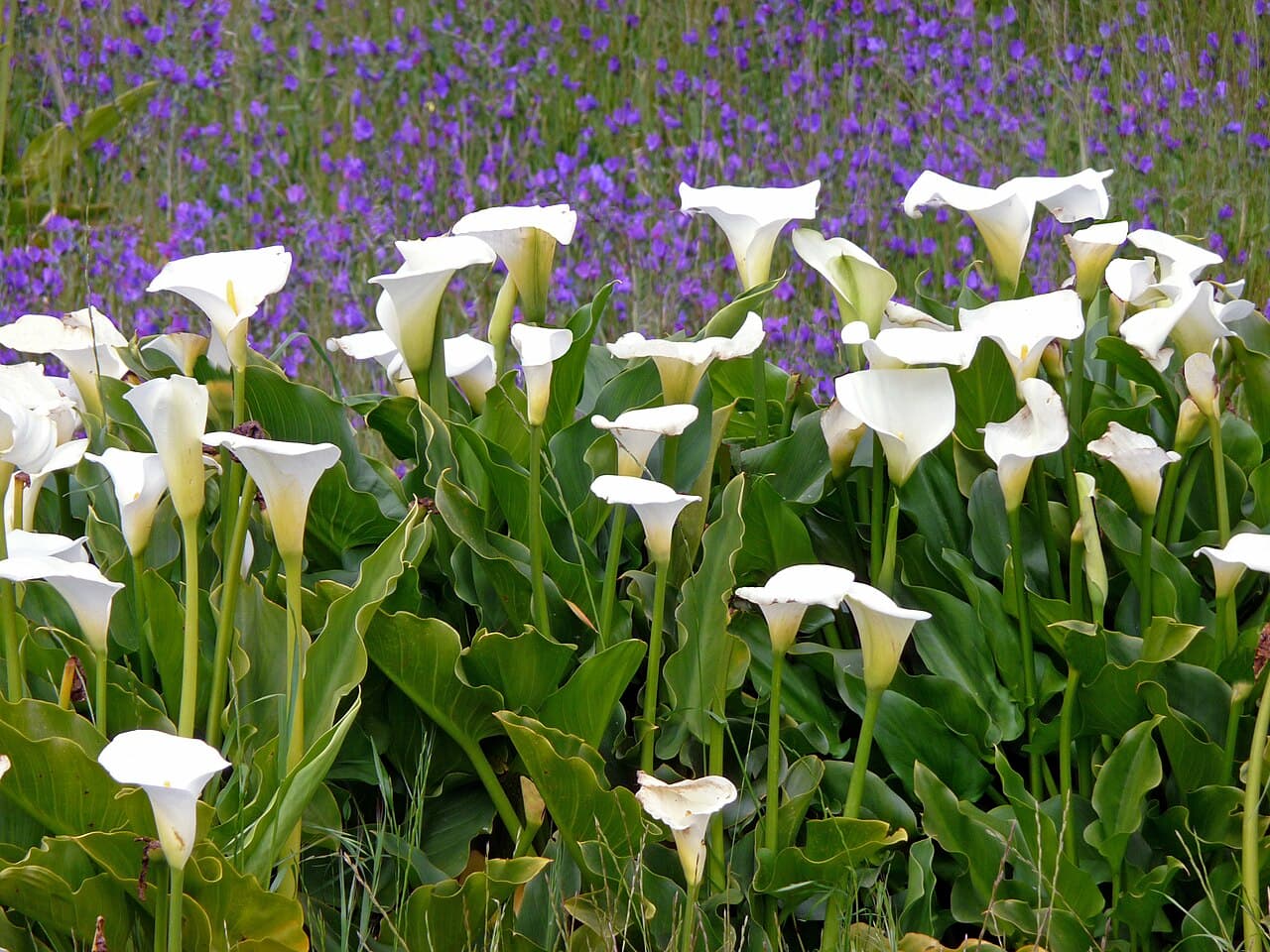
Mostly. Light browsing at worst; rarely ruined.
- Type
- Bulb
- Hardiness
- Zones 8–11, genus range
- Light
- Part shade
- Maintenance
- Moderate
- Toxic to
- dogs, cats, and horses
Damage steps follow a published university field scale. How plants are rated.
About Calla Lily
Calcium oxalate in every part is why deer refuse it and why it is toxic to pets. Hardy only from zone 8, and it naturalizes invasively in mild wet regions.
Are calla lilies deer resistant?
Mostly. Rutgers rates the genus Seldom Severely Damaged, "Calla Lily, Zantedeschia sp.," among the bulbs, and NC State lists deer, rabbits, poor soil and wet soil as the challenges Z. aethiopica resists. The reason is in the leaf: calcium oxalate through the whole plant, "Flowers, Leaves, Roots, Sap/Juice, Stems" in NC State's poison-part list, and a mouthful produces "oral irritation, pain, and swelling of mouth, tongue, and lips." Second tier rather than first because Rutgers did observe damage, seldom severe.
Where it grows
NC State: zones 8a to 10b, in full sun, partial shade or dappled light, 2 to 3 feet, flowering June and July on leafless stalks. Wet ground suits it, which is rare in a plant deer leave alone. North of zone 8 the rhizomes are lifted in fall or the plant is grown in a pot.
Protecting calla lilies
Seldom needed; the oxalate does the work. Where new leaves are being tested in spring, the 20 percent egg spray Colorado State rates High, once. The ASPCA lists calla lily as toxic to dogs, cats and horses; NC State puts the severity at Medium, with the symptoms above and "vomiting (not horses)"; the callout below carries it.
If it is browsed
The rhizome is untouched and sends new leaves within weeks in warm weather. A flower stalk taken is the season's flower on that stalk, and a mature clump sends several. Frost north of zone 8 is the thing that kills it, not deer.
Soil and care
- Soil pH
- 6 to 6.5
- Drainage
- Consistently moist
- Water
- High
- Spacing
- 12 to 18 in apart
- Growth rate
- Moderate
- Maintenance
- Moderate
Similar to Calla Lily
Other bulbs with the same deer rating.
- CamassiaCamassia leichtliniiZones 4–8Seldom damaged
- Canna LilyCanna sp.Zones 8–11, genus rangeSeldom damaged
- CrocusCrocus sp.Zones 3–8, genus rangeSeldom damaged
- Elephant EarColocasia esculentaZones 8–11Seldom damaged
- GladiolusGladiolus sp.Zones 7–10, genus rangeSeldom damaged
- Glory LilyGloriosa superbaZones 8–12Seldom damaged
Where Calla Lily grows
Hardy across 23 states on zone range alone. Mountain and coastal areas sit outside the ranges used here, so check your own zone before ordering. Select any state, including one it will not grow in, for what is resistant there.
Choose a state from the listeasier on a phone
- Pennsylvania
- New Jersey
- New York
- Connecticut
- Massachusetts
- Virginia
- Maryland
- Michigan
- Wisconsin
- Ohio
- Indiana
- Illinois
- Minnesota
- Missouri
- North Carolina
- Tennessee
- Georgia
- Texas
- Colorado
- California
- Oregon
- Washington
- New Hampshire
- Vermont
- Maine
- Rhode Island
- Delaware
- West Virginia
- Kentucky
- South Carolina
- Florida
- Alabama
- Mississippi
- Louisiana
- Arkansas
- Oklahoma
- Kansas
- Nebraska
- Iowa
- North Dakota
- South Dakota
- Montana
- Wyoming
- Idaho
- Utah
- Nevada
- Arizona
- New Mexico
- Alaska
- District of Columbia
- Hawaii
Common questions about Calla Lily
- Is Calla Lily deer resistant?
- Calla Lily (Zantedeschia sp.) is rated Seldom Severely Damaged, step 2 of 4 on the damage scale this site uses. Light browsing at worst; rarely ruined.
- What hardiness zones does Calla Lily grow in?
- Calla Lily is hardy in USDA zones 8 to 11. Outside that range it will either not survive winter or will struggle with summer heat. That is the range across the genus, so a named species or cultivar may be narrower.
- Does Calla Lily grow in shade?
- Yes. Calla Lily tolerates part shade, which makes it one of the options for a shaded bed where deer also browse.
- Is Calla Lily toxic to dogs or cats?
- Yes. The ASPCA lists Calla Lily as toxic to dogs, cats, and horses. Site it away from where animals graze, or choose something else if you have a dog that chews.
Browse from here
Every list Calla Lily belongs to.
All bulbs·Seldom damaged·Part shade plants