
Plant record · Perennial
Is Black-Eyed Susan (Rudbeckia) deer resistant?
Rudbeckia hirta
Mostly. Light browsing at worst; rarely ruined.
- Type
- Perennial
- Hardiness
- Zones 3–8
- Light
- Full sun
- Height
- 36–36 in
- Bloom
- Summer and Fall
- Maintenance
- Low
- Native range
- 47 US states
Damage steps follow a published university field scale. How plants are rated.
About Black-Eyed Susan
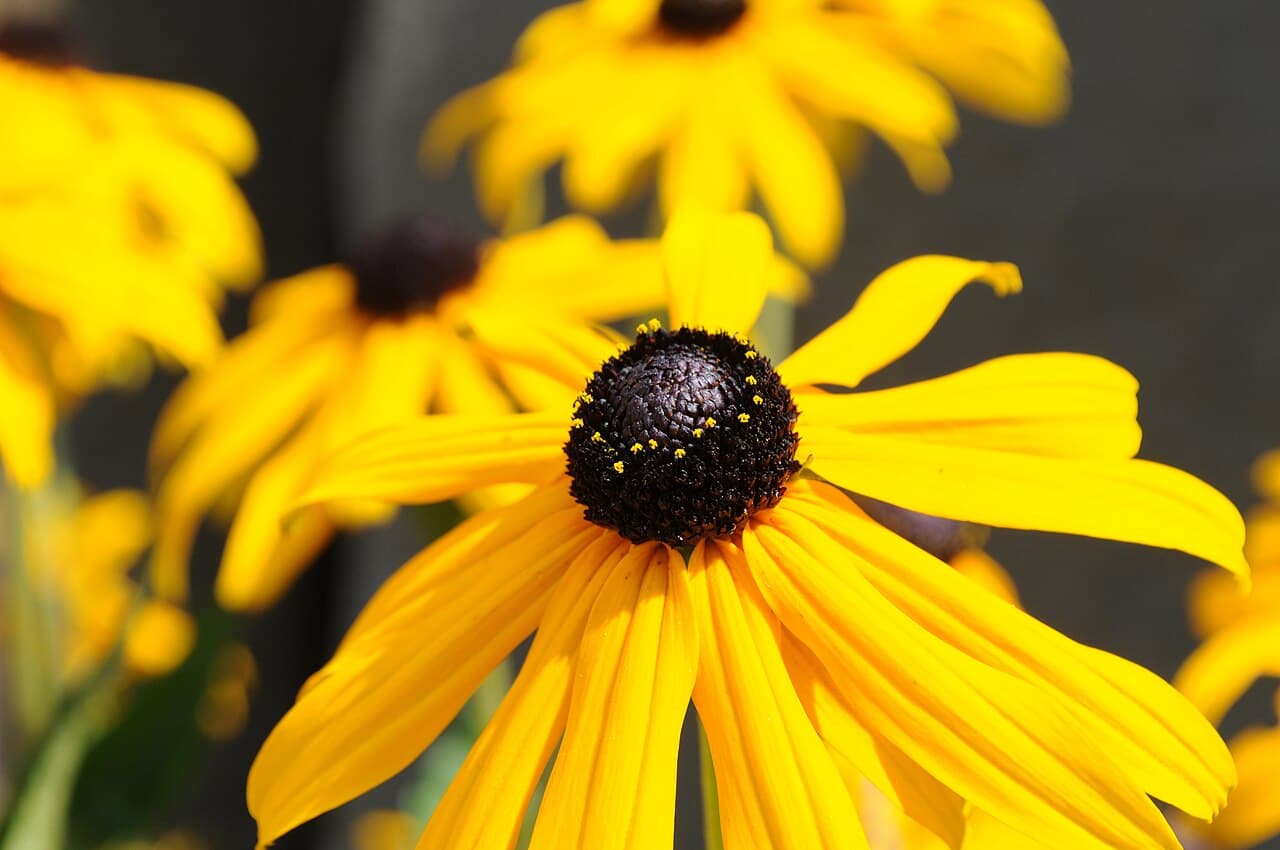
The defense is texture rather than chemistry. Stems and leaves are covered in bristly hairs under that familiar golden daisy and its brown central cone, and deer generally pass it by.
Treat it as a perennial and you will lose it. Depending on conditions it behaves as an annual, a biennial or a short-lived perennial, so a gardener who deadheads tidily removes the only thing keeping the colony going. Let some heads go over. It self-seeds freely and usually stays in the garden that way, shifting position a little each season.
Give it drainage and moving air. Powdery mildew is the standing complaint and it is worse in crowded, humid, still plantings; slugs and snails work on the young growth. Seed sown early in spring flowers the same year, which is exactly why so many people file it as an annual and are then surprised when it comes back.
Do deer eat black-eyed Susans?
Sometimes, and seldom badly. Rutgers rates the genus Seldom Severely Damaged, "Black-Eyed Susan, Rudbeckia sp.," and NC State's line is "Black-Eyed Susans are moderately deer resistant," with deer, drought and salt among the challenges R. hirta resists. Moderately is the right word. The bristly leaves are the defense; the buds and the open flowers are not bristly, and a deer that takes the top few inches off a stand in July takes the season's color with it.
Where it grows
NC State: zones 3a to 8b, full sun to partial shade, 2 to 4 feet, listed as biennial or perennial, flowering from May to July in North Carolina and later north of it. "Susceptible to powdery mildew, snails, and slugs," which are the things that do the real damage.
Protecting black-eyed Susans
Where buds are being taken, one application of the 20 percent egg spray Colorado State rates High covers the month of peak bloom; the USDA trial of twenty repellents found sprays on the plant beat anything hung near it. A self-seeding stand tolerates a good deal of loss because next year's plants are already in the ground.
If it is browsed
Cut stems branch below the bite and flower again on shorter stems, later. Rudbeckia is short-lived by nature, biennial or perennial on NC State's listing, and a colony that is allowed to seed replaces browsed plants without help.
Soil and care
- Soil pH
- 6 to 7.5
- Drainage
- Well drained
- Water
- Low
- Spacing
- 18 to 24 in apart
- Growth rate
- Fast
- Maintenance
- Low
Similar to Black-Eyed Susan
Other perennials with the same deer rating.
- African LilyAgapanthus sp.Zones 8–11, genus rangeSeldom damaged
- AsparagusAsparagus officinalisZones 2–9Seldom damaged
- AsterAster sp.Zones 3–8, genus rangeSeldom damaged
- AstilbeAstilbe x arendsiiZones 3–8Seldom damaged
- Baby's BreathGypsophila sp.Zones 3–9, genus rangeSeldom damaged
- BastardsageEriogonum wrightiiZones 5–10Seldom damaged
Where Black-Eyed Susan grows
Hardy across 50 states on zone range alone, and native to 47 of them. Mountain and coastal areas sit outside the ranges used here, so check your own zone before ordering. Select any state, including one it will not grow in, for what is resistant there.
Choose a state from the listeasier on a phone
- Pennsylvania
- New Jersey
- New York
- Connecticut
- Massachusetts
- Virginia
- Maryland
- Michigan
- Wisconsin
- Ohio
- Indiana
- Illinois
- Minnesota
- Missouri
- North Carolina
- Tennessee
- Georgia
- Texas
- Colorado
- California
- Oregon
- Washington
- New Hampshire
- Vermont
- Maine
- Rhode Island
- Delaware
- West Virginia
- Kentucky
- South Carolina
- Florida
- Alabama
- Mississippi
- Louisiana
- Arkansas
- Oklahoma
- Kansas
- Nebraska
- Iowa
- North Dakota
- South Dakota
- Montana
- Wyoming
- Idaho
- Utah
- Nevada
- Arizona
- New Mexico
- Alaska
- District of Columbia
- Hawaii
Common questions about Black-Eyed Susan
- Is Black-Eyed Susan deer resistant?
- Black-Eyed Susan (Rudbeckia hirta) is rated Seldom Severely Damaged, step 2 of 4 on the damage scale this site uses. Light browsing at worst; rarely ruined.
- What hardiness zones does Black-Eyed Susan grow in?
- Black-Eyed Susan is hardy in USDA zones 3 to 8. Outside that range it will either not survive winter or will struggle with summer heat.
- Does Black-Eyed Susan grow in shade?
- No. Black-Eyed Susan wants full sun and will grow thin and flop in shade.
- How big does Black-Eyed Susan get?
- Mature height is roughly 36–36 in. Growth rate is fast.
Browse from here
Every list Black-Eyed Susan belongs to.
All perennials·Seldom damaged·Full sun plants