
Plant record · Bulb · Liliaceae
Is Tulip deer resistant?
Tulipa spp.
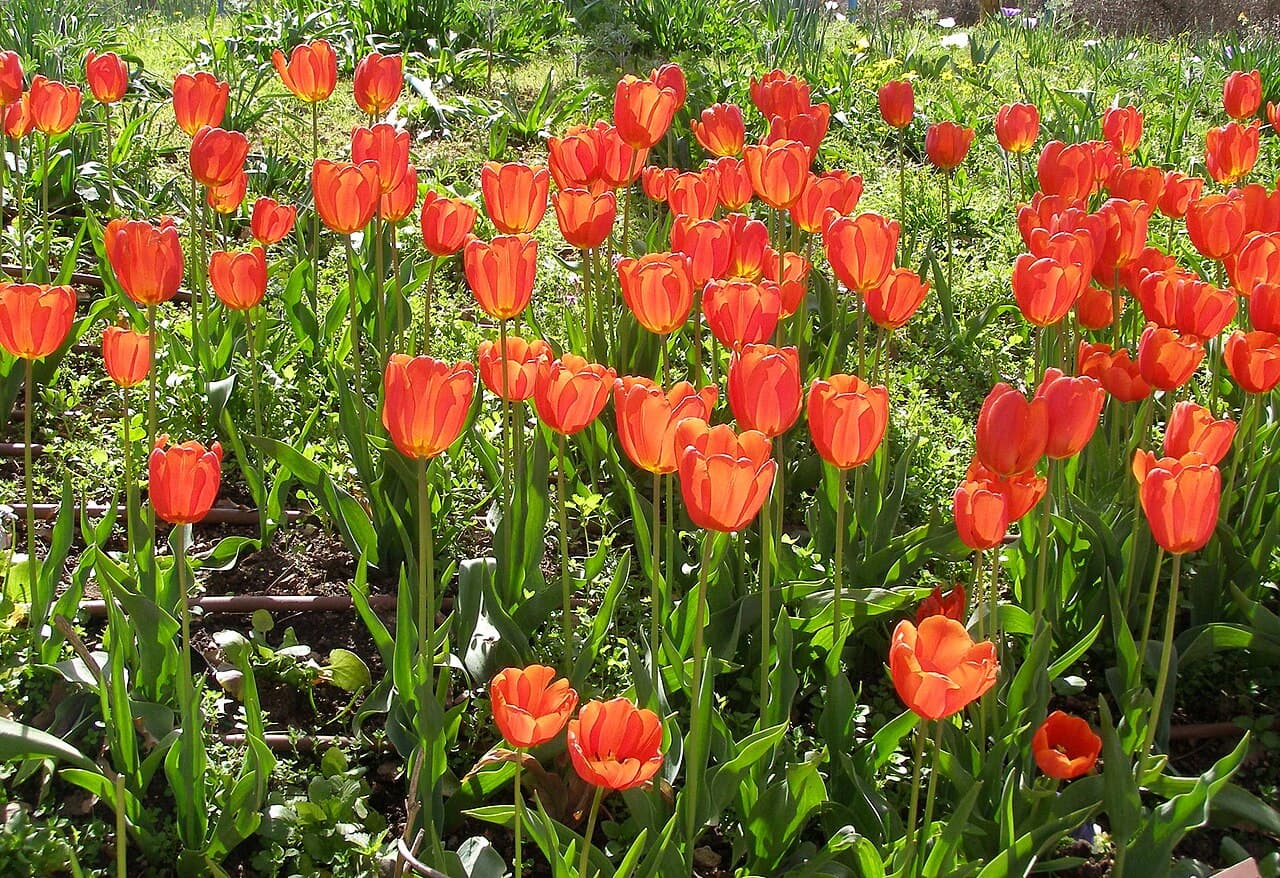
No. Deer will destroy this. Do not plant it unprotected.
- Type
- Bulb
- Hardiness
- Zones 3–8, genus range
- Light
- Full sun
- Height
- 10–24 in
- Bloom
- April–May
- Maintenance
- Moderate
- Family
- Liliaceae
- Toxic to
- cats, dogs, and horses
Damage steps follow a published university field scale. How plants are rated.
About Tulip
Reliably destroyed. If deer are on your property and you plant tulips unprotected, you will lose them, and usually the flower buds go first just as color shows.
The bulbs are eaten too, though that is more often squirrels and voles digging them out shortly after fall planting. Between the two, tulips are the single most heartbreaking bulb in a deer garden: expensive, planted in optimism, gone in one night.
Daffodils are the standard substitute and the comparison is stark. Narcissus contains lycorine and nothing touches it, above or below ground. If you want the tulip look specifically, the only reliable answer is a fenced bed or a container close to the house, not repellent.
Do deer eat tulips?
Yes, and NC State is precise about which part: "Deer will eat the flowers (but not the leaves)." Rutgers rates tulip Frequently Severely Damaged, the bottom tier. The bud goes as the color shows, as the paragraph above says, and what is left is a set of leaves feeding a bulb that will flower again for the deer next spring.
Who else takes them
NC State: "Squirrels may dig up newly planted bulbs," and "mice and voles are attracted to the bulbs and will eat them." So a tulip bed is attacked from below in October and from above in April, and the two need different defenses: wire mesh over the planting for the first, a fence or a cage for the second. The 20 percent egg spray Colorado State rates High buys about thirty days and, on a plant this attractive, is the least reliable option on this site.
Do tulips come back?
Less each year, deer or not. NC State: "in most cases, tulip performance declines substantially starting with the second year," and species tulips "often perform better than hybrid plants as perennials." Plant them three times the depth of the bulb. The comparison above stands: daffodil is the bulb that returns and is never eaten.
Protecting Tulip
Deer will destroy this without protection, so the question is which kind you are willing to pay for.
- 1How tall a deer fence needs to beEight feet, and six is the most common expensive mistake in deer fencing.
- 2What a deer fence costsMaterial ratios are stable even when prices are not, and installation reliably doubles the figure.
- 3Repellent that actually worksThe egg-based recipe that reproduces the active ingredient in the commercial sprays that win university trials.
- 4Fencing a raised bedA deer jumps from ground level, so measure the barrier from the ground and not from the top of the bed.
What to plant instead of Tulip
Same plant type, hardy in the same zones, and rated better for deer. If Tulip keeps getting eaten, these go in the same spot.
Soil and care
- Soil pH
- 6 to 7
- Drainage
- Sharp, gritty. Will rot in wet soil
- Water
- Moderate
- Fertility
- Moderate
- Spacing
- 4 to 6 in apart
- Growth rate
- Moderate
- Maintenance
- Moderate
Tolerances and uses
- Drought
- Moderate
- Salt
- Moderate
- Pollinators
- Low
Containers
Where Tulip is used
One guide on this site plants it, and says where and what beside it.
Where Tulip grows
Hardy across 50 states on zone range alone. Mountain and coastal areas sit outside the ranges used here, so check your own zone before ordering. Select any state, including one it will not grow in, for what is resistant there.
Choose a state from the listeasier on a phone
- Pennsylvania
- New Jersey
- New York
- Connecticut
- Massachusetts
- Virginia
- Maryland
- Michigan
- Wisconsin
- Ohio
- Indiana
- Illinois
- Minnesota
- Missouri
- North Carolina
- Tennessee
- Georgia
- Texas
- Colorado
- California
- Oregon
- Washington
- New Hampshire
- Vermont
- Maine
- Rhode Island
- Delaware
- West Virginia
- Kentucky
- South Carolina
- Florida
- Alabama
- Mississippi
- Louisiana
- Arkansas
- Oklahoma
- Kansas
- Nebraska
- Iowa
- North Dakota
- South Dakota
- Montana
- Wyoming
- Idaho
- Utah
- Nevada
- Arizona
- New Mexico
- Alaska
- District of Columbia
- Hawaii
Common questions about Tulip
- Is Tulip deer resistant?
- Tulip (Tulipa spp.) is rated Frequently Severely Damaged, step 4 of 4 on the damage scale this site uses. Deer will destroy this. Do not plant it unprotected.
- What hardiness zones does Tulip grow in?
- Tulip is hardy in USDA zones 3 to 8. Outside that range it will either not survive winter or will struggle with summer heat. That is the range across the genus, so a named species or cultivar may be narrower.
- Does Tulip grow in shade?
- No. Tulip wants full sun and will grow thin and flop in shade.
- How big does Tulip get?
- Mature height is roughly 10–24 in. Growth rate is moderate.
- When does Tulip bloom?
- Tulip flowers from April–May.
- Is Tulip toxic to dogs or cats?
- Yes. The ASPCA lists Tulip as toxic to cats, dogs, and horses. Site it away from where animals graze, or choose something else if you have a dog that chews.
Browse from here
Every list Tulip belongs to.
All bulbs·Deer favorites·Full sun plants