
Plant record · Perennial · Asphodelaceae
Is Daylily deer resistant?
Hemerocallis spp.
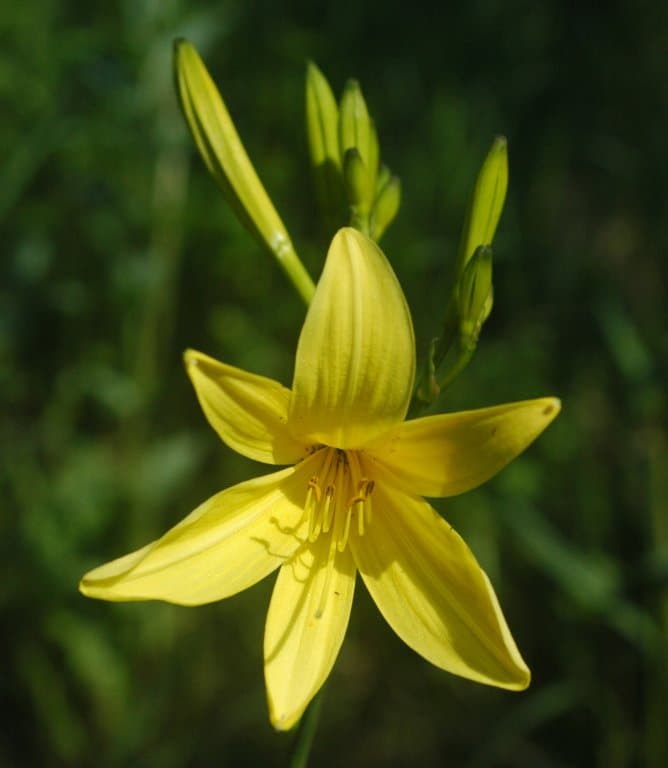
Partly. Browsed where deer pressure is high. Protect it.
- Type
- Perennial
- Hardiness
- Zones 3–9, genus range
- Light
- Full sun
- Height
- 18–35 in
- Bloom
- June–August
- Maintenance
- Low
- Family
- Asphodelaceae
- Toxic to
- cats
Damage steps follow a published university field scale. How plants are rated.
About Daylily
Deer browse the flower buds readily, usually taking them just as they swell and before they open. The plant is tough enough to survive indefinitely; you simply do not get flowers.
That is the daylily pattern in a deer garden. Foliage returns, clumps expand, nothing dies, and season after season the display fails. It is more frustrating than losing the plant outright, because there is nothing visibly wrong.
Repellent has to go on the buds, not the leaves, and has to be reapplied as new scapes come up through the season rather than once in spring.
Daylily is not a lily. True lilies grow from scaly bulbs and are equally browsed, but daylilies are fibrous-rooted and far harder to kill.
Do deer eat daylilies?
Yes. Rutgers rates Hemerocallis Occasionally Severely Damaged, the third tier of four, and NC State is blunter: "they are frequently damaged by deer." The two do not conflict. Rutgers counts how often damage was severe, and daylily damage is rarely severe to the plant, only to the flowers. The buds are taken as they swell, the scapes are taken, and the foliage is grazed in spring when it is the first soft green thing up.
Where it grows
NC State: zones 3a to 9b, full sun to partial shade, 1 to 3 feet, blooming spring into summer depending on the cultivar, and "Each 2 to 6 in. trumpet-shaped bloom lasts only a day." Drought and salt are on its resistance list. Deer are not.
Protecting daylilies
Repellent goes on the scapes as they rise, not on the leaves in April, and goes on again at about thirty days through the bloom season, which for a reblooming cultivar is most of the summer. Colorado State's 20 percent egg spray is the one rated High. Minnesota Extension's benchmark for a repellent program is a 50 percent reduction in browse as very successful and 30 percent as the likelier result, and on a plant whose whole value is the flower, losing half the buds is not a program. A bed that matters gets fenced: in the VerCauteren trials a 1.5 meter fence stopped none of the deer, 2.1 meters stopped 85 percent and 2.4 meters, about 8 feet, all of them. The ASPCA lists daylilies as toxic to cats, and NC State's wording is "vomiting, inappetence, lethargy, kidney failure, and even death after eating"; the callout below carries it.
If it is browsed
The clump is not in danger. Foliage regrows from the crown within weeks, and a plant grazed in April flowers on schedule if the scapes come up after the browsing stops. Buds taken are gone for the year on that scape; reblooming cultivars send more.
Protecting Daylily
Whether this survives comes down to local pressure, so decide on the options before it gets browsed rather than after.
- 1How tall a deer fence needs to beEight feet, and six is the most common expensive mistake in deer fencing.
- 2Repellent that actually worksThe egg-based recipe that reproduces the active ingredient in the commercial sprays that win university trials.
- 3Fencing a raised bedA deer jumps from ground level, so measure the barrier from the ground and not from the top of the bed.
- 4Check it is actually deerDeer tear and leave a ragged stub. A clean 45-degree cut is rabbits, and slug holes get blamed on deer constantly.
What to plant instead of Daylily
Same plant type, hardy in the same zones, and rated better for deer. If Daylily keeps getting eaten, these go in the same spot.
- Bearded IrisIris germanicaZones 3–9Rarely damaged
- Butter and EggsLinaria vulgarisZones 3–9Rarely damaged
- False IndigoBaptisia australisZones 3–9Rarely damaged
- HorehoundMarrubium vulgareZones 3–9Rarely damaged
- IrisIris sp.Zones 3–9, genus rangeRarely damaged
- Threadleaf CoreopsisCoreopsis verticillataZones 3–9Rarely damaged
Soil and care
- Soil pH
- 6 to 7
- Drainage
- Average garden soil
- Water
- Moderate
- Fertility
- Low
- Spacing
- 18 to 30 in apart
- Growth rate
- Fast
- Maintenance
- Low
Tolerances and uses
- Drought
- High
- Salt
- Moderate
- Pollinators
- Low
Containers
Where Daylily is used
One guide on this site plants it, and says where and what beside it.
Where Daylily grows
Hardy across every state on zone range alone. Mountain and coastal areas sit outside the ranges used here, so check your own zone before ordering. Select any state, including one it will not grow in, for what is resistant there.
Choose a state from the listeasier on a phone
- Pennsylvania
- New Jersey
- New York
- Connecticut
- Massachusetts
- Virginia
- Maryland
- Michigan
- Wisconsin
- Ohio
- Indiana
- Illinois
- Minnesota
- Missouri
- North Carolina
- Tennessee
- Georgia
- Texas
- Colorado
- California
- Oregon
- Washington
- New Hampshire
- Vermont
- Maine
- Rhode Island
- Delaware
- West Virginia
- Kentucky
- South Carolina
- Florida
- Alabama
- Mississippi
- Louisiana
- Arkansas
- Oklahoma
- Kansas
- Nebraska
- Iowa
- North Dakota
- South Dakota
- Montana
- Wyoming
- Idaho
- Utah
- Nevada
- Arizona
- New Mexico
- Alaska
- District of Columbia
- Hawaii
Common questions about Daylily
- Is Daylily deer resistant?
- Daylily (Hemerocallis spp.) is rated Occasionally Severely Damaged, step 3 of 4 on the damage scale this site uses. Browsed where deer pressure is high. Protect it.
- What hardiness zones does Daylily grow in?
- Daylily is hardy in USDA zones 3 to 9. Outside that range it will either not survive winter or will struggle with summer heat. That is the range across the genus, so a named species or cultivar may be narrower.
- Does Daylily grow in shade?
- No. Daylily wants full sun and will grow thin and flop in shade.
- How big does Daylily get?
- Mature height is roughly 18–35 in. Growth rate is fast.
- When does Daylily bloom?
- Daylily flowers from June–August.
- Is Daylily toxic to dogs or cats?
- Yes. The ASPCA lists Daylily as toxic to cats. Cats are the risk here, and they browse foliage indoors more readily than out, so it matters most for anything cut and brought inside.
Browse from here
Every list Daylily belongs to.
All perennials·Sometimes destroyed·Full sun plants