
Plant record · Tree
Is American Holly deer resistant?
Ilex opaca
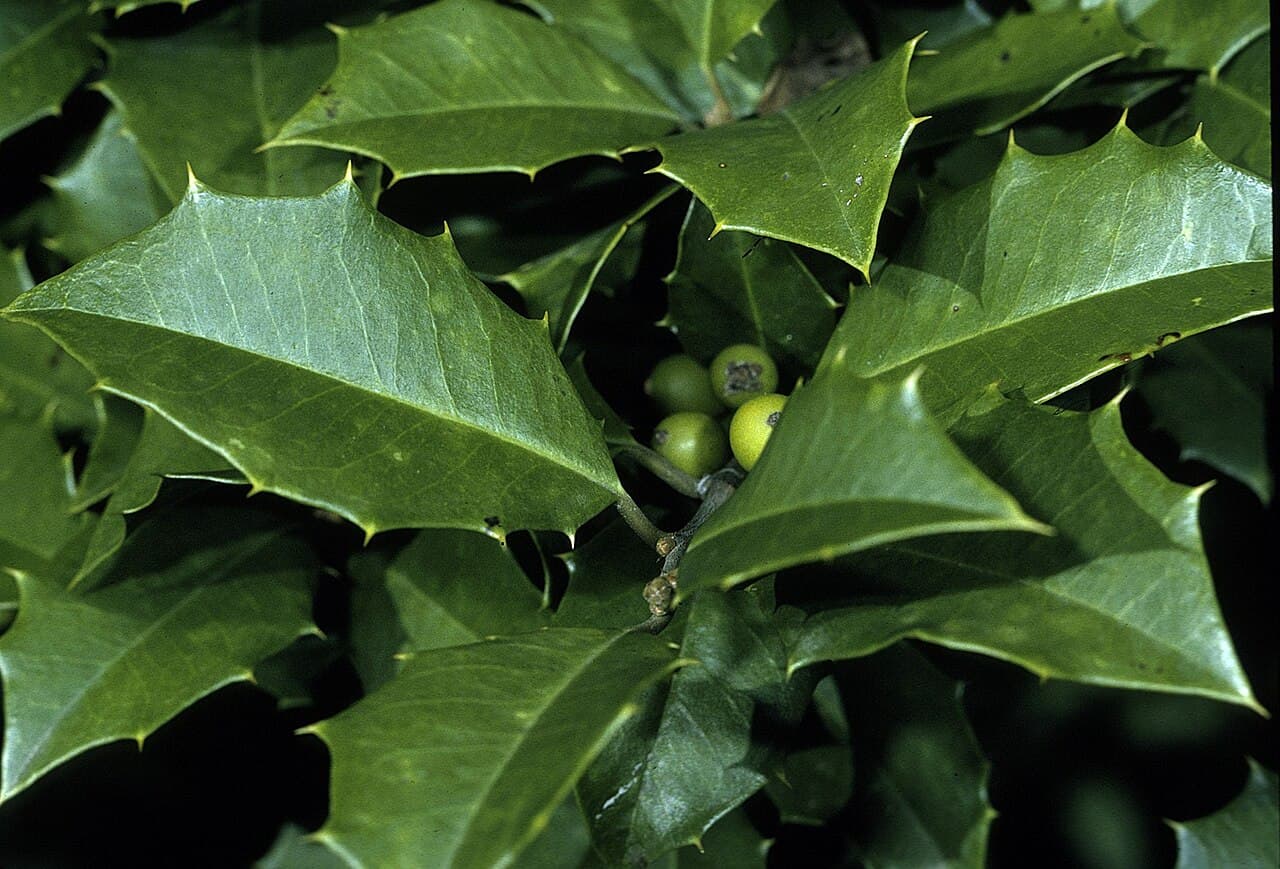
Yes. Deer almost always leave this alone.
- Type
- Tree
- Hardiness
- Zones 5–9
- Light
- Part shade
- Height
- 480–720 in
- Bloom
- Spring and Summer
- Maintenance
- Low
- Native range
- 27 US states
- Toxic to
- dogs, cats, and horses
Damage steps follow a published university field scale. How plants are rated.
About American Holly
Spiny evergreen leaves deer will not chew. You need a male plant within range for the female to set berries, which is the detail most people miss when they buy one.
Do deer eat American holly?
Rarely. Rutgers rates Ilex opaca Rarely Damaged, A, and NC State says it twice, "highly deer resistant," which is stronger language than that entry uses for almost anything. The spined, leathery, evergreen leaf is the reason, and it is the difference between this holly and the Japanese holly sold as a boxwood substitute, whose small soft leaf is a tier below the middle. Among the evergreen screens deer leave alone, American holly is the one that becomes a tree.
Where it grows
NC State: zones 5a to 9b, 40 to 60 feet in time, full sun or partial shade, flowering April to June, and resisting salt, wind and storm damage as well as deer. It is "intolerant of limestone soils." The berries need two plants: NC State, "Only female trees produce fruits and they must have a nearby male pollinizer." The ASPCA lists holly as toxic to dogs, cats and horses; NC State puts the severity Low, the fruit the poisonous part, "nausea, vomiting (not in horses), diarrhea, depression," and the callout below carries it.
Protecting American holly
Nothing from deer at any age. A young holly is spined from its first leaf.
If it is browsed
It is not, in the ordinary run; a holly with a bare band at browse height in a hard winter regrows from the stems the following season, since hollies break new growth from old wood the way most broadleaf evergreens do and yew and arborvitae do not.
Soil and care
- Soil pH
- 5 to 6.5
- Drainage
- Well drained
- Water
- Moderate
- Spacing
- 94 to 142 in apart
- Growth rate
- Slow
- Maintenance
- Low
Tolerances and uses
Evergreen
Similar to American Holly
Other trees with the same deer rating.
- Bottlebrush BuckeyeAesculus parvifloraZones 5–9Rarely damaged
- Dwarf Alberta SprucePicea glauca 'Conica'Zones 2–6Rarely damaged
- Japanese Black PinePinus thunbergianaZones 5–8Rarely damaged
- Katsura TreeCercidiphyllum japonicumZones 4–8Rarely damaged
- MimosaAlbizia julibrissinZones 6–9Rarely damaged
- Paper BirchBetula papyriferaZones 2–7Rarely damaged
Where American Holly is used
2 guides on this site plant it, and say where and what beside it.
- Structure: Build the Bones from Resistant PlantsWinter is when structure carries the garden and when browse pressure peaks. The decision that matters is not what gets eaten but what grows back.6 min
- Wall and Foundation Planting PlanThe strip at the base of a wall is the driest ground you own, and a wall stops nothing. Aspect decides the planting; the rain shadow decides whether it lives.6 min
Where American Holly grows
Hardy across 50 states on zone range alone, and native to 27 of them. Mountain and coastal areas sit outside the ranges used here, so check your own zone before ordering. Select any state, including one it will not grow in, for what is resistant there.
Choose a state from the listeasier on a phone
- Pennsylvania
- New Jersey
- New York
- Connecticut
- Massachusetts
- Virginia
- Maryland
- Michigan
- Wisconsin
- Ohio
- Indiana
- Illinois
- Minnesota
- Missouri
- North Carolina
- Tennessee
- Georgia
- Texas
- Colorado
- California
- Oregon
- Washington
- New Hampshire
- Vermont
- Maine
- Rhode Island
- Delaware
- West Virginia
- Kentucky
- South Carolina
- Florida
- Alabama
- Mississippi
- Louisiana
- Arkansas
- Oklahoma
- Kansas
- Nebraska
- Iowa
- North Dakota
- South Dakota
- Montana
- Wyoming
- Idaho
- Utah
- Nevada
- Arizona
- New Mexico
- Alaska
- District of Columbia
- Hawaii
Common questions about American Holly
- Is American Holly deer resistant?
- American Holly (Ilex opaca) is rated Rarely Damaged, step 1 of 4 on the damage scale this site uses. Deer almost always leave this alone.
- What hardiness zones does American Holly grow in?
- American Holly is hardy in USDA zones 5 to 9. Outside that range it will either not survive winter or will struggle with summer heat.
- Does American Holly grow in shade?
- Yes. American Holly tolerates part shade, which makes it one of the options for a shaded bed where deer also browse.
- How big does American Holly get?
- Mature height is roughly 480–720 in. Growth rate is slow.
- Is American Holly toxic to dogs or cats?
- Yes. The ASPCA lists American Holly as toxic to dogs, cats, and horses. Site it away from where animals graze, or choose something else if you have a dog that chews.
Browse from here
Every list American Holly belongs to.
All trees·Rarely damaged·Part shade plants·Mast and fruit trees·Evergreen shrubs